
What is VPN and How It is Important for Organization?
A VPN, or Virtual Private Network, is a private network that encrypts and transmits data while it travels…
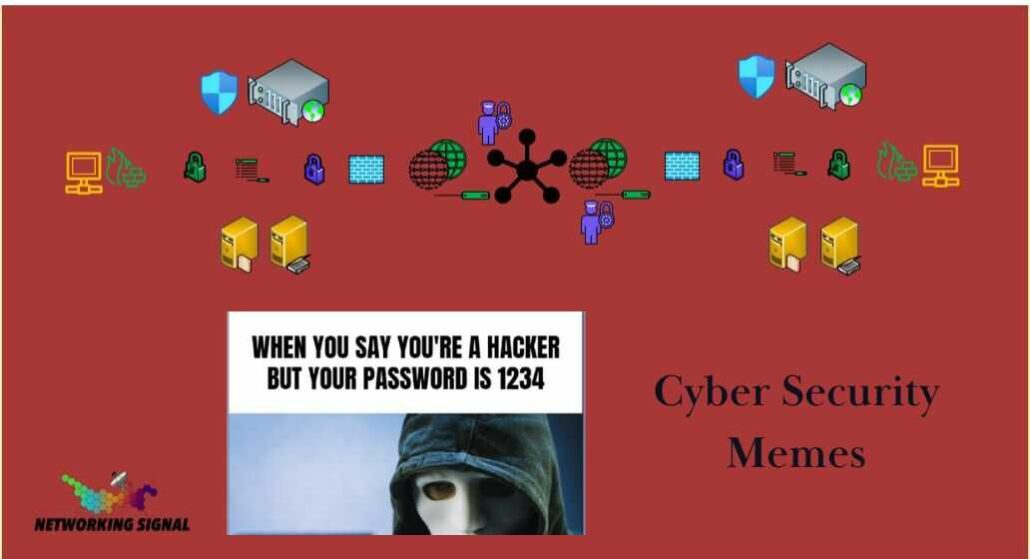
So, you know those funny pictures, GIFs, or short videos that get shared around on the internet? Those are called memes. Now, imagine those memes, but they’re all about cybersecurity. That’s what cybersecurity memes are!
In today’s world, memes are everywhere. They’re a big part of our online culture. And the cool thing is, they’re not just for laughs. Memes can actually help us learn and spread awareness about serious stuff like cybersecurity.
Why are cybersecurity memes important, you ask? Well, they have this unique ability to take something complex like cybersecurity and make it simple and fun. They use humor to catch our attention and keep us engaged. This way, learning about cybersecurity doesn’t feel like a chore.
Look Here: Cyber Security Goals and Three Pillar of Cyber Security
For instance, a meme about creating strong passwords can remind us to update our passwords, but in a fun way. Or a meme about the dangers of clicking on unknown links can make us think twice before falling for a phishing attack.
So, in a nutshell, cybersecurity memes are more than just a source of entertainment. They’re a powerful tool for educating people about cybersecurity in a fun and engaging way. They help us understand the risks and promote safer online behaviors. And that’s pretty awesome.
So, you’re asking about cybersecurity memes? They’re pretty cool! Imagine your regular memes, but with a twist – they’re all about cybersecurity. These could be images, GIFs, or short videos that use humor to highlight different aspects of cybersecurity.
You might see a meme joking about the importance of strong passwords or one that humorously warns about the dangers of clicking on unknown links. These memes are more than just funny – they’re educational.
We share them, we relate to them, and now, we can even learn from them. Cybersecurity can be a complex topic, but these memes make it simpler and more accessible to everyone.
By using humor, these memes grab our attention and make learning about cybersecurity fun. So, while you’re laughing at a meme about creating strong passwords, you’re also being reminded to update your passwords. It’s a fun way to promote safer online behaviors and make the internet a safer place for everyone. Pretty neat, right?
Cybersecurity memes are impactful. They’re not just about making us laugh, but they also play a big role in spreading awareness about cybersecurity. Think about it – cybersecurity can be a tough nut to crack. It’s complex and can be a bit intimidating. But when you wrap up these concepts in a funny meme, it suddenly becomes a lot easier to understand.
Look Here: What are the Best Laptops For Cyber Security Students? (Updated 2023)
And the best part? Memes are super shareable. They’re like digital wildfire, spreading across social media platforms and reaching tons of people. This makes them a powerful tool for educating folks about cybersecurity threats and how to stay safe online.
Let’s talk about some examples. Ever seen the “Hide the Pain Harold” meme? It’s a picture of a guy forcing a smile, and it’s been used to talk about the pain of having security software that you’re not using properly. It’s a funny way to highlight a serious issue, and it’s sparked a lot of discussions about making the most of our security tools.
Another popular one is the “High Five Drown” meme. It’s often used to talk about how we sometimes blame the victim when a security breach happens. The meme encourages us to be more supportive and reminds us that security is everyone’s responsibility.
Here are 50 cybersecurity meme ideas with humorously worded captions that could be paired with funny visuals:
So, while you’re chuckling at a cybersecurity meme, remember that it’s doing more than just tickling your funny bone. It’s helping to spread important messages about staying safe online. And that’s a pretty big deal.
Hand-picked articles you might also find useful.
 Security
 A VPN, or Virtual Private Network, is a private network that encrypts and transmits data while it travels…
 Security
 What is Site To Site VPN? Site-to-site VPN is a VPN connection that allows two or more remote…
 Security
 What are SNAT and DNAT? SNAT and DNAT are both types of network address translation (NAT). NAT is…