
ESP Encapsulating Security Payload: Detail Explained
What is ESP Encapsulating Security Payload? ESP Encapsulating Security Payload is a data security protocol that provides confidentiality,…
A firewall is a network security device that monitors incoming and outgoing network traffic and controls access to your network. Firewalls are often categorized as either network firewalls or host-based firewalls.
Network firewalls filter traffic between multiple devices on a network, while host-based firewalls provide a layer of software security on individual devices.
Firewalls can be hardware appliances, software programs, or a combination of both. Hardware firewalls are typically installed on a network router and protect an entire network.
Software firewalls are installed on individual devices and only protect that one device. Some routers have built-in firewall features that can be enabled to provide basic protection for a home network.
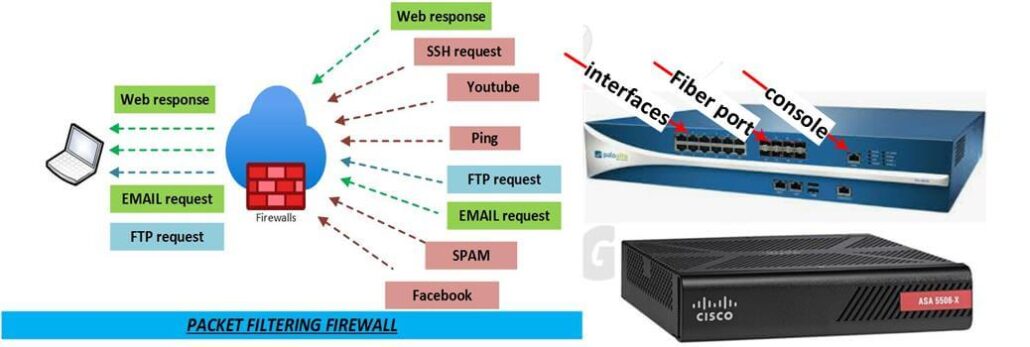
There are several different types of firewalls that are used to protect networks and devices. The most common types of firewalls include:
Packet filtering firewall: This type of firewall inspects each packet that comes into a network and checks the header information to see if it is allowed to enter. Packet filtering firewalls can be configured to allow or block traffic based on various criteria, such as the source and destination IP addresses, port numbers, and protocols.
Stateful inspection firewall: Also known as a dynamic packet filtering firewall, this type of firewall keeps track of the state of each connection passing through it. Stateful inspection firewalls can inspect packets in context and make decisions about whether to allow or block them based on the state of the connection.
Application-level firewall: This type of firewall inspects traffic at the application layer, which is the highest level of the OSI model. Application-level firewalls are also known as proxy servers because they act as intermediaries between clients and servers. Proxy servers can be configured to allow or block traffic based on the content of the traffic, such as specific websites or applications.
A firewall typically consists of the following components:
Firewalls provide a number of benefits for both home and business networks Some of the benefits of using a firewall include:
There are a few drawbacks to using firewalls, such as:
Hand-picked articles you might also find useful.
 Security
 What is ESP Encapsulating Security Payload? ESP Encapsulating Security Payload is a data security protocol that provides confidentiality,…
 Security
 IP spoofing forges the source address in a packet header to hide the sender or impersonate a trusted…
 Security
 What is a Host-Based Firewall? A host-based firewall is a software program that runs on a server or…