
What is Multicast in Networking, Uses and How Does It Work?
What is Multicast in Networking? Multicast is a networking protocol that allows for the efficient delivery of data…
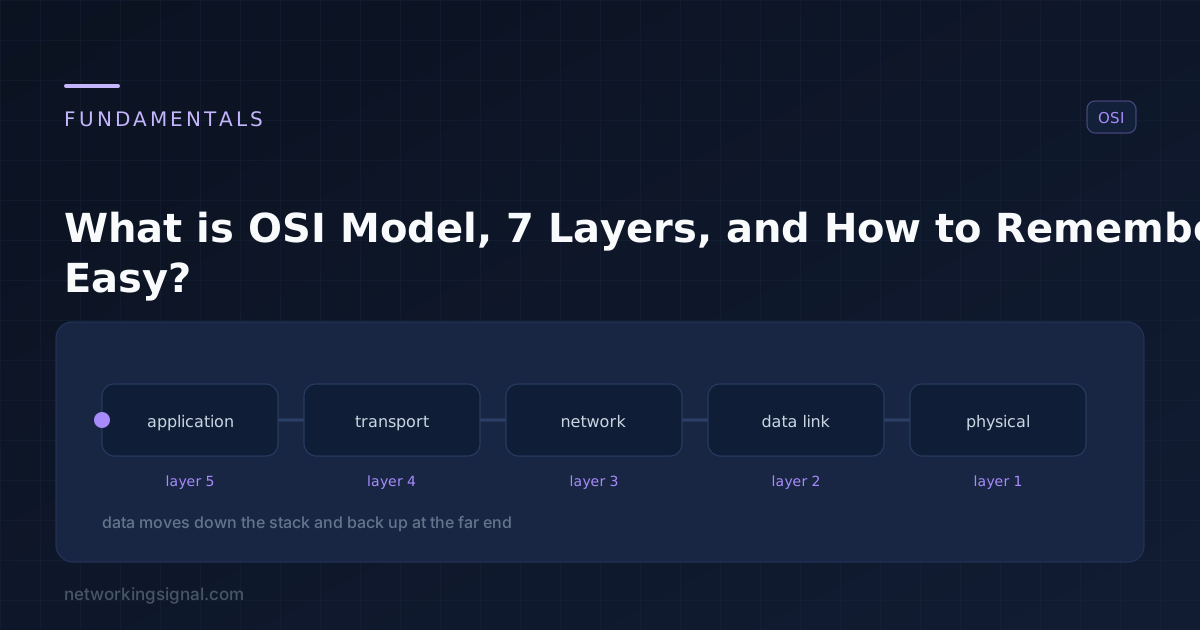
The OSI Model is a seven-layer model that defines the different components of a network system and how they interact with each other. The OSI Model is a reference model that was developed by the International Organization for Standardization (ISO) in 1984.
The OSI Model is divided into seven layers, each of which represents a different aspect of networking:
The Physical Layer is the first layer of the OSI Model and is responsible for transmitting raw data over a physical medium, such as a copper cable or optical fiber. The Physical Layer defines the electrical, mechanical, and procedural characteristics of the interface between a network and the devices that connect to it.
The Data Link Layer is the second layer of the OSI Model and is responsible for the error-free transmission of data over a physical medium. The Data Link Layer defines the logical relationships between nodes, such as how data is packaged into frames and how frames are routed from one node to another.
The Network Layer is the third layer of the OSI Model and is responsible for routing data between nodes. The Network Layer defines the logical relationships between network devices, such as how data is routed through a network.
The Transport Layer is the fourth layer of the OSI Model and is responsible for end-to-end error-free delivery of data. The Transport Layer defines the mechanisms that are used to ensure that data is delivered reliably and in sequence.
The Session Layer is the fifth layer of the OSI Model and is responsible for establishing, maintaining, and terminating sessions between nodes. The Session Layer defines the procedures that are used to establish, maintain, and terminate communication between nodes.
The Presentation Layer is the sixth layer of the OSI Model and is responsible for translating data between different formats. The Presentation Layer defines the procedures that are used to translate data between different formats.
The Application Layer is the seventh layer of the OSI Model and is responsible for providing services to application programs. The Application Layer defines the procedures that are used to provide services to application programs.
There are several examples of the OSI Model:
There are several advantages of the OSI Model:
There are several disadvantages of the OSI Model:
The TCP/IP Model is a simplified version of the OSI Model, and it is the most widely used model for networking. The TCP/IP Model has four layers: the Application Layer, the Transport Layer, the Internet Layer, and the Link Layer. The TCP/IP Model is a more practical model than the OSI Model, and it is the model that is used by the Internet.
See Also: OSI model vs TCP/IP Model ( Comparison )
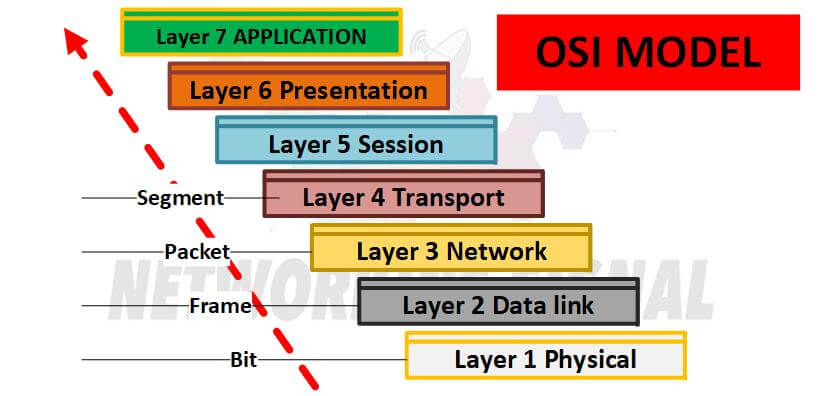
Here are the easy mnemonics to remember the OSI Model:
Please Do Not Throw Sausage Pizza Away (Physical, Data Link, Network, Transport, Session, Presentation, Application)
All People Seem To Need Data Processing (Application, Presentation, Session, Transport, Network, Data Link, Physical)
Annie’s Pet Sells Dogs Properly (Application, Presentation, Session, Transport, Network, Data Link, Physical)
A Poor Singer Takes Heedless Risks Performing (Application, Presentation, Session, Transport, Network, Data Link, Physical)
Hand-picked articles you might also find useful.
 Routing & Switching
 What is Multicast in Networking? Multicast is a networking protocol that allows for the efficient delivery of data…
 Routing & Switching
 Network traffic analysis is a crucial skill for any IT professional dealing with networks and security. TCPdump is…
 Routing & Switching
 A hub is one collision domain; each switch port is its own. A switch is one broadcast domain;…