
What is VOIP Voice Over Internet Protocol?
f you’ve ever had to deal with complicated telephone networks or outdated equipment, you know how frustrating it…
The anycast address is the type of IPv6 address that refers to any unicast address that is assigned to multiple hosts. Anycast addresses are assigned to multiple endpoints on the network, and traffic sent to an anycast address is routed to the nearest instance of that address.
Anycast addresses can be easily identified as they start with a binary value of 000 (bits 8-10). They are typically configured on multiple interfaces at different locations, which enables the same address to be used by multiple hosts.
In IPv6, anycast addresses are identified with the prefix FC00::/7. This is a reserved address range that can only be used for anycast addressing and not for unicast or multicast purposes.
Anycast addresses are not routable on the public internet but must be configured within a private network.
A bit pattern of 000 (bits 8-10) in the fourth nibble of the address can also be used to identify anycast addresses, as this is a reserved pattern for anycast addressing.
Here is an example of an anycast address in IPv6:
The working of an anycast address is simple.
When assigning an address to anycast, the network administrator must select a unique prefix for the anycast address. This is typically done by choosing a locally significant value that cannot be used as a unicast or multicast address in the same subnet.
Once the prefix has been chosen, it should be assigned to one or more interfaces in the network using a static configuration. This will enable any packets sent to the anycast address to be routed to the nearest instance of that address.
Hand-picked articles you might also find useful.
f you’ve ever had to deal with complicated telephone networks or outdated equipment, you know how frustrating it…
 Routing & Switching
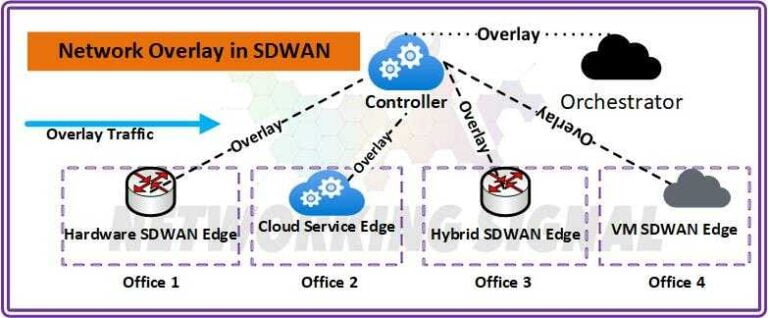
 What is Network Overlay in SDWAN? Network overlay in SDWAN is a technology that uses software-defined networking (SDN)…
A home lab server can be a great resource for the tech-savvy individual. It is not only useful…