
What is Azure Virtual network gateway (VNG)?
What is Azure Virtual network gateway (VNG)? A virtual network gateway is a software-based, fully managed multi-tenant gateway…
Cloud computing is the on-demand delivery of IT resources over the Internet with pay-as-you-go pricing. Instead of buying, owning, and maintaining physical data centers and servers, you can access technology services, such as computing power, storage, and databases, on an as-needed basis from a cloud provider like Amazon Web Services (AWS).
With cloud computing, you no longer need to make large upfront investments in hardware and spend a lot of time on the heavy lifting of managing that hardware.
Instead, you can provision exactly the right type and size of computing resources you need to power your newest bright idea or operate your IT department. You can access as much or as little as you need, almost instantly, and only pay for what you use.
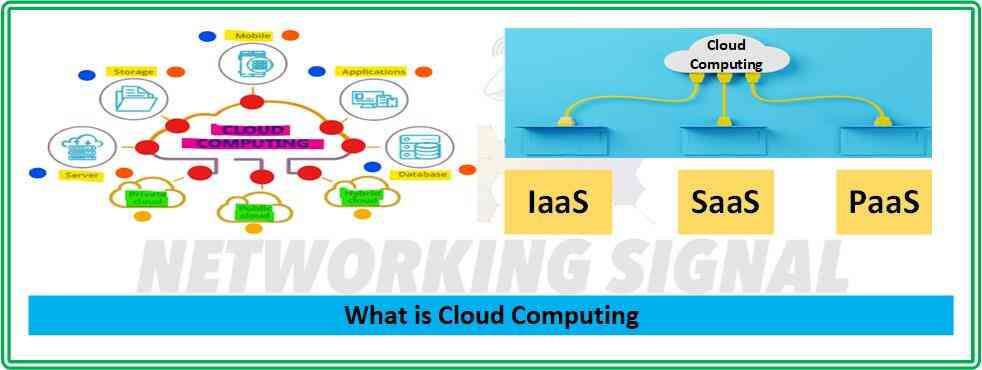
There are three types of cloud computing services:
IaaS is the most basic and fundamental type of cloud computing service. It provides access to computing resources such as virtual machines, storage, and networking. With IaaS, you rent IT infrastructure from a cloud provider on an as-needed basis.
PaaS is a more complete offering than IaaS. It provides computing resources and additional services that make it easier to develop, run, and manage applications in the cloud. These services typically include development tools, a deployment environment, an application server, a middleware stack, and other tools for managing cloud-based applications.
SaaS is the most complete form of cloud computing service. It provides access to software applications that are hosted in the cloud and managed by the provider.
With SaaS, you don’t have to install or manage any software on your own computers, you just use the applications over the internet. Popular examples of SaaS include webmail, customer relationship management (CRM), and human resource management (HRM) applications.
Cloud computing is a model for enabling ubiquitous, on-demand access to a shared pool of configurable resources (e.g., networks, servers, storage, applications, and services) that can be rapidly provisioned and released with minimal management effort or service provider interaction.
The five essential characteristics of cloud computing are:
On-demand self-service: A consumer can unilaterally provision computing capabilities, such as server time and network storage, as needed automatically without requiring human interaction with each service provider.
Broad network access: Capabilities are available over the network and accessed through standard mechanisms that promote use by heterogeneous thin or thick client platforms (e.g., mobile phones, tablets, laptops, and workstations).
Resource pooling: The provider’s computing resources are pooled to serve multiple consumers using a multi-tenant model, with different physical and virtual resources dynamically assigned and reassigned according to consumer demand.
There is a sense of location independence in that the customer generally has no control or knowledge over the exact location of the provided resources but may be able to specify location at a higher level of abstraction (e.g., country, state, or data center).
Rapid elasticity: Capabilities can be rapidly and elastically provisioned, in some cases automatically, to quickly scale out and rapidly released to quickly scale in. To the consumer, the capabilities available for provisioning often appear unlimited and can be purchased in any quantity at any time.
Measured service: Cloud systems automatically control and optimize resource use by leveraging a metering capability at some level of abstraction appropriate to the type of service (e.g., storage, processing, bandwidth, and active user accounts). Resource usage can be monitored, controlled, and reported providing transparency for both the provider and consumer of the utilized service.
The Working of Cloud Computing is divided into five layers.
These five layers work together to provide a complete cloud computing environment for users. The user devices connect to the cloud server and access the necessary applications, data, and services via the internet. The cloud management layer ensures that all the resources are managed efficiently and securely.
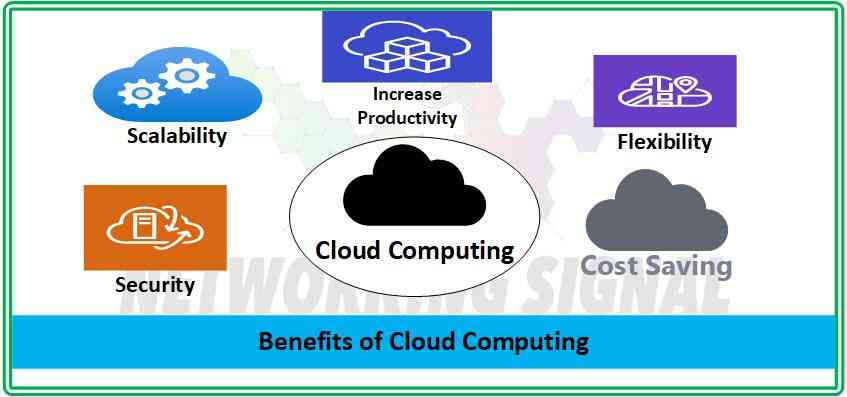
Cloud Computing offers numerous benefits over traditional computing environments. Some of the most prominent advantages include:
Although cloud computing offers numerous advantages, there are also some security implications that need to be considered when using the cloud.
See Also: Network Security Appliance: Benefits, Deploying Ways
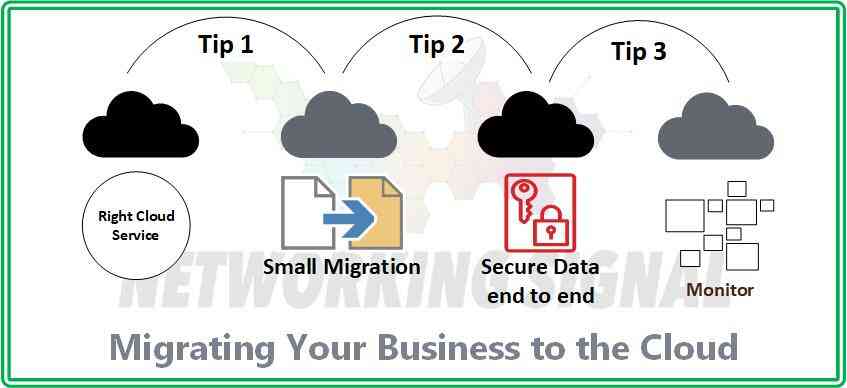
Migrating your business to the cloud can be a challenging process, but with the right strategies in place, it can be done successfully. Here are some tips for making the transition smooth and secure:
Choosing the right cloud provider for your business needs is essential in ensuring a secure, successful migration to the cloud. Here are some tips for selecting the best provider for you:
The future of Cloud Computing is bright, with the industry expected to grow exponentially in the coming years. The cloud will become increasingly important for businesses of all sizes as they rely on its scalability, flexibility, and cost-effectiveness. As technology continues to develop, we can expect even more innovations in the field of cloud computing such as artificial intelligence (AI), machine learning, and the Internet of Things (IoT).
Additionally, businesses will start relying more heavily on cloud storage for data backup and recovery. This will help ensure that their data remains secure and accessible in any emergency situation. All in all, the future of Cloud Computing is bright and has the potential to revolutionize the way businesses operate.
Hand-picked articles you might also find useful.
 Cloud
Cloud What is Azure Virtual network gateway (VNG)? A virtual network gateway is a software-based, fully managed multi-tenant gateway…
 Cloud
Cloud What is Azure Load Balancer ? The load balancer is one of the essential components in cloud computing…
 Cloud
Cloud What is Express Route Circuit? An Express Route circuit is a type of connection that allows you to…