
DHCP vs DNS — What Each One Does and Why You Need Both
DHCP hands out IP addresses; DNS turns names into addresses. They are unrelated services that people confuse constantly.…
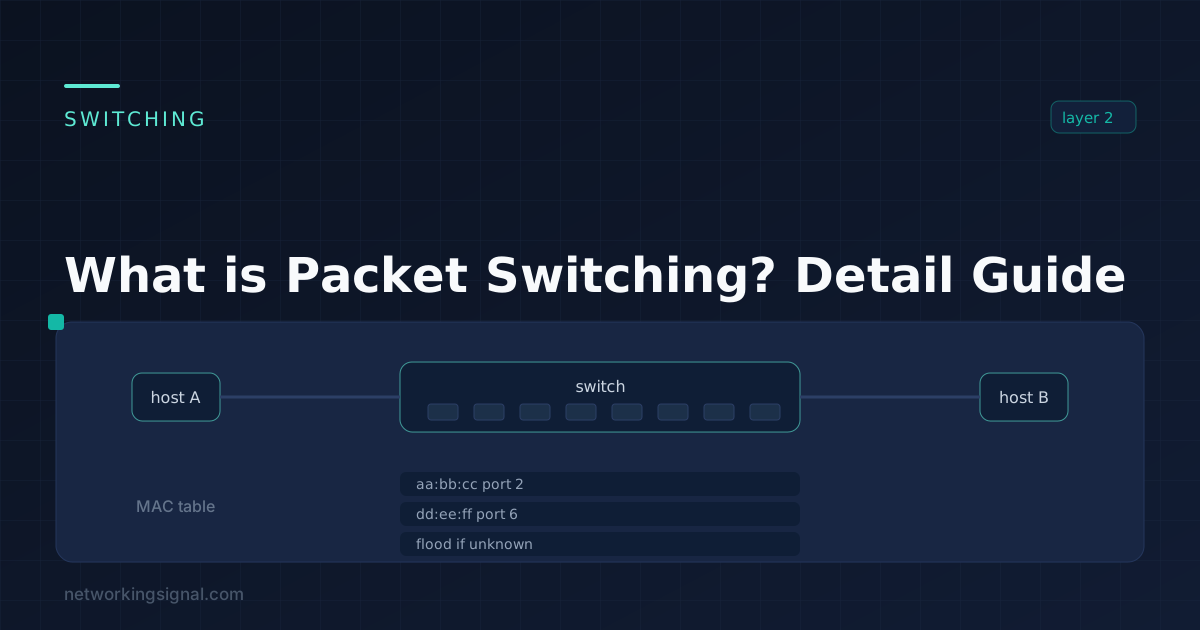
Packet switching is a process in which data is divided into packets and routed to its destination through networks. It involves the concept of sending and receiving data between two or more computers by dividing it into small chunks called packets, which are individually routed from source to destination over available pathways in the network.
Each packet contains both the sender’s address and the receiver’s address, as well as data. Each packet is then sent separately through the network to its destination, where it is reassembled into the original data stream. Packet switching enables efficient transmission of data across multiple networks because packets can be routed differently depending on the availability of pathways in the network.
Packet switching technology was developed in the early 1960s and was first used in the ARPANET project. Its original purpose was to provide a more effective way of sending messages between computers over a network, which would allow for faster transmission times than traditional circuit switching or analog systems. The first use of packet switching networks involved connecting two mainframe computers over a dedicated leased line.
Packet switching technology was later used in the development of the Internet and is still used today as one of its core technologies, allowing data to be sent between computers all over the world in packets.
There are two main types of packet-switching technologies:
Circuit-switched packet (CSP) is a connection-oriented approach to routing data packets in which a virtual circuit has to be established before data can be sent. It uses fixed-length packets, with each packet having a single purpose. The circuit-switched approach is more reliable as each packet travels along the same route and arrives at its destination in the order it was sent, but it is also more expensive due to the overhead associated with setting up the virtual circuit.
Datagram packets are connectionless, meaning that each data packet does not have a fixed destination and is sent independently of any other packet. This makes it less reliable than CSP, as the packets may be reordered or lost along the way. However, it does require less overhead as no virtual circuit needs to be established before data can be sent. Datagram packets are more suitable for applications that do not need guaranteed delivery such as streaming media.
The key features of a packet-switching network are:
Here are some use cases of packet-switching networks:
Layer 2 switches use MAC (media access control) addresses to direct packets. Each device on a network has a unique MAC address that is used to identify it and allow it to send and receive data. Layer 2 switches read the destination MAC address on a packet before forwarding it to its intended destination.
This makes them more efficient than routers as they do not need to consult a routing table before forwarding the packet. The switch can also use other fields in the packet header such as VLAN tags and QoS (quality of service) markings to further restrict where packets are sent.
Hand-picked articles you might also find useful.
 Routing & Switching
 DHCP hands out IP addresses; DNS turns names into addresses. They are unrelated services that people confuse constantly.…
 Routing & Switching
 EIGRP uses DUAL with feasible successors for near-instant failover; OSPF uses Dijkstra with a full link-state map and…
 Routing & Switching
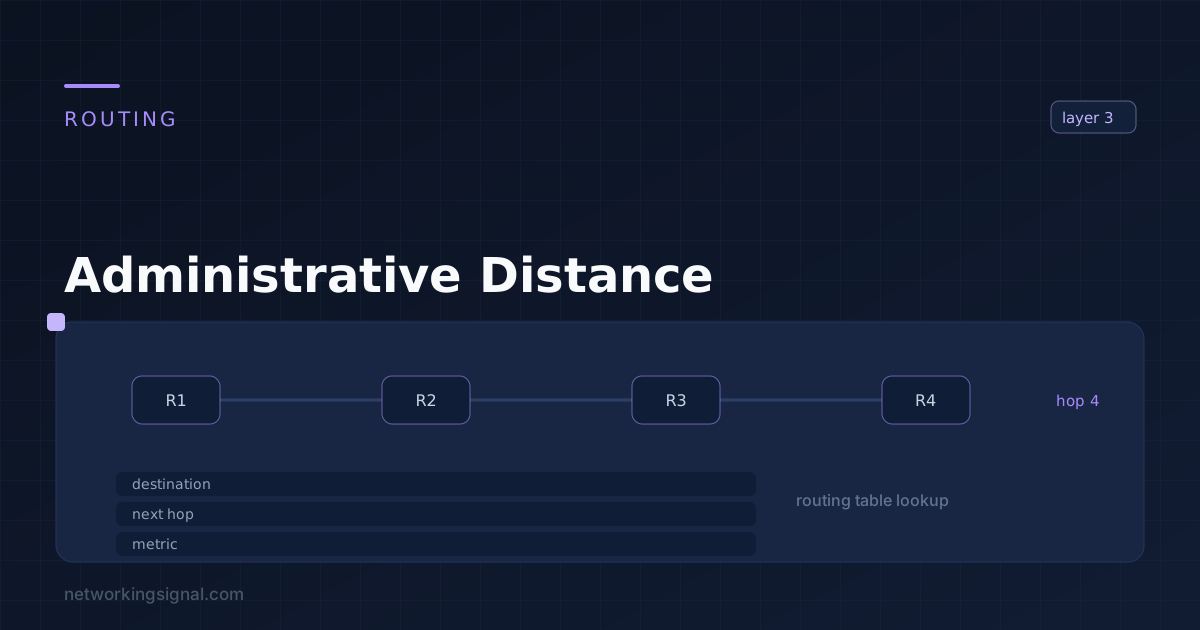
 Administrative distance decides which routing protocol a router believes when two of them offer the same route. Full…