
What is Server in Networking? | Types | Working |Benefits
What is Server in Networking? A server is a computer, or a software package, that provides functionality for…
The PVID (Primary VLAN ID) is the VLAN ID that is assigned to a port when it is initially configured. This can be changed later, but the PVID must always be specified when configuring a port.
Untagged VLANs are those that do not have a specific VLAN ID assigned to them. An untagged VLAN is typically used for management traffic or for devices that do not support VLANs.
The PVID does not need to match the untagged VLAN. However, if you want the port to be able to communicate with devices on the untagged VLAN, you will need to add a static entry for the untagged VLAN to the port’s VLAN configuration.
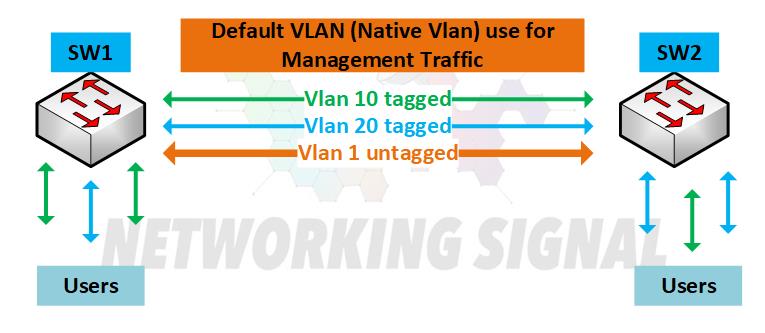
Untagged traffic is typically found on an access VLAN. An access VLAN is a VLAN that is used to provide connectivity for a single host or device. Access VLANs are typically untagged because only a single host or device is connected to the VLAN.
A trunk VLAN is a VLAN that is used to carry traffic for multiple VLANs. Trunk VLANs typically do not support untagged traffic because they are carrying traffic for multiple VLANs.
There are a few reasons why you might want the PVID to match the untagged VLAN.
The PVID can be configured using the following command:
switch(config)# interface <interface>
switch(config-if)# switchport mode access
switch(config-if)# switchport access vlan <vlan id>
switch(config-if)# end
Where <interface> is the name of the interface you want to configure and <vlan id> is the ID of the VLAN you want to assign to the port.
Hand-picked articles you might also find useful.
What is Server in Networking? A server is a computer, or a software package, that provides functionality for…
What is IP Phone? IP Phone is a phone set that uses Voice over Internet Protocol (VoIP) technology…
 Routing & Switching
 Which is the Below Function Performed by the Network layer? Explanation The following functions are performed by the…