
Socket vs Port: Detail Explained
In the world of computer networking, sockets, and ports are two essential concepts that everyone should be familiar…
A logical interface is an abstract representation of a communication port or circuit. It represents the way in which data is transmitted between two devices and can be thought of as a ‘virtual’ connection between two points. Logical interfaces are often used to simplify complex network architectures and can provide flexibility and scalability.
A logical interface can be implemented in a number of ways, depending on the needs of the network.
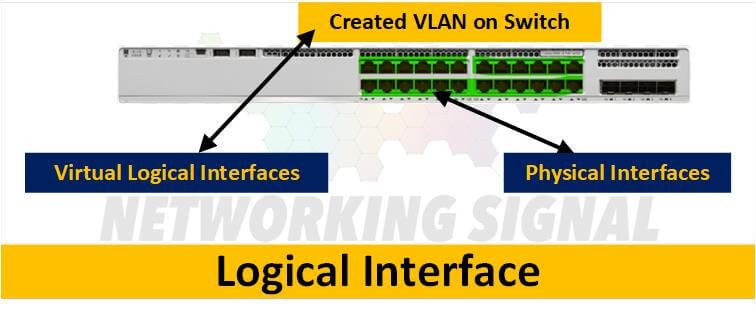
Logical interfaces are important because they provide a way to connect devices that would otherwise be unable to communicate with each other.
There are a number of benefits associated with logical interfaces, including:
Increased flexibility: Logical interfaces can be implemented in a variety of ways, which provides increased flexibility for the network.
Improved scalability: Logical interfaces can be added or removed from the network as needed, which improves scalability.
Cost savings: Logical interfaces can sometimes be implemented using existing infrastructure, which can lead to cost savings.
Improved performance: Logical interfaces can provide improved performance by reducing latency and increasing bandwidth.
One of the main drawbacks of logical interfaces is that they can be complex to configure and manage. In addition, logical interfaces can sometimes be less reliable than physical interfaces.
Yes, VLAN (virtual LAN) is a logical interface that can be created on a physical network. VLANs are often used to segment a network into multiple virtual networks.
No, the logical interface does not have an IP address. But the logical interface can be assigned an IP address if it is implemented as a VPN connection. The IP address is associated with the physical interface.
Hand-picked articles you might also find useful.
 Routing & Switching
 In the world of computer networking, sockets, and ports are two essential concepts that everyone should be familiar…
 Routing & Switching
 Star topology explained — how it works, why it is the standard for every modern LAN, its real…
 Routing & Switching
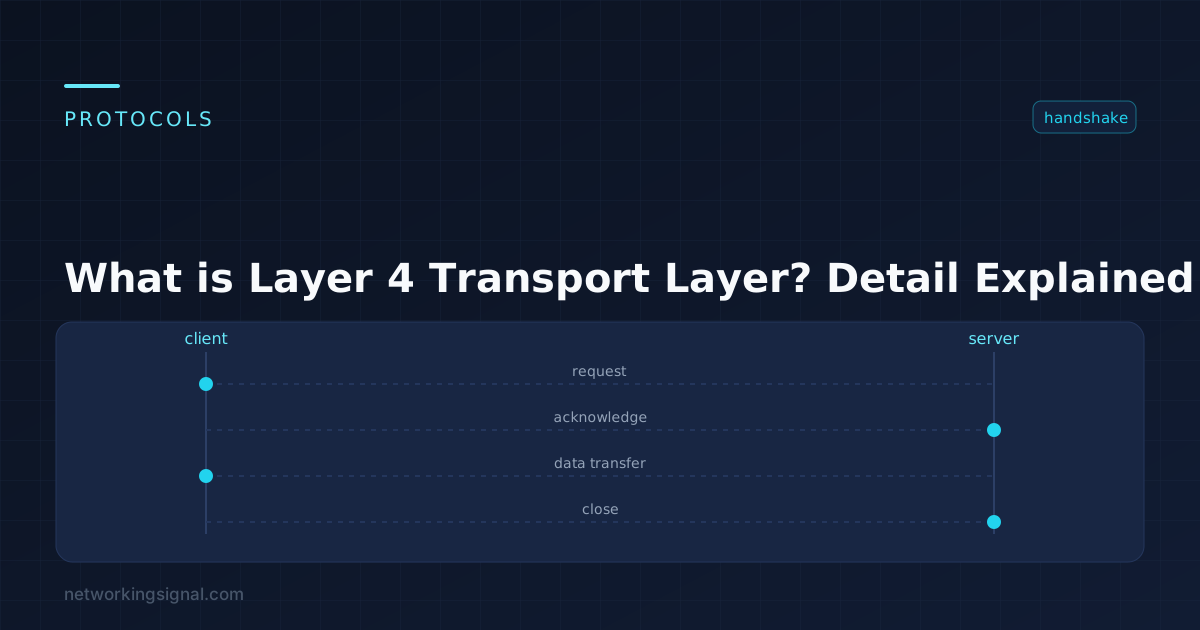
 What is Layer 4 Transport Layer? The Layer 4 Transport Layer is the fourth layer of the Open…