
7 Best Wifi Extender For StarLink in 2025
Are you struggling to achieve seamless, high-speed WiFi throughout your home with Starlink satellite internet? As more households…
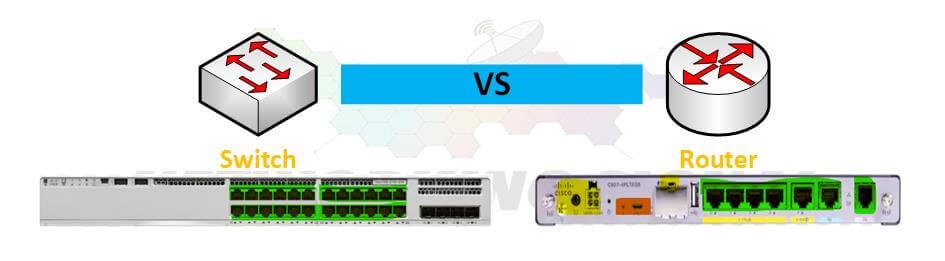
Both routers and switches are used to connect devices on a network so that they can communicate with each other.
Routers and switches are two of the most common devices used in computer networks. They are both essential for connecting devices on a network and allowing them to communicate with each other. However, there are some key differences between routers and switches that you should be aware of.
A router is a computer networking device that forwards data packets between computer networks. Routers use a variety of protocols to connect to different networks, including the Internet.
Routers are typically used to connect networks that are not physically connected to each other, such as the Internet and a local area network (LAN). Routers can also be used to connect two or more LANs together.
A switch is a computer networking device that connects devices on a single computer network by forwarding data packets between the devices. Switches use a variety of protocols to connect devices on a network, including Ethernet and Fibre Channels.
Switches are typically used to connect devices on the same LAN. For example, you might use a switch to connect your computer to a printer or another computer on the same LAN.
Here are some of the key differences between routers and switches:
Here are 14 key parameters based on which routers and switches differ from each other:
Function: Routers act as a connection point for two or more logical subnets, which do not have a physical connection. Switches, on the other hand, connect various devices on the same physical network.
Speed: Routers work at a lower speed as compared to switches.
Ease of Configuration: It is comparatively easier to configure a switch as compared to a router.
Number of Ports: A router has a lesser number of ports as compared to a switch.
Location: Routers are used for long-distance communication while switches are used at the local level.
Ports: Routers have WAN ports while switches have LAN ports.
Protocols: Routers use various protocols for communication such as TCP/IP, while switches use protocols such as Ethernet.
Scalability: Switches are more scalable as compared to routers.
Management: It is easier to manage a switch as compared to a router.
Security: Routers provide better security as compared to switches.
VLANs: Switches support VLANs while routers support VRF.
Bandwidth: Switches have a higher bandwidth as compared to routers.
Traffic control: Routers can control traffic while switches cannot.
Cost: Switches are less expensive as compared to routers.
Related Articles:
Hand-picked articles you might also find useful.
 Networking Gears
 Are you struggling to achieve seamless, high-speed WiFi throughout your home with Starlink satellite internet? As more households…
 Networking Gears
 Are you tired of dealing with dead zones and slow internet speeds in your home, despite having Starlink’s…
 Networking Gears
 Are you tired of dealing with weak Wi-Fi signals and dead zones in your home or office? The…