
How To Identify Ethernet Cable?
Ethernet cables are critical components in setting up wired computer networks and establishing connectivity between devices. Correctly identifying…
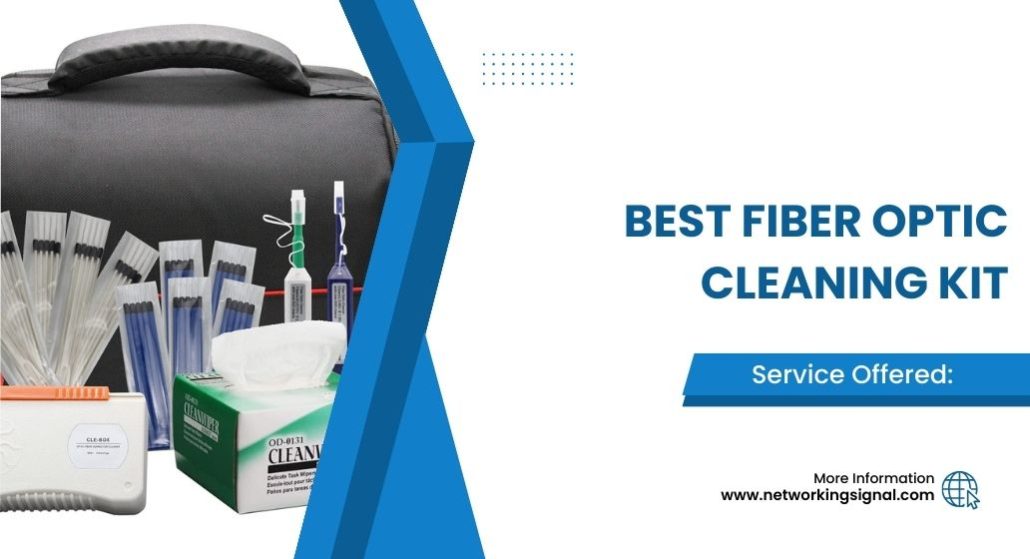
The D YEDEMC kit ($59.89) is the best fiber cleaning kit because it includes both tools the job needs: a cassette and two cleaner pens.
That distinction is the whole thing. A cassette cleans the end face of a connector you are holding. A pen reaches down inside an adapter or a transceiver port, where a cassette cannot go. Buy only one and half your connections stay dirty.
And if you clean fiber regularly, buy an inspection scope. Contamination is around one micron and completely invisible. Without a scope you are not cleaning, you are hoping. The Jonard FIM-400 ($178.50) is the one to get.
Working order is always inspect, clean, inspect.
| Product | Item | Type | Cleans | Price |
|---|---|---|---|---|
 | D YEDEMC Complete KitBest overall | Cassette + 2 pens | Both types | $59.89 |
 | Yicizol MK-200 KitBest value kit | Cassette + 2 pens | Both types | $52.89 |
 | groword 4-in-1 Pen KitBudget pick | Pens and swabs | Adapters | $29.99 |
 | One-Click Cleaner 2-PackCheapest pens | 2 pens | Adapters | $18.99 |
 | TRUE CABLE MTP/MPO CleanerBest for MPO | MPO pen | MTP and MPO | $34.65 |
 | Fibershack 2.5mm Pen + CapsBest for SC and ST | Pen + dust caps | SC, ST, FC | $24.99 |
 | Jonard FIM-400 ScopeEssential companion | 400x microscope | Inspection | $178.50 |
The light carrying core of a single mode fiber is 9 microns across. A human hair is around 70. A speck of dust is between 2 and 20.
So a single particle of ordinary household dust, sitting on the end face, can cover most of the core. It blocks light directly, and it scatters more of it back down the fiber as reflection. The link either fails outright or, more often, runs with errors and retransmissions that make it look like a bandwidth problem.
Contamination is also invisible without magnification. There is no version of holding it up to the light that works. It is one of the causes behind a red LOS light on a fibre router, though a loose connector is far more common.
Worse, dirt transfers. Plug a dirty connector into a clean adapter and now both are dirty. Do that across a patch panel and one contaminated patch cord degrades every port it touched.
This decides which kit is right for you.
A cassette is a box holding a reel of cleaning tape. You wipe the end face of a connector across the exposed tape and advance it. Fast, cheap per clean, and the right tool for a patch cord in your hand. It cannot reach inside anything.
A pen has a narrow probe that pushes into an adapter, a bulkhead port or an SFP transceiver, then rotates a cleaning tip against the end face inside. It reaches where a cassette cannot, and it costs more per clean.
Every real fiber connection has both halves. A cord goes into an adapter, and the adapter has a connector waiting on the other side. Cleaning only the cord leaves the other half dirty and immediately recontaminates the cord. That is why a kit with both is the right purchase.
Dry cleaning, meaning tape or a pen with no solvent, handles most contamination and leaves no residue.
Oil from fingerprints does not come off dry. For that, use isopropyl alcohol at 99 percent on a lint free wipe, then immediately follow with a dry pass. Alcohol left to evaporate on an end face leaves its own residue, which is worse than what you started with.
Never use standard rubbing alcohol at 70 percent. The other 30 percent is water and additives that leave deposits.
The industry procedure has three steps and skipping the first and last is what wastes everyone’s time.
Inspect first, because a scratched or cracked end face cannot be cleaned and needs replacing. Clean. Then inspect again to confirm it worked, because a pen can smear a contaminant rather than lift it and a scope is the only way to know.
A scope costs more than the cleaning tools, and if you touch fiber more than occasionally it is the single most useful item on this page.
The most complete kit here, and the only one that covers every case without a second purchase.
The cassette handles 2.5 mm and 1.25 mm ferrules, so SC, FC, ST, LC, MU, D4 and MPO connectors on a patch cord, for around 550 cleans.
Two pens cover the other half. The 2.5 mm pen cleans adapter mounted SC connectors in both UPC and APC polish, and the 1.25 mm pen cleans LC and MU adapters and ferrules, each rated for over 800 cleans.
What raises it above the pen only kits is the consumables. Two replacement tapes for the cassette, a bottle of alcohol, thirty anti static lint free wipes and a storage box, all in a carry bag.
The anti static point is not marketing. A charged end face attracts airborne dust as fast as you clean it off, which is why a wipe that generates static makes the problem worse rather than better.
Rough arithmetic: 550 cassette cleans plus 1,600 pen cleans for $59.89 is roughly three cents each, and replacement tapes bring it down further.
The alcohol bottle is small and will need replacing before anything else does. Buy 99 percent isopropyl by the bottle if you do wet cleaning regularly.
Buy this if you want one purchase that covers everything except inspection.
The same combination as the D YEDEMC for seven dollars less, with fewer consumables in the box.
Cassette plus both pen sizes, covering LC, MTP, MPO, SC, FC and ST connectors, ferrules and adapters. That is the full range of what you will meet in a normal install.
The cleaning tape is high density textile fiber with strong anti static properties, and Yicizol makes a specific claim worth noting: it delivers a clean end face without alcohol or solvents.
That matters more than it sounds. Dry cleaning is faster, leaves no residue, and removes the risk of alcohol drying on the end face and depositing exactly what you were trying to remove. Keep alcohol for fingerprints and use dry for everything else.
Anti static properties are called out for the tape itself, which prevents the cleaned end face pulling dust straight back on.
Around 550 cleans from one tape, replaceable cores, and the cassette is a manual lightweight design that needs no power.
The saving against the D YEDEMC comes from the consumables. Fewer wipes, no alcohol bottle, no spare tapes. If you already have lint free wipes, this is the better buy.
Buy this if you already have wipes and alcohol and want the tools alone.
Thirty dollars for both pen sizes plus swabs, in a box. For occasional work on a home fibre install this is enough.
Covers LC, SC, FC, ST, MU, MTP, MPO, D4 and DIN connectors, in both UPC and APC polish, with over 800 cleans per pen.
The audible click is the feature that makes a pen worth using. It confirms the cleaning tip has completed its rotation against the end face. Without it you are guessing whether the mechanism actually cycled, which is the most common way a pen clean fails.
The swabs are single use and handle stubborn contamination in one pass, useful for the occasional connector a dry pen cannot shift.
What you give up is the cassette. Pens can clean a patch cord connector, but it is slower and costs more per clean than wiping across tape. If most of your work is patch cords rather than adapters, the kits above are better value despite costing more.
The ergonomic pen shaped body is genuinely easier to control in a cramped rack than a boxy cassette.
It is a good complement to a cassette you already own, and a reasonable starting point if you only ever clean a handful of connections.
Buy this for occasional cleaning of adapters and transceiver ports on a budget.
Nineteen dollars for both pen sizes, roughly a cent per clean. The cheapest way to have the right tool on hand.
The 1.25 mm pen cleans LC and MU ferrules, the 2.5 mm handles SC, FC and ST, and both work with SFP transceivers and either polish type.
Two details lift this above the usual budget pen. The 180 degree rotating head sweeps the full end face rather than pressing on one spot, which is where cheaper mechanisms fall short. And the transparent window shows how much cleaning tape is left, so a pen does not quietly run out mid job in a rack.
The guide cap is removable, so the same pen cleans a patch cord connector directly or reaches inside an adapter. The extendable probe gets into high density panels where a fixed body will not fit.
Micro woven fabric with a finer strand structure than standard cleaners, rated at over 95 percent effectiveness, dry, with no fluids needed.
Each pen weighs 22 grams and a safety lanyard is included, which sounds trivial until you drop one behind a rack. Anti static design and RoHS compliant.
The limit is that these are pens only, with no cassette, no swabs and no wipes.
Buy these to keep in a tool bag so the right pen is always to hand.
If you run 40 or 100 Gbps trunks, you have MPO connectors, and a standard 2.5 mm pen will not touch them.
MPO packs 8, 12 or 24 fibers into a single rectangular ferrule. One dirty fiber out of twelve can take the whole link down, which makes cleaning both more important and more difficult than on a single fiber LC.
This cleans all three fiber counts, in UPC and APC polish, and both male and female connectors. The male and female point matters: MPO uses guide pins, so the two are physically different and many cleaners only handle one.
The dual position mechanism is why it covers both. One position for pinned connectors, one for unpinned, in a single tool rather than two.
Over 95 percent cleaning effectiveness in one click, over 500 cleans per unit, with an anti static design to protect against electrostatic discharge.
The narrow profile reaches MPO adapters in tightly spaced cassettes, which is where these connectors actually live.
Buy this only if you have MPO. If everything you touch is LC and SC, it is the wrong tool. TRUE CABLE backs it with a lifetime warranty and it is RoHS compliant.
Buy this only if you have MPO trunks for 40 or 100 Gbps links.
A single 2.5 mm pen with something no other kit here includes: dust caps, five clear for SC and five red for ST.
Caps are the cheapest fiber maintenance there is, and the most often skipped. An uncapped connector on a rack floor or in a drawer collects dust continuously, and every clean is undone the moment you set it down again. Capping is what makes a clean stay clean.
The pen cleans SC, ST and FC connectors at over 800 single click cleans, using a fabric cleaning material that needs no solvent for most jobs.
Fibershack makes a sensible argument about consumables: brand name cleaners cost noticeably more per clean, and for most work a lower cost pen produces the same result. Where you should not economise is the scope, because a poor image leads to wrong decisions.
The protection container is a real consideration. Cleaning pens get damaged rolling loose in a tool bag, and a damaged tip smears rather than cleans.
The limit is scope. 2.5 mm only, so no LC, which is now the most common connector. Pair it with a 1.25 mm pen or a full kit.
Fibershack comes from Pacific Satellite, who have installed commercial CATV systems since 1989.
Buy this for legacy SC and ST installs where dust caps matter as much as the pen.
This does not clean anything. It tells you whether the cleaning worked, which is the step everybody skips and the reason links stay intermittent after three attempts.
400x magnification through an achromatic lens. Achromatic matters: it corrects colour fringing, so a scratch looks like a scratch instead of a smear of contamination. At 400x you can see whether a defect sits on the core, where it kills the link, or out on the cladding, where it usually does not matter.
Both adapters are included, 2.5 mm for FC, SC and ST and 1.5 mm for LC, covering everything you are likely to inspect.
Integrated laser safety filters are not optional equipment. Infrared laser light in a live fiber is invisible and can damage your eye, and you cannot tell by looking whether a fiber is dark. The filter is what makes inspection safe.
LED illumination for long battery life, a rubber protective cover, three AAA batteries and a nylon carrying case included.
At $178.50 it costs three times the best cleaning kit here. Cheaper 400x scopes exist at $52 and $72, and they work, but the optics are noticeably softer and it is harder to judge borderline cases.
Buy this if fiber is part of your job. For a one off home install, borrow one or buy one of the cheaper scopes.
Buy this if fiber is part of your job and you need to know a clean actually worked.
Every time before mating, without exception. Even a factory sealed connector straight from the bag can carry contamination, and a connector that was clean yesterday collects dust the moment it sits uncapped. Cleaning takes seconds and diagnosing a dirty link takes hours.
No. Cotton sheds fibers onto the end face, adding contamination. Use lint free wipes or a purpose made cleaner, and if you use alcohol make it 99 percent isopropyl followed immediately by a dry pass so nothing is left to evaporate on the surface.
A cassette holds a reel of tape you wipe a connector across, which is fast and cheap for patch cords in your hand. A pen has a probe that reaches inside adapters, bulkheads and transceiver ports. You need both, because every connection has both halves.
If you work with fiber regularly, yes. Contamination is around one micron and completely invisible without magnification, so without a scope you cannot tell a successful clean from a failed one, and you cannot tell contamination from a permanent scratch.
Typically 800 cleans per pen and around 550 per cassette tape, with MPO cleaners nearer 500. Cassette tapes are replaceable, so the body keeps working. Both work out at a few cents per clean, which is negligible against one site visit.
Yes, for the dry cleaners here, which all list both polish types. APC has an angled end face and UPC is flat, but the cleaning tape or tip conforms to either. What must match is the connection itself, because an APC connector will not mate with a UPC one.
Buy the D YEDEMC kit at $59.89. It is the only kit here with a cassette, both pen sizes and the consumables, which means one purchase covers patch cords and adapters alike.
If you already own wipes, the Yicizol MK-200 at $52.89 gives you the same tools for less. On a tight budget, the One-Click Cleaner 2-pack at $18.99 is remarkable value at about a cent per clean.
Add the TRUE CABLE MPO cleaner only if you run 40 or 100 Gbps trunks. And if fiber is part of your work, budget for the Jonard FIM-400, because inspect, clean, inspect is the procedure, and without a scope you are only doing the middle step.
Disclosure: Networking Signal is a participant in the Amazon Services LLC Associates Program. We earn a commission on qualifying purchases made through links on this page, at no additional cost to you. Prices shown were accurate at the time of writing and may change. Never look into a fiber connector or an inspection scope without a laser safety filter, and treat every fiber as live unless you have confirmed otherwise.
Hand-picked articles you might also find useful.
 Cables
 Ethernet cables are critical components in setting up wired computer networks and establishing connectivity between devices. Correctly identifying…
 Cables
 Lightning strikes can have a significant impact on underground infrastructure, including cables used for data transmission. Cat6 ethernet…
 Cables
 The best Ethernet cables for Xbox Series X and Series S in 2026. The Cable Matters Cat 6…