
Load Balancer vs Rate Limiting: 5 Key Differences
There are two common ways to deal with excessive traffic on a website: load balancing and rate limiting…
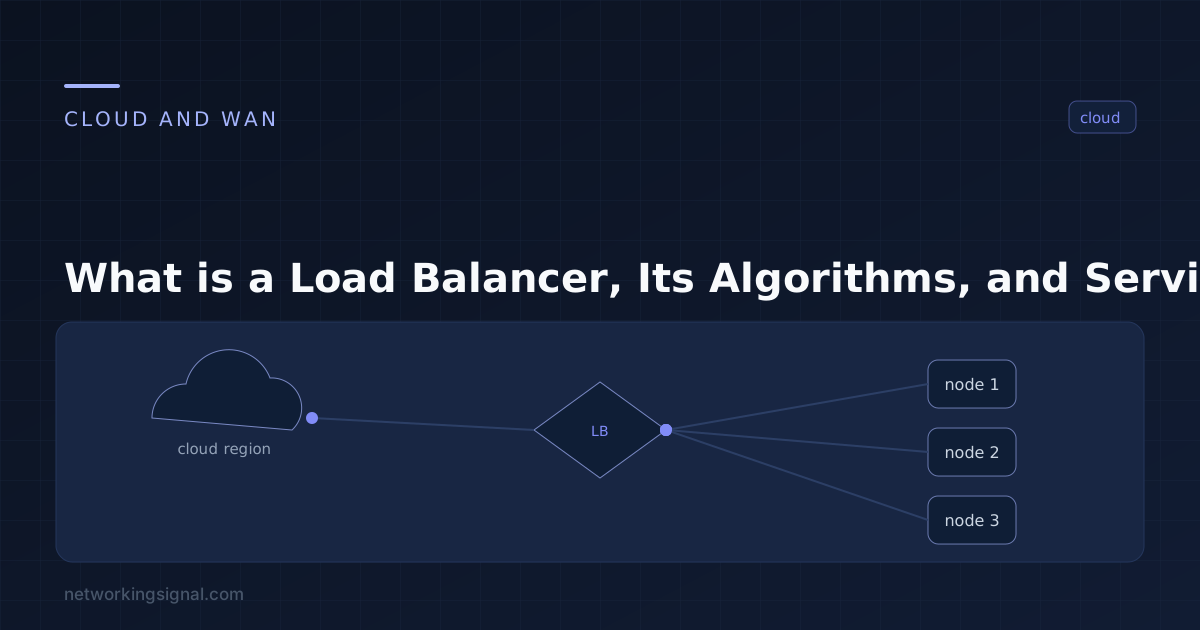
A load balancer is a device that evenly distributes network traffic among a group of servers. This ensures that no single server is overwhelmed by requests and reduces the risk of downtime. Load balancers are often used in web applications to improve performance and availability.
The best load balancer for web applications will depend on your specific needs and requirements. Some factors to consider include the number of servers, the type of traffic, and the budget. Some popular load balancers for web applications include NGINX, HAProxy, and F5 BIG-IP.
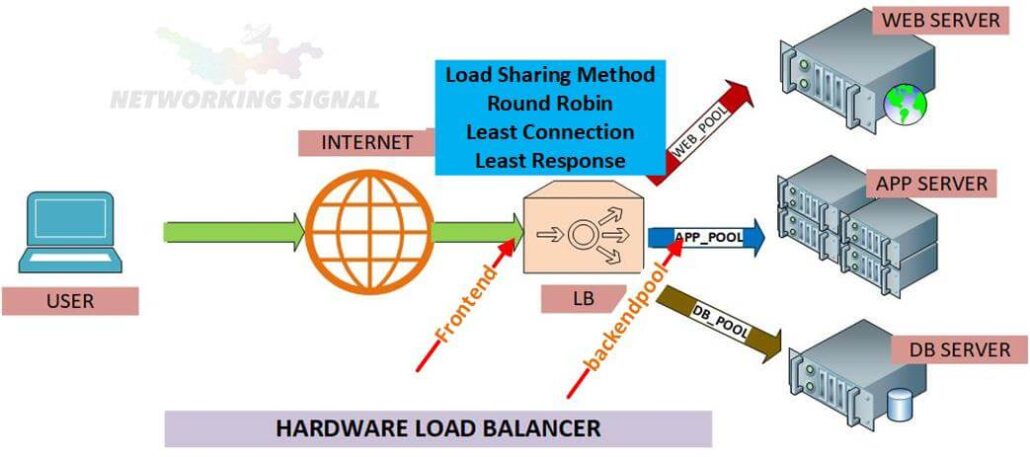
There are three main components of a load balancer: the listener, the server group, and the health check.
The listener is the component that receives incoming traffic and forwards it to the server group. The listener can be configured to use various protocols such as HTTP, HTTPS, or TCP.
The server group is a collection of servers that the load balancer will distribute traffic to. The server group can be static or dynamic. Static server groups are manually configured by the administrator while dynamic server groups are automatically created and updated based on conditions such as availability or performance.
The health check is a component that monitors the health of the servers in the server group. If a server fails the health check, it will be removed from the server group and traffic will no longer be forwarded to it. This ensures that only healthy servers are used to handle the traffic.
There are various algorithms that can be used to distribute traffic among the servers in a server group. Some of the most common include round robin, least connections, and least response time.
Round robin is the simplest form of load balancing and involves forwarding traffic to each server in the server group in turn. This algorithm is best suited for applications with a small number of servers.
The Least connection is an algorithm that forwards traffic to the server with the fewest active connections. This algorithm is best suited for applications with a large number of servers and can help to prevent overloading a single server.
The Least response time is an algorithm that forwards traffic to the server with the quickest response time. This algorithm is best suited for applications where performance is critical.
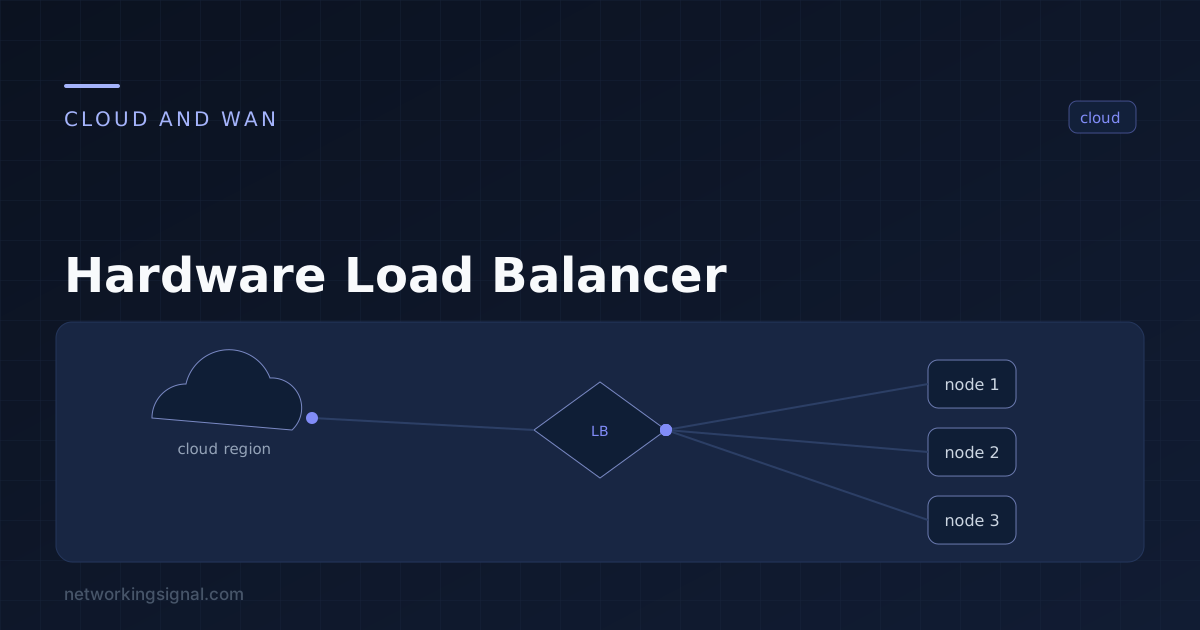
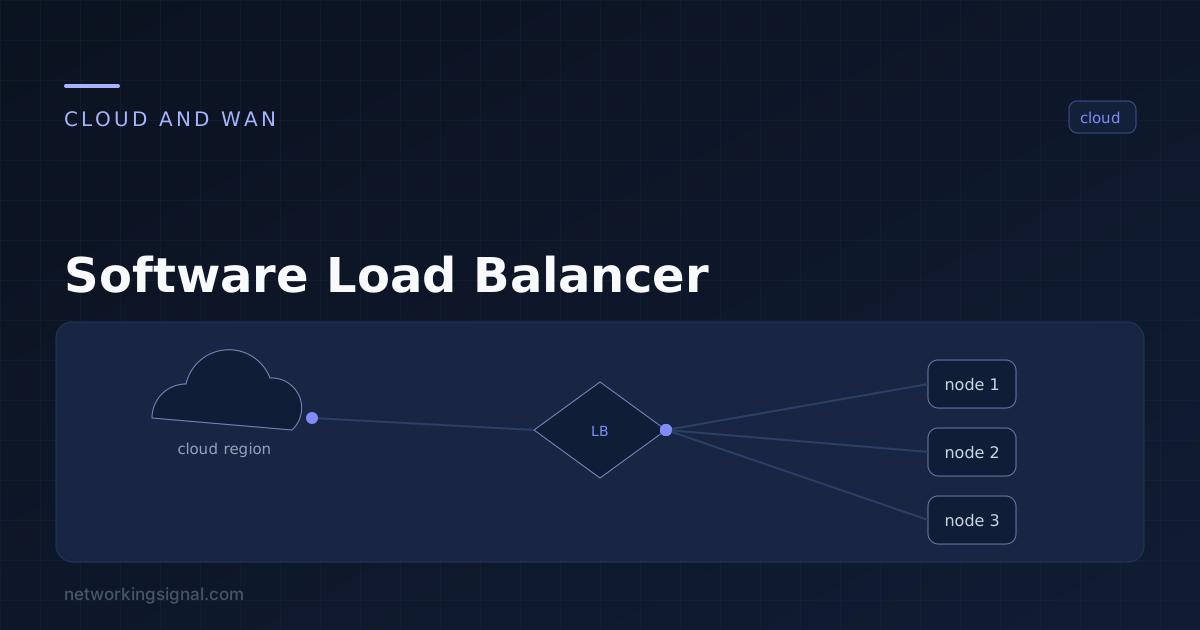
There are two main methods of load balancing: hardware and software. Hardware load balancers are physical devices that are installed in the network. Software load balancers are software-based and can be run on a dedicated server or virtual machine.
Hardware load balancers are more expensive but offer better performance and scalability. They are best suited for large-scale applications with high traffic levels.
Software load balancers are less expensive and can be more easily deployed and configured. They are best suited for small to medium-scale applications.
There are various load-balancing services available that can be used to improve the performance and availability of web applications. These services provide a layer of abstraction on top of the underlying load balancer and can be used to dynamically update the server group based on conditions such as availability or performance.
Some popular load-balancing services include AWS ELB, Azure Load Balancer, and Google Cloud Load Balancer.
AWS ELB is a cloud-based load-balancing service that can be used to improve the availability and performance of web applications. It offers a Layer 4 Load Balancer that can distribute traffic based on the source IP address, a Layer 7 Load Balancer that can distribute traffic based on the URL path, and a Global Load Balancer that can distribute traffic across multiple regions.
Azure Load Balancer is a cloud-based load balancing service that offers a Layer 4 Load Balancer and a Layer 7 Load Balancer. It can be used to improve the availability and performance of web applications.
Google Cloud Load Balancer is a cloud-based load-balancing service that offers a Global Load Balancer. It can be used to improve the availability and performance of web applications.
When choosing a load balancer, it is important to consider the requirements of the application and the environment in which it will be deployed. Load balancers can be hardware- or software-based, and each has its own benefits and drawbacks.
Hardware load balancers are more expensive but offer better performance and scalability. They are best suited for large-scale applications with high traffic levels.
Software load balancers are less expensive and can be more easily deployed and configured. They are best suited for small to medium-scale applications.
Hand-picked articles you might also find useful.
 Load Balancing
 There are two common ways to deal with excessive traffic on a website: load balancing and rate limiting…
 Load Balancing
 What is Hardware Load Balancer ? A hardware load balancer is a physical device that helps to distribute…
 Load Balancing
 What is Software Load Balancer ? A software load balancer is a type of load balancer that uses…
2 responses to “What is a Load Balancer, Its Algorithms, and Services?”
[…] load balancer is one of the essential components in cloud computing. It helps to distribute the workloads evenly […]
[…] are the key differences between load balancers and rate […]