
Ansible for Network Engineers: A Working Setup From Scratch
From an empty folder to a playbook you can run against real switches. The four files, the connection…

Network automation is the process of automating the configuration, deployment, and management of network devices. This includes tasks such as configuring routers and switches, provisioning virtual networks and firewalls, setting up VPNs, deploying new services or applications, monitoring performance metrics, and troubleshooting issues. Network automation simplifies many tedious manual processes by utilizing scripts and automation tools to help quickly and efficiently manage an organization’s network.
The two main types of network automation are:
NetDevOps is an approach to network administration that combines traditional networking methodologies with the principles of software development automation, like agile workflows and Continuous Integration/Continuous Delivery (CI/CD). It enables faster service deployment by automating tasks such as configuring network elements, testing changes, and pushing out updates.
DevOps is an operations methodology that applies software development practices such as version control, automation testing, and continuous delivery to the process of managing networks. It helps organizations quickly deploy new services by automating common tasks like package installation, server configuration, and monitoring.
Network automation is playing an increasingly important role in network management. As organizations strive to increase the speed and reliability of their networks, automation can help make this possible. Automation can reduce manual labor and allow for faster fault resolution, improved scalability, better resource utilization, improved security, and reduced operational costs.
Automation also helps manage and monitor network performance, ensuring that networks are available when and where needed. Automation can also reduce the time required to deploy new applications or services, as well as provide real-time information on system performance metrics. Furthermore, automation tools can be used to detect potential problems before they become critical issues.
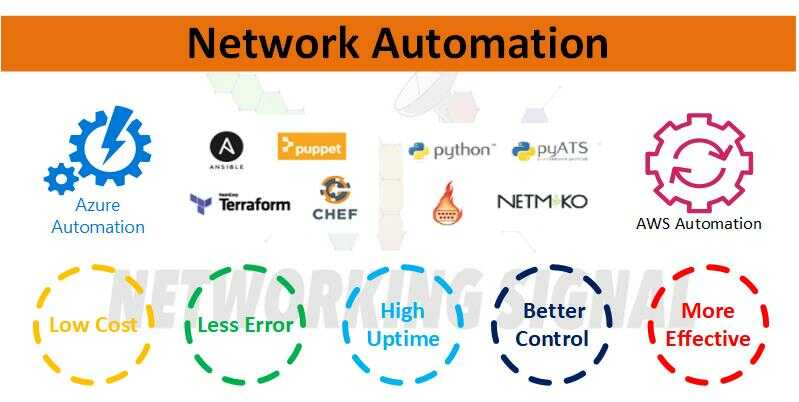
There are numerous benefits of network automation, including:
Overall, network automation can help organizations increase efficiency and reduce costs while improving reliability, agility, and security.
There are many challenges that come with network automation, such as:
Despite these challenges, network automation can bring many benefits and help organizations increase efficiency, reduce costs, and improve security.
There are a variety of network automation tools available, including:
The two primary drivers that support the need for network automation are:
Agility: Network automation helps organizations respond quickly to changing demands or customer requirements with minimal effort.
Cost Reduction: Automation can help reduce operational expenses by eliminating the need for manual labor or expensive hardware upgrades.
Network automation is critical for organizations to stay competitive, reduce costs and improve security. Automation can help streamline mundane tasks such as patching or configuration management and enable teams to focus on more strategic initiatives.
Automation can also provide consistency in deployments, configurations, and processes to ensure that the network remains secure and reliable. Additionally, automating complex tasks can reduce the risk of human error, increase efficiency and improve scalability.
Hand-picked articles you might also find useful.
 Network Automation
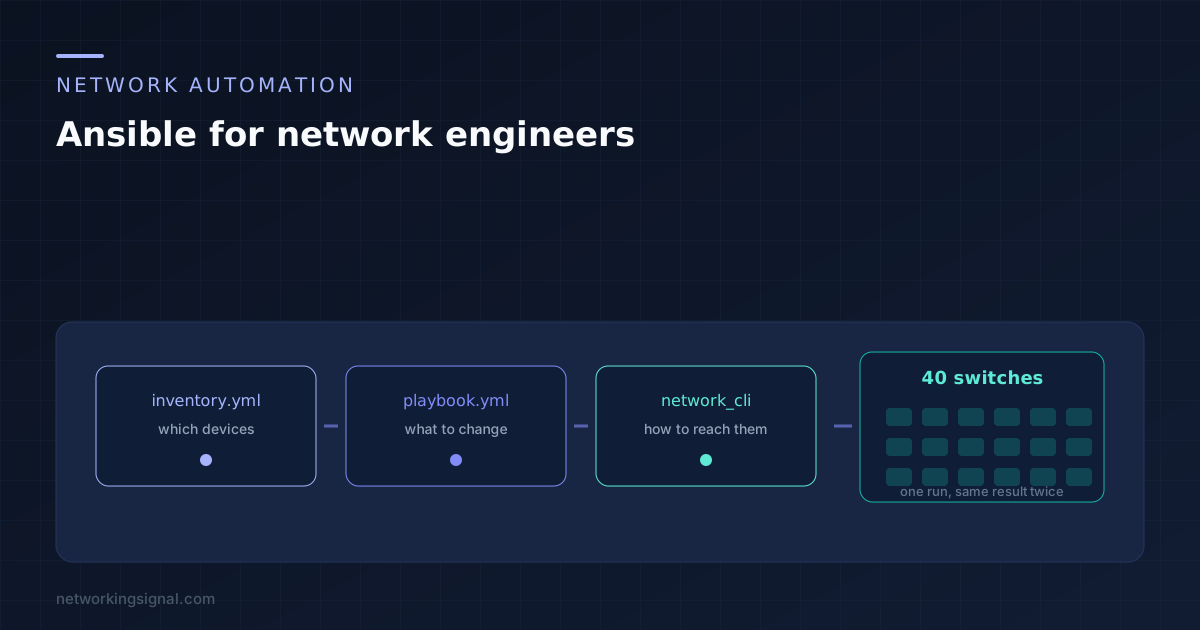
 From an empty folder to a playbook you can run against real switches. The four files, the connection…
 Network Automation
 The restore is the obvious reason. The diff is the valuable one. Tools compared, the five steps of…
 Network Automation
 What is Data Serialization in Networking? Data serialization is the process of converting structured data into a format…