
Administrative Distance — Default Values, How It Works and How to Change It
Administrative distance decides which routing protocol a router believes when two of them offer the same route. Full…
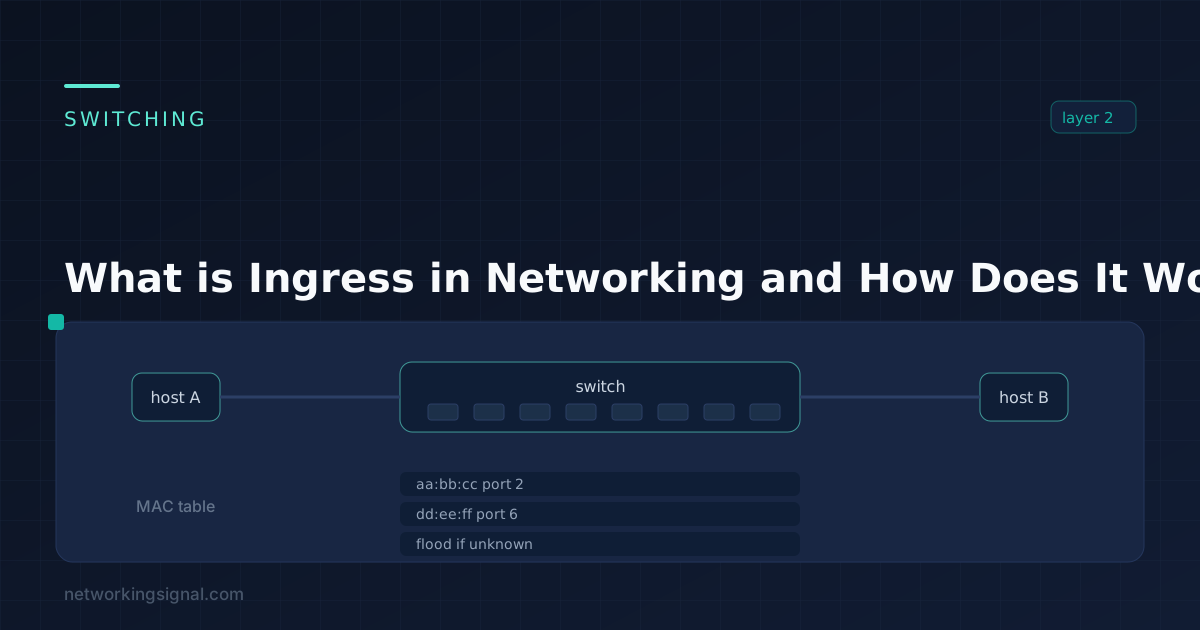
In computer networking, Ingress is the term used to describe data that enters a network. It is typically used in reference to data that flows into a router or switch from an external source. In contrast, egress refers to data that leaves a network.
There are many examples of ingress in computer networking, including:
The working of Ingress is best explained with an example.
Similarly, when you send an email, the data that enters the network from your computer is ingress. The data is then routed through the network to the recipient’s mailbox. Ingress can also refer to the act of accessing a network.
There are many benefits of using Ingress in computer networking, including:
There are some disadvantages of using Ingress in computer networking, including:
In networking, ingress is typically measured in terms of bandwidth. This is the amount of data that can flow into a network in a given period of time. Ingress is usually measured in bits per second (bps).
Ingress plays an important role in cyber security. This is because it can help to control what data is allowed into a network. By controlling ingress, administrators can prevent unauthorized data from entering a network. This can help to protect networks from attacks and reduce the risk of data breaches.
Hand-picked articles you might also find useful.
 Routing & Switching
Administrative distance decides which routing protocol a router believes when two of them offer the same route. Full…
 Routing & Switching
What is Syslog in Networking? Syslog is a protocol for logging system events on network devices such as…
 Routing & Switching
Access port vs trunk port explained — the real difference is VLAN tagging, not device count. Includes Cisco…