
What is Server in Networking? | Types | Working |Benefits
What is Server in Networking? A server is a computer, or a software package, that provides functionality for…
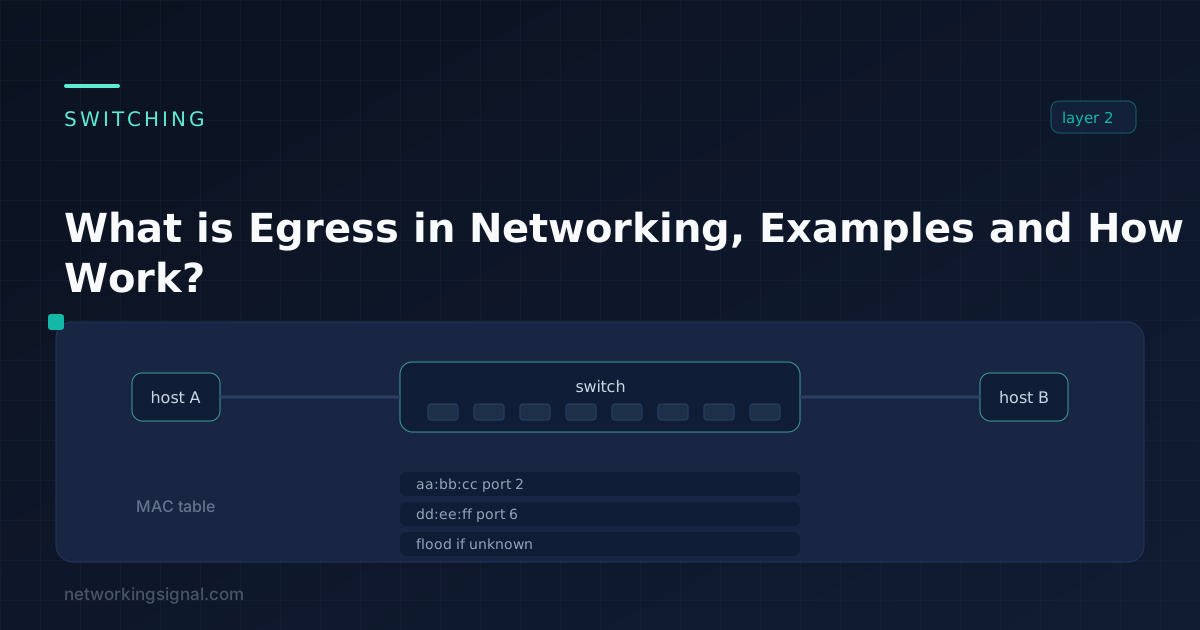
Egress is the data that flows out of a network or system. In computer networking, egress refers to the outgoing traffic from a local area network (LAN). It is the opposite of ingress, which is incoming traffic.
Egress can also refer to:
Egress filtering is a security measure that controls what traffic is allowed to leave a network. It can be used to prevent sensitive data from being exfiltrated by an organization, for example.
Egress can be used in a variety of contexts, but some common examples include:
In computer networking, egress refers to the data that flows out of a network or system. This can include outgoing traffic from a local area network (LAN), email messages being sent from a system, or files being downloaded from a server.
If you wanted to set up egress filtering on your home network, you would need to configure your router to only allow certain types of traffic to leave the network. For example, you might want to block all traffic except for web browsing and email.
There are several benefits of using egress filtering, including:
There are some potential disadvantages of using egress, which include:
Egress is typically measured in terms of bandwidth. This is the amount of data that can flow out of a network in a given period of time.
Egress plays an important role in cyber security. It can be used to prevent sensitive data from being exfiltrated, and it can also help to improve the security of a network by blocking malicious traffic.
Hand-picked articles you might also find useful.
 Routing & Switching
 What is Server in Networking? A server is a computer, or a software package, that provides functionality for…
 Routing & Switching
 Ping sends ICMP Echo Requests and times the replies. Here is what each part of the output means,…
 Routing & Switching
 What is PPPoE? PPPoE (Point-to-Point Protocol over Ethernet) is a network protocol used to establish a direct connection…