
What is TelNet and How to Configure it on a Router or Switch?
What is TelNet? Telnet is a network protocol used on the Internet or local area networks to provide…
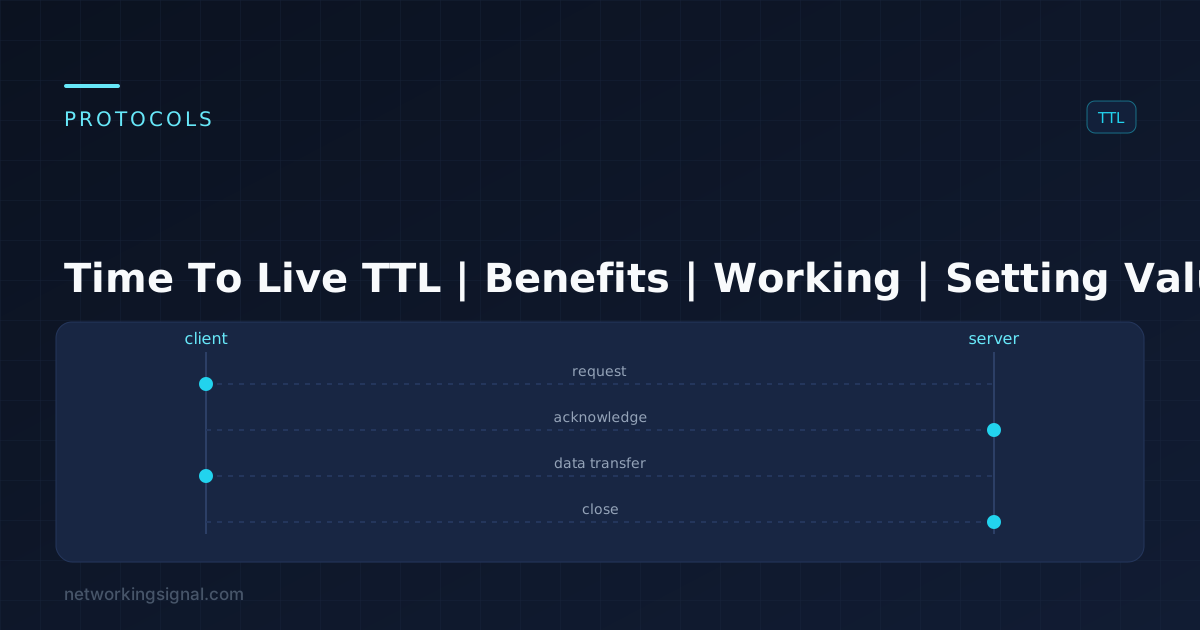
Time To Live (TTL) is a setting that determines how long data can remain in the system or network before it becomes obsolete. It’s a parameter used in computer networking and other distributed systems to limit the time period of data storage or transmission. TTL is typically used to prevent routing loops, reduce the possibility of security breaches, and optimize network performance.
Time To Live (TTL) provides numerous advantages to computer networks and other distributed systems. Some of the main benefits include:
Time To Live (TTL) does have a few drawbacks. These include:

The working of Time To Live (TTL) is quite simple. When data is transmitted from one computer to another, the TTL field of the packet header is set with a numerical value. As this data travels across networks and routers, the value of this field decreases by 1 each time it passes through a router.
Once the TTL reaches 0, the packet is discarded and the data will no longer reach its intended destination. This helps to ensure that packets are not delivered more than once, as they would otherwise create a loop in the network.
In addition, it also ensures that old or outdated information is not kept unnecessarily in the system, thus ensuring that only fresh data is processed at all times. This helps to optimize network performance and reduce the possibility of security breaches.
See Also: How to Time To Live TTL Issue?
Time To Live (TTL) is an important parameter used in computer networking and other distributed systems. By ensuring that only fresh data is processed, TTL helps to improve network performance, reduce routing loops, minimize latency, and reduce the risk of security breaches.
For these reasons, it is recommended to use TTL for all types of networks and distributed systems to ensure optimal performance and security.
The TTL value should be set according to the specific needs and requirements of each system. Generally speaking, it is recommended to keep the TTL at its default setting unless necessary changes are needed.
It is also important to remember that different systems may require different time limits for their data. Therefore, it is important to consult an experienced professional or do extensive research in order to select the optimal TTL value for each system.
Time To Live (TTL) values can be set in a variety of ways. Generally speaking, they will be determined by the system administrator or an experienced professional who is knowledgeable about the specific requirements of each system.
In addition, TTL values can also be set using various software tools available today. Such tools allow users to select the optimal TTL value for each system in order to optimize performance, reduce latency, and minimize security risks.
In conclusion, TTL is a useful tool to keep track of when data expires so that you don’t accidentally send out old information.
Hand-picked articles you might also find useful.
 Routing & Switching
 What is TelNet? Telnet is a network protocol used on the Internet or local area networks to provide…
 Routing & Switching
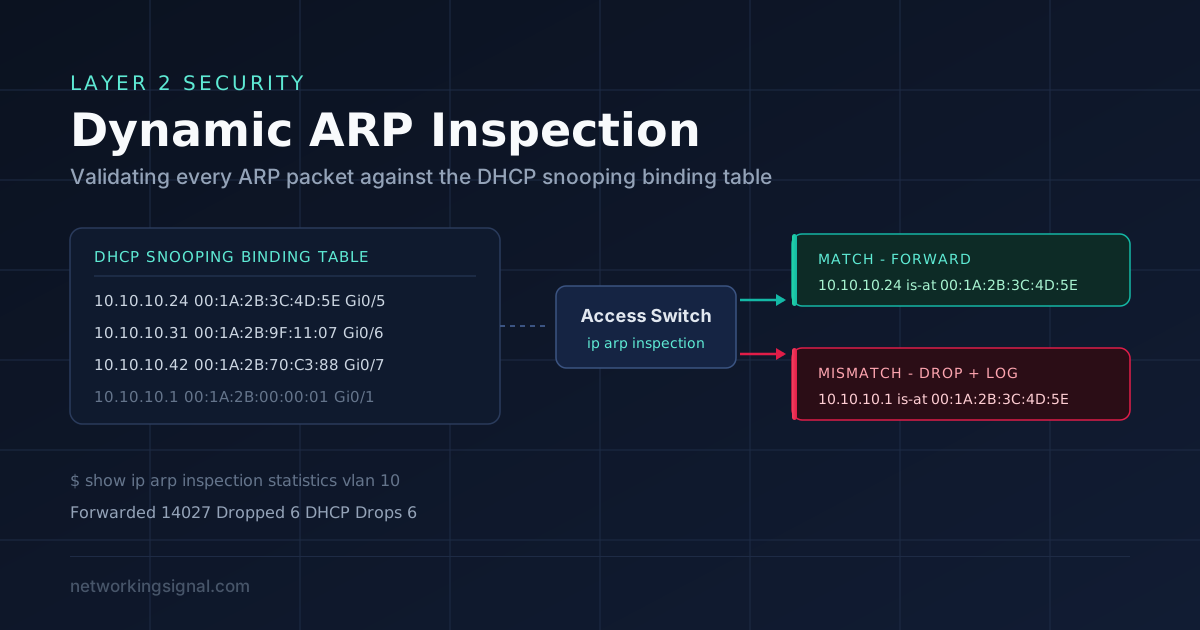
 DAI validates every ARP packet against the DHCP snooping binding table and drops the forged ones, stopping ARP…
 Routing & Switching
 What are Edge Devices in SD-WAN? Edge devices are components of a Software-Defined Wide Area Network ( SD-WAN…