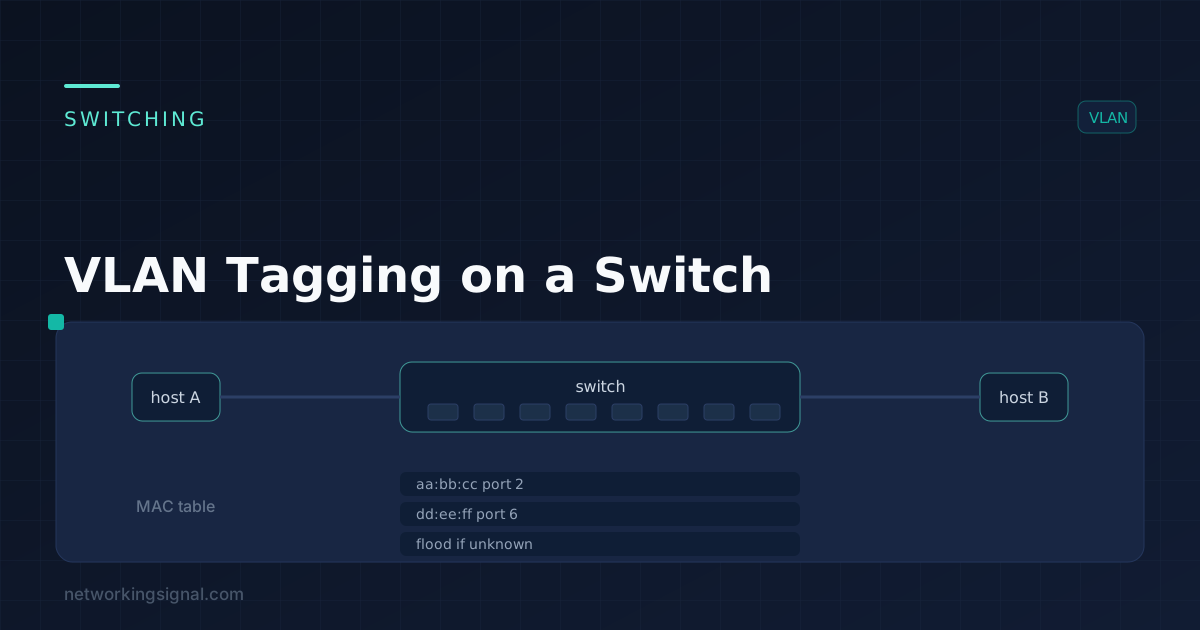
VLAN Tagging on a Switch — How to Create and Assign VLANs
How 802.1Q tagging works, creating VLANs, assigning access ports, configuring trunks, and the allowed-VLAN trap that takes trunks…
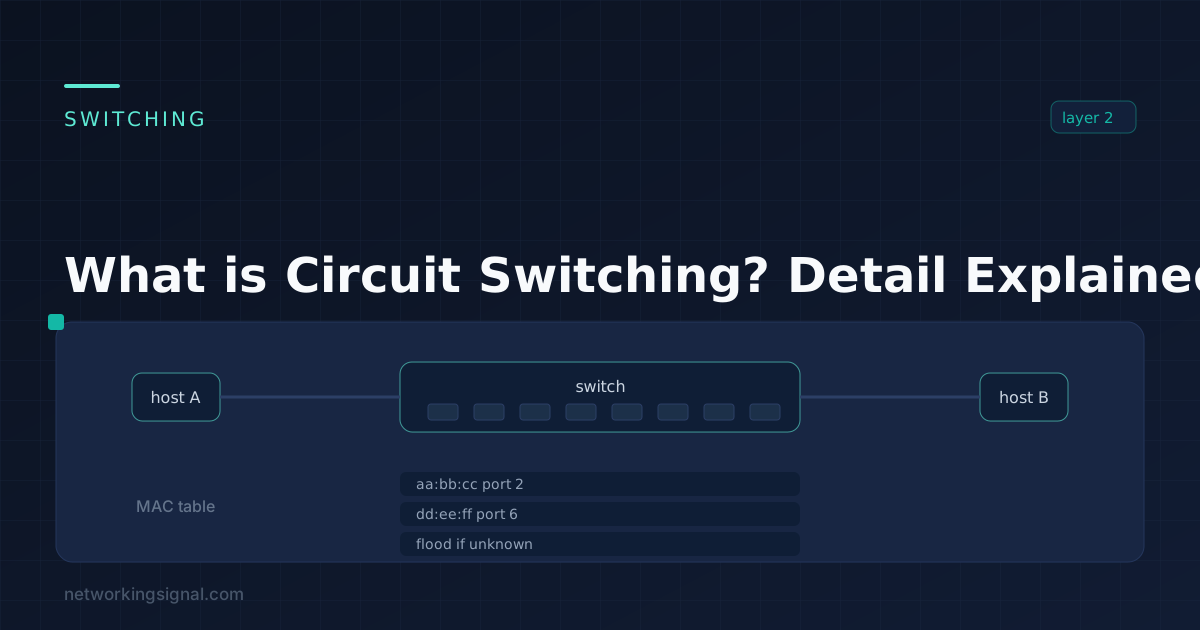
In circuit switching, a dedicated physical connection is established between the two nodes before communication can take place. This connection, or circuit, is then maintained for the duration of the communication session. Once the session is finished, the circuit is dismantled.
There are two main types of circuit switching:
Time-Division Multiplexing (TDM): In TDM, each connection is allocated a certain amount of time on the physical link. This time is then divided into time slots. TDM is commonly used in voice communication because it provides guaranteed quality of service.
Frequency-Division Multiplexing (FDM): In FDM, each connection is allocated a certain frequency on the physical link. This frequency is then divided into frequency bands. FDM is commonly used in data communication because it can provide a higher data rate than TDM.
Here are the three main advantages of circuit switching:
There are also three main disadvantages of circuit switching:
There are four main phases in circuit switching:
Circuit switching is commonly used in voice communication because it provides guaranteed quality of service. It is also used in data communication, but it is not as common because it can be less efficient than other methods, such as packet switching.
Circuit switching is different from packet switching in several ways:
1. In circuit switching, a physical connection is established before communication can take place. In packet switching, communication can take place without a physical connection.
2. In circuit switching, the resources are dedicated to each individual connection. In packet switching, the resources are shared among all the connections.
3. In circuit switching, the quality of service (QoS) is guaranteed because of the dedicated resources. In packet switching, the QoS is not guaranteed because of the shared resources.
4. In circuit switching, the latency is predictable because of the dedicated resources. In packet switching, the latency is variable because of the shared resources.
5. In circuit switching, the connection is reliable because of the dedicated resources. In packet switching, the connection is not necessarily reliable because of the shared resources.
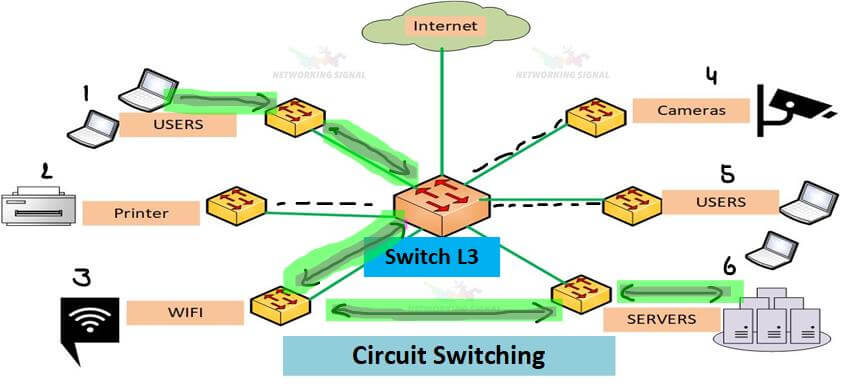
Circuit switching works by establishing a physical connection between two nodes before communication can take place. This connection is then maintained for the duration of the communication session.
The resources are dedicated to each individual connection, which means that the quality of service is guaranteed.
However, this also means that the circuit-switched network is not very flexible because it can only support a limited number of connections at any given time. In addition, the infrastructure required for circuit switching is expensive.
One example of a circuit-switched network is the public switched telephone network (PSTN). The PSTN is a voice communication network that uses circuit switching to connect callers. Another example of a circuit-switched network is an integrated services digital network (ISDN). ISDN is a data communication network that uses circuit switching to connect devices.
Yes, switches and routers are used in circuit switching. Switches are used to establish the physical connection between two nodes. Routers are used to route the data over the physical connection.
Circuit switching is important for wide area networks (WANs) because it provides guaranteed quality of service. WANs are often used to connect different sites in a company or organization, and they need to be able to support real-time applications, such as voice and video.
Circuit switching is the only technology that can provide guaranteed quality of service for real-time applications. This is because the resources are dedicated to each individual connection, which means that the quality of service is not affected by other traffic on the network.
Hand-picked articles you might also find useful.
 Switching
 How 802.1Q tagging works, creating VLANs, assigning access ports, configuring trunks, and the allowed-VLAN trap that takes trunks…
 Switching
 What are the Basic Issues of MAC Addresses on Switch? A MAC address is a unique identifier assigned…
 Switching
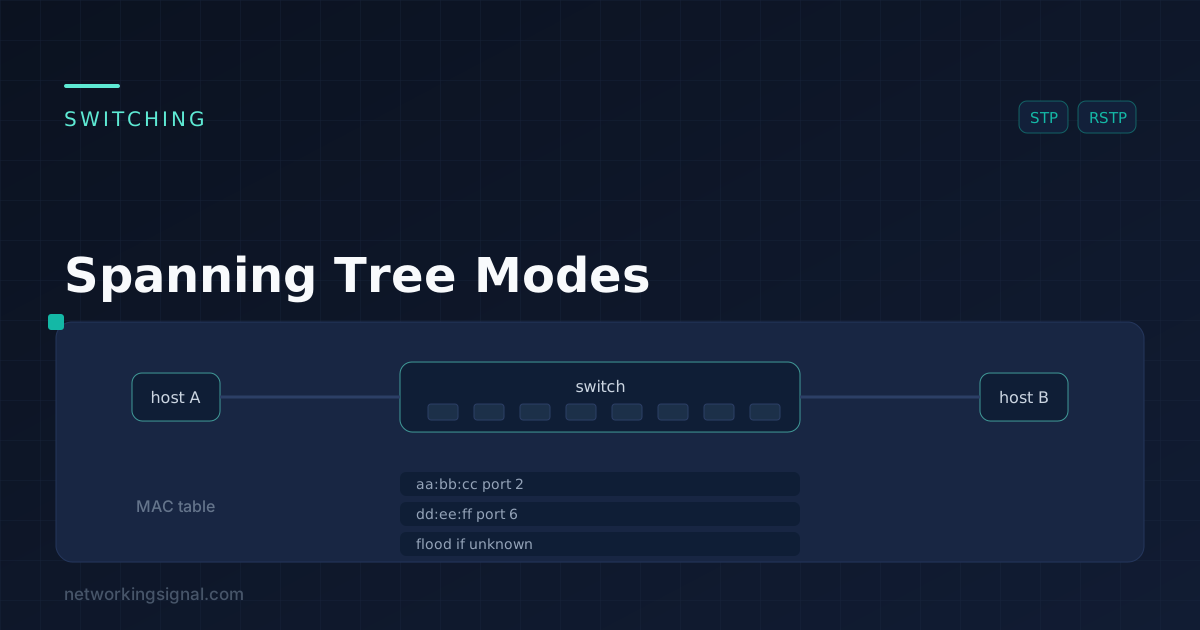
 Spanning Tree Modes Spanning Tree Modes are essential protocols used in computer networking to prevent loops and broadcast…
One response to “What is Circuit Switching? Detail Explained”
[…] https://www.networkingsignal.com/circuit-switching/point-to-point […]