
What is Network Traffic, its Types, and How is it Measured?
What is Network Traffic? In computing, network traffic is the amount of data sent and received by a…
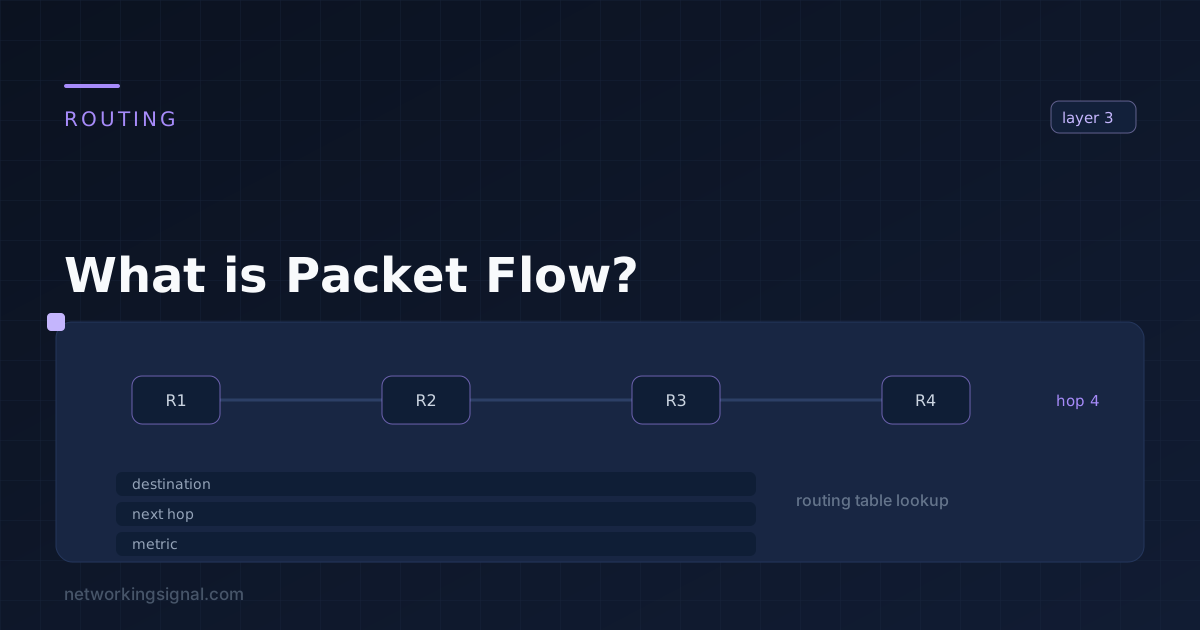
Packet flow (also called IP routing) is the process of forwarding data packets from a source to a destination on the Internet or an internal network. The packet flow aims to enable data transfer between two endpoints without having to send each packet along a single path. Instead, each packet is sent along multiple paths and can be delivered in any order.
To ensure a successful packet flow, routers must analyze the information contained in each packet and decide which route is most efficient for it. The router is responsible for selecting the optimal route between two points, using several factors such as time delay, cost of transmission, availability of resources, etc.
Packet flow is essential for the efficient functioning of modern-day networks. Without packet flow, data would be sent along inefficient routes, leading to delays and bottlenecks in data transmission. By enabling packets to be sent along multiple paths, packet flow ensures that data reaches its destination as quickly and seamlessly as possible.
In addition, packet flow helps to maintain network security by allowing the router to examine each packet and reject any unwanted packets. This is particularly important in preventing malicious attacks such as malware or phishing.
Finally, packet flow can help optimize bandwidth usage across a network. By distributing data packets along multiple paths, the load on individual routers and connections can be reduced, allowing for smoother data transmission.
Packet flow can also help manage the quality of service, ensuring that more important packets are given priority over less important ones. In this way, packet flow helps to optimize network performance and reduce congestion.
When a packet arrives at a router, the router performs the following steps to forward the packet to its destination:
These steps are repeated for every packet that the router receives. With packet flow, the router can identify the most efficient route for each packet, ensuring fast and reliable data transfer.
When a packet arrives at a switch, the switch takes the following steps to forward the packet:
These steps are repeated for every packet that the switch receives, allowing it to efficiently route packets to their intended destinations.
Routers and switches both use packet flow to forward packets, but there are some key differences between the two.
Hand-picked articles you might also find useful.
 Routing & Switching
 What is Network Traffic? In computing, network traffic is the amount of data sent and received by a…
 Routing & Switching
 Administrative distance decides which routing protocol a router believes when two of them offer the same route. Full…
 Routing & Switching
 You can pass the CCNA on free software. Here is what the exam actually tests, the four ways…