
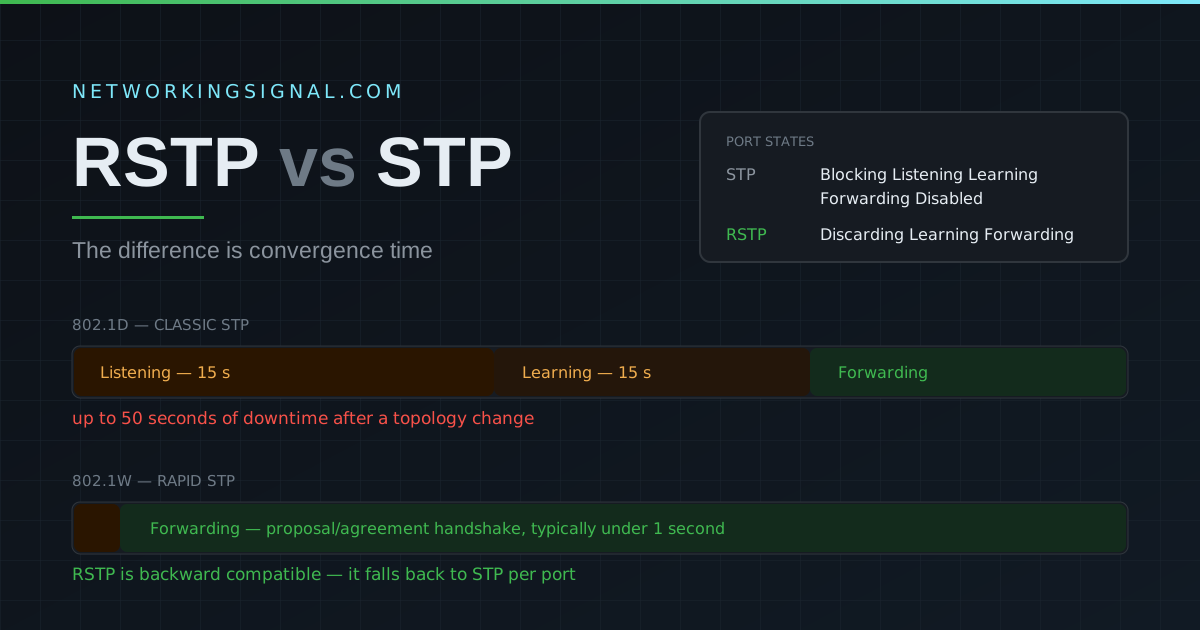
RSTP vs STP — Key Differences Explained
RSTP vs STP — complete comparison of Rapid Spanning Tree Protocol vs Spanning Tree Protocol. Convergence time, port…
Ports are the places where data enters and leaves a computer or network device. They are like virtual doorways that allow information to flow in and out. Ports are numbered so that computers can keep track of the different types of data that are flowing through them.
There are two main types of ports:
Physical ports are the actual places where data enters and leaves a device. They are usually located on the back or side of the device.
Virtual ports are not physical places, but rather they are software-defined locations where data can enter or leave. Virtual ports are often used to connect two or more devices that are not physically next to each other.
Ethernet port: This is the most common type of physical port. It is used to connect devices to an Ethernet network.
USB port: This is a physical port that is used to connect devices such as keyboards, mice, and printers to a computer.
Firewire port: This is a physical port that is used to connect high-speed devices such as digital cameras and camcorders to a computer.
Serial port: This is a physical port that is used to connect devices such as modems and printers to a computer.
Parallel port: This is a physical port that is used to connect some types of printers to a computer.
Virtual private network (VPN) port: This is a virtual port that is used to connect a computer to a VPN.

A port number is a way to identify a specific port. It is a number that is assigned to a port. Port numbers are used by computers to keep track of the different types of data that are flowing through them.
The most common port numbers are in the range of 0 to 1023. This range is reserved for well-known ports. Some of the most well-known port numbers are 22 (SSH), 23 (Telnet), 80 (HTTP), and 443 (HTTPS).
Hand-picked articles you might also find useful.
 Routing & Switching
 RSTP vs STP — complete comparison of Rapid Spanning Tree Protocol vs Spanning Tree Protocol. Convergence time, port…
 Routing & Switching
 What is API? API stands for Application Programming Interface. It is a set of routines, protocols, and tools…
 Routing & Switching
 What is PPPoE? PPPoE (Point-to-Point Protocol over Ethernet) is a network protocol used to establish a direct connection…