
How To Reset TP-Link Router?
A TP-Link router is a network device that connects computers, smart devices, and other wired and wireless products…
The TP-Link Archer AXE75 ($99) is the best router for an apartment, and the reason has nothing to do with range. Its 6 GHz band is legally restricted to WiFi 6E and 7 devices, so in a building where thirty neighbouring networks are fighting over 2.4 and 5 GHz, the 6 GHz band is empty. Its short range is irrelevant in a flat.
Do not shop for coverage. In an apartment the problem is almost never that the signal cannot reach, it is that your neighbours’ networks are drowning yours out. A “long range” router with eight antennas does not fix interference; a clean band does.
| Product | Router | Bands | Clean band | Size | Price |
|---|---|---|---|---|---|
 | TP-Link Archer AXE75Best overall | Tri-band 6E | 6 GHz | Medium | $99.00 |
 | TP-Link Archer AX55Best value | Dual-band AX3000 | DFS 5 GHz | Medium | $74.99 |
 | TP-Link Archer BE230Best WiFi 7 | Dual-band BE3600 | MLO | Compact | $89.99 |
 | TP-Link Archer AX21Budget pick | Dual-band AX1800 | DFS 5 GHz | Medium | $59.99 |
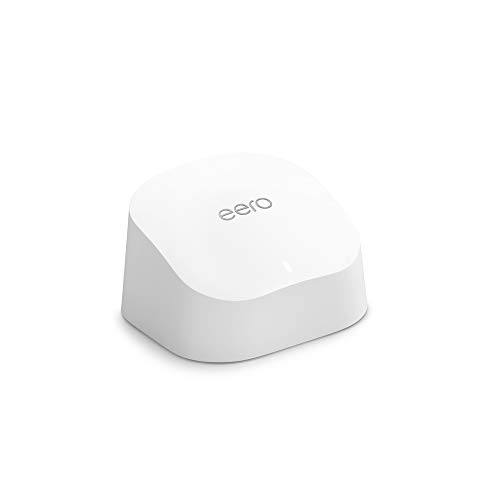 | Amazon eero 6 (1-pack)Easiest setup | Dual-band WiFi 6 | Auto channel | Very compact | $69.99 |
 | NETGEAR R6700AXSimplest | Dual-band AX1800 | Auto channel | Medium | $60.05 |
 | TP-Link Archer A6Cheapest | Dual-band AC1200 | Manual channel | Medium | $29.05 |
Most router buying advice is written for houses, where the challenge is getting a signal from one end of a building to the other. In an apartment that challenge barely exists. A 700 sq ft flat is well within the reach of a $30 router.
What you are actually fighting is co-channel interference. Open a WiFi analyser app in a typical apartment block and you will see twenty to forty networks, most of them stacked on the same handful of channels. WiFi is polite by design: when a device hears another transmission on its channel, it waits. With forty networks sharing a channel, everybody spends most of their time waiting.
This is why apartment WiFi feels slow at 8 pm and fine at 3 am, and why buying a router with more antennas changes nothing. More transmit power does not help when the problem is that you have to take turns.
2.4 GHz is effectively unusable in most apartment buildings. It has only three non-overlapping channels, 1, 6 and 11, and it passes through walls easily, which means you hear your neighbours and they hear you. It is also shared with Bluetooth, microwaves and older smart-home devices.
5 GHz is better but crowded, with more channels and shorter range so fewer neighbours reach you. The under-used part is the DFS channels (52 to 144), which most consumer routers avoid by default because they must yield to weather radar. Many neighbours’ routers never touch them, which makes them the quietest part of 5 GHz, and a router that supports DFS can use that.
6 GHz is the real answer. Only WiFi 6E and WiFi 7 devices may transmit there, so in a building full of older routers it is empty. Its short range and poor wall penetration, a serious drawback in a house, cost you nothing in a flat.
Change your channel manually. Install a WiFi analyser (WiFi Analyzer on Android, AirPort Utility on iOS with scanning enabled), see which channels your neighbours use, and move to the quietest one. Automatic channel selection runs at boot and often never revisits the decision, so it is frequently sitting on a channel that has since become crowded.
Use 20 MHz channel width on 2.4 GHz. Routers default to 40 MHz for speed, which occupies twice the spectrum and collides with twice as many neighbours. In a dense building, a narrow clean channel beats a wide crowded one, and the speed loss is invisible on any normal internet plan.
Split your SSIDs. Give 2.4 GHz and 5 GHz different network names so you can put your laptop and phone on 5 GHz permanently and leave 2.4 GHz for smart plugs and sensors. Band steering often keeps devices on 2.4 GHz longer than it should, which in an apartment is the worst place for them.
Try these before buying anything. In a lot of flats they solve the problem entirely.
This is the apartment router, and the argument is simple: the 6 GHz band solves the actual problem. Regulations restrict it to WiFi 6E and 7 devices, so in a building where every neighbour runs a WiFi 5 or WiFi 6 router, nobody else is transmitting there. You get a clean 2,402 Mbps band to yourself.
The 6 GHz band’s weaknesses, short range, poor wall penetration, are exactly the weaknesses that do not matter in a flat. In a house they would push you toward a different router. Here they are irrelevant, because your laptop is fifteen feet from the router with at most one wall between.
All three radios together give 5,400 Mbps: 2,402 on 6 GHz, 2,402 on 5 GHz and 574 on 2.4 GHz. The practical way to use this in an apartment is to put your laptop and phone on 6 GHz if they support it, everything else on 5 GHz, and leave 2.4 GHz for the smart plugs.
The 1 GHz dual-core processor with 512 MB of RAM matters more here than the price suggests, because tri-band routers run three radios and cheap ones overheat and throttle. TP-Link designed the housing around heat dissipation specifically to avoid that.
One thing to check before buying: your devices need to support WiFi 6E to use the 6 GHz band at all. iPhone 15 Pro and later, Samsung Galaxy S21 Ultra and later, and most 2022-onward laptops do. Older devices simply use 5 GHz instead, which is still fine, but then a cheaper router would have done.
Buy it if you have WiFi 6E devices and noisy neighbours, this is the only fix that actually addresses interference.
If your devices are not WiFi 6E, the 6 GHz band is a feature you cannot use, and the AX55 becomes the better buy. 2,402 Mbps on 5 GHz and 574 Mbps on 2.4 GHz for $75.
The reason it works well in an apartment is DFS channel support. The 5 GHz band’s DFS channels (52 through 144) require a router to monitor for weather radar and yield if it detects any, so many manufacturers avoid them entirely. That means your neighbours’ routers mostly are not there, and a router that will use them finds a quiet channel where the default ones are jammed.
You will usually need to enable DFS manually in the wireless settings, and it is worth the two minutes. In a dense building the difference between channel 36, which everybody uses, and channel 100, which almost nobody does, is larger than any hardware upgrade.
The redesigned cooling case matters here too. Apartment routers often live in a cupboard or behind a TV with poor airflow, and thermal throttling is a common cause of a router that seems fast when tested and slow in use.
VPN server and client support is included, which is genuinely useful in shared-building living if you ever want to reach your home network from elsewhere.
Buy it if your devices are WiFi 6 rather than 6E, DFS gives you the next-best clean spectrum.
Multi-Link Operation is unusually valuable in an apartment, and it is worth understanding why. MLO lets a WiFi 7 device hold a connection on 2.4 GHz and 5 GHz simultaneously. When one band gets congested, which in an apartment happens constantly as neighbours start streaming, the connection keeps moving data on the other rather than stalling.
That is precisely the failure mode of apartment WiFi. It is not that speeds are low; it is that they collapse unpredictably when the building gets busy. MLO smooths exactly that.
The BE230 is dual-band, so there is no 6 GHz radio and no 320 MHz channels. In a flat where you might have chosen the AXE75 for its clean band, that is a real trade, but MLO across two bands is a different kind of fix, and arguably a more robust one because it does not depend on owning 6E devices.
Two 2.5 Gbps Ethernet ports at $90 is remarkable, and relevant if your building has fibre. Many newer apartment blocks offer multi-gig plans that a gigabit router would cap.
The 2.0 GHz quad-core processor handles 60 devices, and its internal antennas keep the footprint small, useful when the router has to sit on a shelf in a studio rather than in a dedicated cupboard.
Buy it if your WiFi collapses at peak times rather than being consistently slow, MLO targets that.
For a one- or two-bedroom flat on a normal internet plan, the AX21 at $60 is genuinely all you need. AX1800 gives 1,201 Mbps on 5 GHz and 574 Mbps on 2.4 GHz, which exceeds what most apartment broadband delivers.
WiFi 6’s OFDMA is the feature that earns its keep here. It lets the router serve several devices within one transmission slot instead of queueing them, which reduces how long your network occupies the shared channel. In a crowded building that means both better performance for you and less airtime consumed, you become a better neighbour as well as a faster one.
Four high-gain antennas with beamforming are more than a flat requires, but the advanced front-end module chipset does mean a stronger signal reaches the far corner of a longer apartment.
OneMesh support is the quiet advantage for renters. If your flat has an awkward layout, a long hallway, a thick internal wall, a $30 TP-Link OneMesh extender joins as a proper mesh node with a single network name, rather than the separate SSID a generic extender creates.
Buy it for a one- or two-bed flat on a normal plan where the goal is simply to beat the ISP box.
The eero 6 is the size of a coffee cup, has no visible antennas, and looks like a design object rather than networking equipment. In a studio or a small flat where the router sits in the living room, that matters more than any specification.
Setup takes about five minutes through the app, and after that it manages itself, including automatic channel selection that re-evaluates over time rather than picking once at boot and never revisiting it. In an apartment building where the interference picture changes as neighbours move in and out, that ongoing adjustment is genuinely useful.
The built-in Zigbee hub is a real saving for anyone with smart-home devices. Zigbee bulbs, sensors and locks normally need a separate bridge; here they connect directly and work with Alexa. That is one less box and one less power socket in a flat where both are scarce.
It covers 1,500 sq ft and supports plans up to 900 Mbps, which suits almost any apartment. And if you later move somewhere larger, you can add eero nodes to build a mesh rather than starting over.
The trade is control: eero deliberately hides advanced settings, so manual channel selection and DFS forcing are not available. You are trusting its automation, which is generally good but takes the decision out of your hands.
Buy it if the router has to live in a visible room and you would rather not manage settings.
The R6700AX is aimed squarely at people replacing a landlord-supplied or ISP router who want the swap to be uneventful. NETGEAR’s Nighthawk app is the most forgiving setup flow here, it identifies the connection, handles bridge mode where a building gateway needs it, and gets you online without a settings page.
Its 1,500 sq ft rating and 20-device ceiling are honestly stated where competitors inflate both. For a one-bedroom flat that is ample. For a shared flat with four people and their devices, twenty is tight and the Archer AX21 is the safer choice.
WPA3, automatic firmware updates and a guest network are all enabled out of the box with no subscription, worth noting because NETGEAR charges for its Armor package on higher-end models. The guest network is genuinely useful in shared housing, letting flatmates or visitors connect without access to your devices.
Four gigabit Ethernet ports cover a TV, a console and a desktop, and Free Expert Help gives you a phone number that reaches a person, which matters more than any specification if this is the first router you have set up.
Buy it if this is your first router and you live alone, you are paying for the app and the phone support.
At $29 the A6 is the sensible answer for a rented flat where you would rather not invest much in something you may leave behind. AC1200 gives 867 Mbps on 5 GHz and 300 Mbps on 2.4 GHz, comfortably above the 100 to 300 Mbps plans common in apartment buildings.
It gives you full manual channel control, which is the single most valuable feature for apartment WiFi and something the eero deliberately withholds. Run a WiFi analyser, find the quiet channel, set it, and you have solved most of what a $99 router would have solved.
WPA3 is present, which matters more than it sounds: many budget routers still ship WPA2-only, and in a building where dozens of people are within radio range, the modern protocol is worth having.
The limitation is WiFi 5, which has no OFDMA. With twenty or more devices the network gets less efficient in a way a $50 WiFi 6 router avoids, and in a crowded building it also means you consume more airtime, which makes things worse for everyone including you.
Access Point mode is included, so if you later buy something better you can repurpose this as a wired access point in another room.
Buy it for a rental where you want manual channel control cheaply and your plan is 300 Mbps or less.
Because your neighbours are online. WiFi devices sharing a channel take turns transmitting, so when thirty networks in a building are all active, everyone spends most of their time waiting. It is congestion, not a fault with your router or your internet plan, which is why it clears up by 3 am.
No. Range is not the constraint in a flat, a $30 router covers 700 sq ft easily. What helps is access to clean spectrum: a 6 GHz band, DFS channel support, or Multi-Link Operation. Extra antennas and transmit power do not fix interference.
It is the single most effective upgrade, provided your devices support it. The 6 GHz band is restricted to WiFi 6E and 7 hardware, so in a building of older routers it is empty. Its short range, a drawback in a house, is irrelevant across a flat. Check that your phone or laptop is 6E-capable first, an iPhone 15 Pro or a 2022-onward laptop typically is.
On 2.4 GHz, one of 1, 6 or 11, whichever a WiFi analyser shows as least used, at 20 MHz width. On 5 GHz, try the DFS channels (52 to 144), which most consumer routers avoid and are therefore usually the quietest. There is no universally best channel; it depends entirely on what your neighbours are using, so measure rather than guess.
Usually not. Mesh solves coverage problems, and a flat rarely has one. The exception is a long or oddly shaped apartment with a thick internal wall, in that case a two-node system or a single OneMesh extender helps. For a normal one- or two-bedroom flat, one good router is better and cheaper.
Rarely, and it often makes things worse. A traditional extender rebroadcasts on the same congested spectrum, adding another transmitter to an already crowded building and typically halving throughput. If your problem is interference, which in an apartment it usually is, an extender adds to it.
The TP-Link Archer AXE75 at $99 is the best apartment router because it is the only one here that gives you spectrum your neighbours legally cannot use. If your phone and laptop support WiFi 6E, nothing else on this list will make as much difference.
If they do not, buy the Archer AX55 at $75 and enable DFS channels, the next-cleanest spectrum available. And before you buy anything, spend ten minutes with a WiFi analyser and change your channel manually. In a lot of flats that alone fixes it, and it costs nothing.
Disclosure: Networking Signal is a participant in the Amazon Services LLC Associates Program. We earn a commission on qualifying purchases made through links on this page, at no additional cost to you. Prices shown were accurate at the time of writing and may change. DFS channel availability and 6 GHz regulations vary by country, check what applies where you live.
Hand-picked articles you might also find useful.
 Routers
 A TP-Link router is a network device that connects computers, smart devices, and other wired and wireless products…
 Routers
 The best routers for fibre internet in 2026. The TP-Link Archer BE600 at $189.99 has the 10 Gbps…
 Routers
 A TP-Link Deco BE95 review for 2026. The second 6 GHz band is the whole reason it costs…