
Dual Band Router — What It Is and Whether You Need One
A dual band router broadcasts on 2.4 GHz and 5 GHz at once. What that buys you, how…

The TP-Link Archer AX55 ($75) is the best router under $100, AX3000 speeds, four external antennas, a VPN server, and a cooling design that stops it throttling under sustained load. At $60 the Archer AX21 gives you most of that for less.
The surprise in 2026: WiFi 7 has dropped below $100. The Archer BE230 at $90 is dual-band rather than tri-band, but Multi-Link Operation works, and MLO is the feature that actually improves a busy network. If you plan to keep the router five years, that is the one to buy.
| Product | Router | Standard | Speed | Coverage | Price |
|---|---|---|---|---|---|
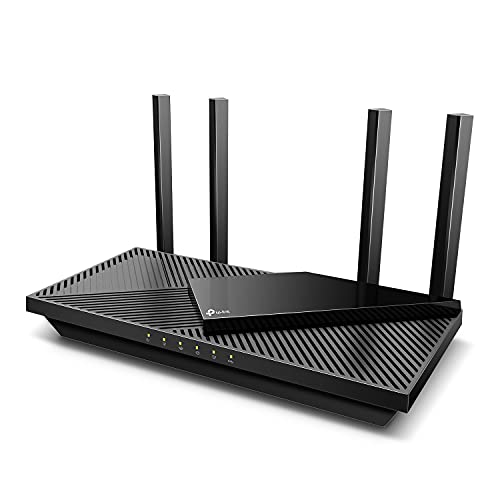 | TP-Link Archer AX55Best overall | WiFi 6 | AX3000 | Medium home | $74.99 |
 | TP-Link Archer AX21Best value | WiFi 6 | AX1800 | Medium home | $59.99 |
 | TP-Link Archer BE230Best WiFi 7 | WiFi 7 | BE3600 | 2,000 sq ft | $89.99 |
 | TP-Link Archer AXE75Best WiFi 6E | WiFi 6E | AXE5400 | Large home | $99.00 |
 | NETGEAR R6700AXEasiest setup | WiFi 6 | AX1800 | 1,500 sq ft | $60.05 |
 | TP-Link Archer AX10Budget pick | WiFi 6 | AX1500 | Small home | $49.96 |
 | TP-Link Archer A6Cheapest | WiFi 5 | AC1200 | Apartment | $29.05 |
The sub-$100 router market has changed more in the last two years than in the five before it, and the old advice, “spend $150 or accept a compromise”, no longer holds.
WiFi 6 is now the floor, not the premium option. Below $60 you get AX1500 or AX1800 with OFDMA and MU-MIMO, which is the technology that actually matters when twenty devices share a network. Two years ago that was $120 hardware.
WiFi 6E arrived at $99 with the Archer AXE75, bringing a 6 GHz band that was $250-and-up territory not long ago.
And WiFi 7 crossed the line at $90. The Archer BE230 is dual-band rather than tri-band, no 6 GHz radio, so no 320 MHz channels, but Multi-Link Operation, 4K-QAM and Multi-RU all work, and those are the features that improve a busy home network rather than a benchmark.
What you still do not get under $100: a 10 Gbps port, more than two multi-gig Ethernet ports, tri-band WiFi 7, or a processor fast enough to run heavy QoS and a VPN tunnel at line rate simultaneously. If you need any of those, our routers under $200 guide is the right page.
Match the router to your internet plan. On a 300 Mbps plan, an AX1500 router at $50 has ample headroom and a $99 router changes nothing. On a gigabit plan, look for AX3000 or better so the wireless side is not the limit. Check your plan first, it is the ceiling.
Count your devices, not your people. A modern household with smart bulbs, sensors, cameras, speakers and a doorbell can pass forty connections without anyone noticing. What fails at that count is the processor, not the radio. The Archer AX55’s dual-core chip and the AXE75’s 1 GHz dual-core with 512 MB of RAM hold up where a cheaper single-core router starts dropping connections.
External antennas beat internal ones at this price. Above $200, careful internal antenna design can outperform external ones. Under $100 it does not, the engineering budget is not there. Four external antennas on a $60 router will reach further than internal antennas on the same-priced model.
Check for a real heatsink. Cheap routers throttle. A router that runs fast for ten minutes and then slows is almost always thermally limited, and it is the single most common cause of “my new router got worse”. TP-Link specifically redesigned the AX55’s case for heat dissipation, which is why it appears at the top of this list.
Do not buy WiFi 5 unless the price gap is decisive. The Archer A6 at $29 is genuinely good value, but WiFi 5 has no OFDMA, and OFDMA is what lets many devices share airtime efficiently. For $20 more the AX10 is a meaningfully better router.
At $75 the AX55 delivers 2,402 Mbps on 5 GHz and 574 Mbps on 2.4 GHz, genuine AX3000 speeds that comfortably exceed a gigabit internet plan’s real-world WiFi throughput. That is the specification you would have paid $130 for two years ago.
The improved cooling design is the reason it sits at the top rather than the AX21. A larger heatsink and a reworked case mean it holds its speed under sustained load instead of throttling after ten minutes, the failure mode that makes cheap routers feel fast in a speed test and slow in real use.
Four high-gain external antennas with beamforming give it coverage that suits a normal two- or three-bedroom home. Target Wake Time is included, which extends battery life on phones and battery-powered sensors by letting them sleep between scheduled transmissions rather than staying awake to listen.
The VPN server and client support is unusual at this price. You can reach your home network from anywhere, or route the whole household through a VPN provider, without buying a second device, genuinely useful, and normally a $150 feature.
Buy it if you want the best all-round router under $100 and would rather not think about it again.
The AX21 has been one of the most-sold routers in the US for several years running, and at $60 the reason is straightforward: it does everything a normal household needs and nothing it does not.
AX1800 means 1,201 Mbps on 5 GHz and 574 Mbps on 2.4 GHz. Against the AX55 you lose half the 5 GHz throughput; on a plan of 500 Mbps or less you will not notice, because your connection runs out first.
What it keeps is the important part. Four high-gain antennas, beamforming, and, unusually at this price, an advanced front-end module chipset, which is the amplifier stage that determines how much signal actually reaches the far side of the house. It is why the AX21 covers better than several routers costing more.
OpenVPN and PPTP server support is included, same as the AX55. So is OneMesh, which lets you add a TP-Link extender later and have it join as a proper mesh node rather than creating a second network name.
Buy it if your plan is 500 Mbps or slower and you want the most coverage for the least money.
WiFi 7 under $100 sounds like it must involve a catch, and there is one, but it is smaller than you would expect. The BE230 is dual-band, so no 6 GHz radio and no 320 MHz channels. What survives is Multi-Link Operation across 2.4 and 5 GHz, 4K-QAM, and Multi-RU.
MLO is the feature worth having. It lets a WiFi 7 device hold links on two bands simultaneously, so when one band gets congested the connection does not stall, it keeps moving data on the other. That is why WiFi 7 feels steadier rather than faster, and it is exactly what a household with thirty devices needs.
The port layout is remarkable at this price: a 2.5 Gbps WAN/LAN port, a second 2.5 Gbps LAN port, and three gigabit LAN ports. Routers at $150 routinely ship with a single 2.5 Gbps port. If you have a NAS or a multi-gig plan, this is a real advantage.
The 2.0 GHz quad-core processor is what keeps it stable with 40 or 50 connected devices, where a cheaper single-core router starts dropping them. Coverage is rated at 2,000 sq ft for 60 devices from four internal antennas.
Buy it if you want a router that stays current for five years and you have a multi-gig plan or a NAS.
The AXE75 is the only genuinely tri-band router on this list, and at exactly $99 it sits right at the ceiling. It gives 2,402 Mbps on 6 GHz, 2,402 Mbps on 5 GHz and 574 Mbps on 2.4 GHz, a total of 5,400 Mbps across three radios.
The 6 GHz band is worth understanding before you buy. It is fast and completely uncongested, because no legacy device can use it, but its range is short and it does not go through walls well. It is excellent for a laptop or VR headset in the same room as the router, and nearly useless two rooms away.
The hardware behind the radios is why it holds up. A 1 GHz dual-core CPU with 512 MB of memory is substantially more than the AX55 or AX21 have, and the housing is designed around heat dissipation. That combination is what lets it run three radios and heavy device counts without degrading, the thing cheap tri-band routers get wrong.
EasyMesh support means you can extend it later with compatible extenders or routers. VPN server and client cover OpenVPN, PPTP and L2TP.
Buy it if you have WiFi 6E devices in the same room as the router, a gaming laptop, a VR headset, a workstation.
If the person setting this up would rather not read a manual, the R6700AX is the one to buy. NETGEAR’s Nighthawk app is the most forgiving setup experience in the category, it detects the connection, handles bridge mode if your ISP gateway needs it, and gets you online without showing a settings page.
AX1800 across 2.4 and 5 GHz for up to 1.8 Gbps combined, covering 1,500 sq ft for up to 20 devices. NETGEAR is unusually honest about that device figure where competitors quote optimistic numbers, but check it against your actual count, because twenty is low for a modern household.
Worth noting on the security side: WPA3, automatic firmware updates and a guest network are all enabled out of the box with no subscription. NETGEAR charges for its Armor package on higher-end models, so this is a genuine point in the R6700AX’s favour.
Four gigabit Ethernet ports handle wired devices, and Free Expert Help is included, a phone number that reaches a person, which matters more than any specification if this is your first router.
Buy it if this is your first router and setup anxiety is real, you are paying for the app and the phone line.
At $50 the AX10 is the cheapest router here that still gives you real WiFi 6, and that distinction is worth $20 over the WiFi 5 alternative. 1,201 Mbps on 5 GHz and 300 Mbps on 2.4 GHz, with OFDMA and MU-MIMO both present.
OFDMA is the reason to insist on WiFi 6 even at the bottom of the market. It lets the router serve several devices within a single transmission slot instead of queueing them one at a time. In a house with a dozen small devices, smart plugs, sensors, a doorbell, that is the difference between a responsive network and one that feels laggy for no visible reason.
The 900 MHz dual-core processor is modest but adequate for its intended load, and four gigabit LAN ports mean you can wire a TV, a console and a desktop without adding a switch.
OneMesh support is the quiet advantage. If coverage turns out to be short, a $30 TP-Link OneMesh extender joins as a proper mesh node with one network name, rather than the separate SSID a generic extender creates.
Buy it if you want the cheapest router that is still worth owning for an apartment or small house.
Thirty dollars for a dual-band router with four gigabit ports and WPA3 is remarkable value, and for the right situation the A6 is a sensible buy rather than a compromise.
AC1200 is WiFi 5: 867 Mbps on 5 GHz and 300 Mbps on 2.4 GHz. On a plan of 200 or 300 Mbps with a handful of devices, that is more than adequate, and the four external antennas with beamforming give it coverage that embarrasses several more expensive routers.
WPA3 is the detail that keeps it current. Plenty of budget routers still ship WPA2-only, which is a genuine security gap; the A6 has the modern protocol.
The limitation is real and worth stating plainly: WiFi 5 has no OFDMA. With twenty or more devices the network gets less efficient in a way that a $50 WiFi 6 router avoids. Access Point mode is included if you later want to repurpose it behind a better router.
Buy it for an apartment, a rental, or a second network where price matters more than device capacity.
For most homes, yes. Under $100 you can get AX3000 WiFi 6, tri-band WiFi 6E, or dual-band WiFi 7 with Multi-Link Operation. What you cannot get is a 10 Gbps port, tri-band WiFi 7, or a processor fast enough to run heavy QoS and VPN at line rate simultaneously. If your internet plan is a gigabit or less and you have under fifty devices, a $75 router is genuinely sufficient.
WiFi 6 at $60 to 75 is the safe default. WiFi 6E at $99 only pays off if you have 6E devices in the same room as the router, since the 6 GHz band has short range. WiFi 7 at $90 is the best long-term buy because Multi-Link Operation improves a busy network even though the dual-band models lack a 6 GHz radio.
Four to six years is realistic. Wireless standards change roughly every four years, but routers stay usable well past the arrival of the next standard because they are backward compatible. The practical limits are firmware support ending and the processor struggling as your device count grows, not the radio becoming obsolete.
Not strictly, but buying your own usually pays for itself. ISPs typically charge $10 to 15 a month to rent a gateway, so a $75 router pays back in six months and saves $120 to 180 a year afterwards. It is also normally better hardware with more control and no rental fee.
Only if its wireless capacity is below your plan speed, or its processor cannot keep up with your device count. An AX1500 router on a 300 Mbps plan will not slow anything. The same router on a gigabit plan with forty devices will. Match the router to the plan and the device count, not to the price.
Under $100, generally yes. Effective internal antenna design requires engineering effort that budget routers do not get, so four external antennas typically reach further than internal antennas at the same price. Above $200 that reverses, expensive routers with internal antennas are usually carefully engineered.
The TP-Link Archer AX55 at $75 is the right buy for most people: AX3000 speeds, a cooling design that prevents throttling, a VPN server, and enough coverage for a normal home. At $60 the Archer AX21 gives up half the 5 GHz throughput and almost nothing else, the better choice on a plan of 500 Mbps or less.
If you expect to keep the router five years, spend $90 on the Archer BE230. Its dual-band WiFi 7 lacks a 6 GHz radio, but Multi-Link Operation and two 2.5 Gbps ports mean it will still be a good router when the $60 options feel dated.
Disclosure: Networking Signal is a participant in the Amazon Services LLC Associates Program. We earn a commission on qualifying purchases made through links on this page, at no additional cost to you. Prices shown were accurate at the time of writing and change frequently in this segment, check current pricing before buying, as the ranking can shift when models go on sale.
Hand-picked articles you might also find useful.
 Routers
 A dual band router broadcasts on 2.4 GHz and 5 GHz at once. What that buys you, how…
 Routers
 When it comes to networking, routers are the backbone of the entire system. Whether it's your home or…
 Routers
 A TP-Link Deco BE95 review for 2026. The second 6 GHz band is the whole reason it costs…