
Single Mode vs Multimode Fiber: The Core Decides Everything
Nine microns against fifty is the whole difference, and everything else follows from it. Distances, the OM and…
Fiber optic internet provides extremely fast and reliable internet connectivity through cables made of thin strands of very pure glass called optical fibers. But how does the installation process work to bring these cables into your home or business?
This article will walk through the key steps involved. The fiber optic cables allow for greater bandwidth capacity and speed.
Fiber optic cables transmit data as pulses of light through the glass fibers, allowing for faster speeds and greater bandwidth capacity compared to traditional copper cables. Some key advantages of fiber internet include:
The consistency of the light pulses through the fibers also makes fiber optic communication highly secure and resistant to electromagnetic interference. The fiber optic cables provide more reliability and consistency.
| Type | Speed | Reliability |
|---|---|---|
| Fiber Optic Internet | Up to 1 Gbps | High |
| Cable Internet | Up to 100 Mbps | Moderate |
| DSL Internet | Up to 100 Mbps | Low |
The first step is verifying that fiber optic internet service is available in your area. Fiber internet requires a connection to a fiber optic network, which needs to exist near your location. You can check for availability by entering your address on your chosen fiber internet provider’s website. The providers often have maps showing service availability.
If fiber internet infrastructure has not yet reached your area, find out if there are any planned expansions by contacting providers. Extending availability may be possible if there is enough interest and demand in a neighborhood. Providers weigh cost versus potential customers.
If fiber internet is available, the basic installation process involves:
Professional installation is typically required to ensure proper handling of fiber cables and optimal set-up. Improper installation can lead to connectivity issues.
The first major step is bringing the physical fiber optic cable to your property from the broader network. This usually requires underground installation. The underground location protects the cables. A few key methods for running new fiber cable lines include:
Permits for digging or access may be required to connect to public rights-of-way. Installers take care to avoid existing underground infrastructure like electrical lines or plumbing. Damage can lead to hazardous situations.
Once the fiber optic cable reaches your building, it needs to link up with your home or business’s internal network. This involves:
The ONT converts light signals from the fiber cable into electrical signals for transmission over Ethernet cables or WiFi. The ONT is a key connectivity component.
To broadcast WiFi and provide connectivity, networking components like routers, switches, or extenders need configuration after the ONT installation. The proper configuration ensures optimal speeds. WiFi routers connected to the fiber optic terminal translate signals into wireless access. More access points can enhance coverage across larger spaces if needed. Extenders boost the range.
After physical installation, your fiber internet service needs activation at network servers. Your provider will test signal strength, connectivity, and speed to confirm your fiber internet is ready for use! The tests verify everything is working.
While the backend infrastructure is more complex with fiber optic internet, the in-home installation process is very similar to cable or DSL. Connecting to the high-capacity fiber optic network is what enables faster speeds.
As fiber internet expands to more regions, more households and businesses can benefit from this cutting-edge connectivity. Contact your local providers to find out about getting fiber services installed today.
Hand-picked articles you might also find useful.
 Cables
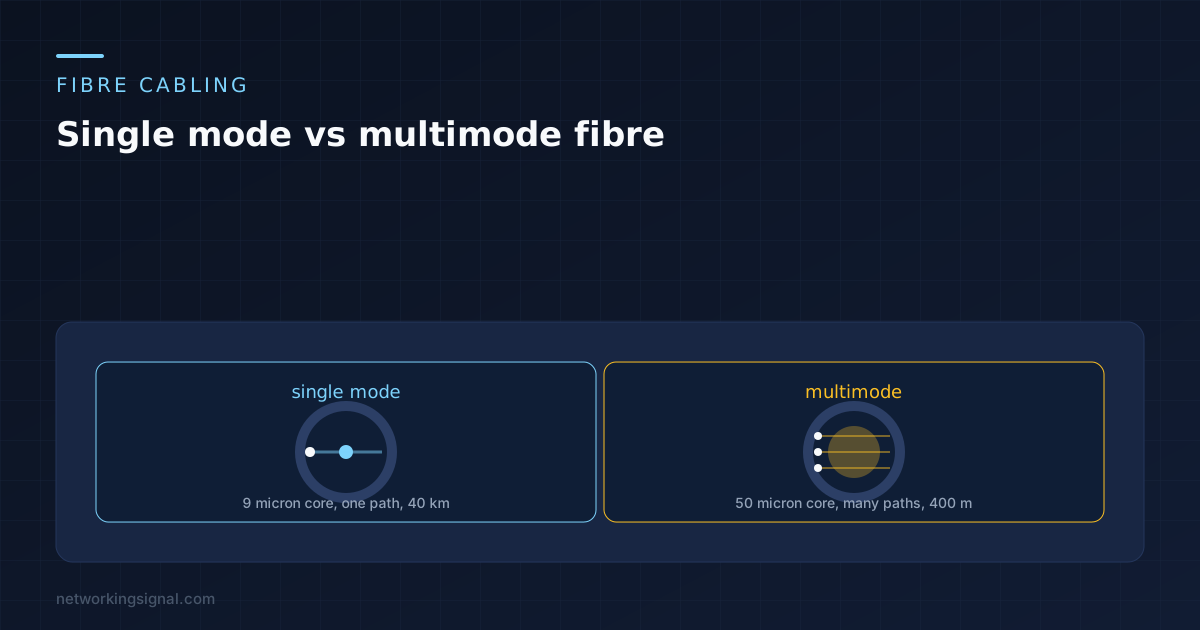
 Nine microns against fifty is the whole difference, and everything else follows from it. Distances, the OM and…
 Cables
 Ethernet ports on network devices like routers , switches , and network interface cards contain small LED lights…
 Cables
 When setting up a wired local area network , one of the most basic but important decisions is…