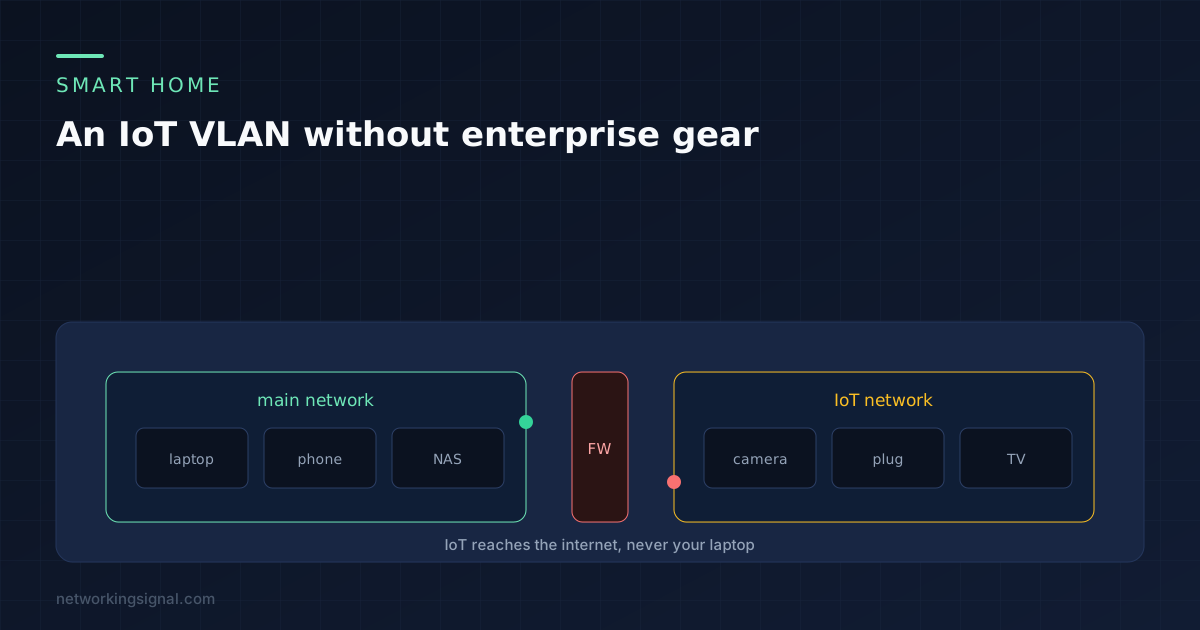
IoT VLAN at Home: Isolate Smart Devices Without Enterprise Gear
Put cameras, plugs and TVs on their own network. Three ways to do it, the five firewall rules…
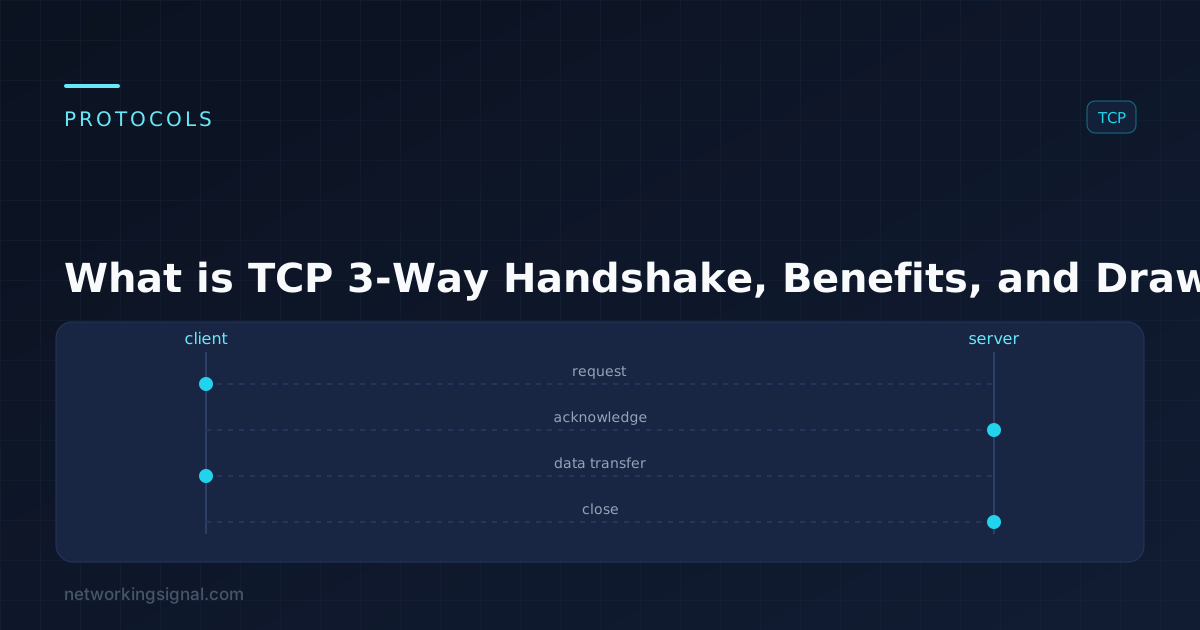
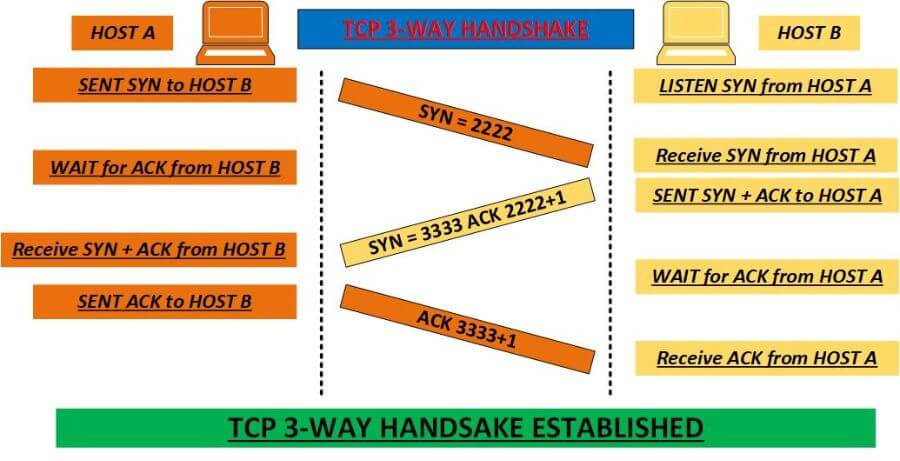
A 3-way handshake is a method used in a TCP/IP network to create a connection between two computers. It is the process of sending SYN, SYN-ACK, and ACK packets back and forth between the two machines to establish communication.
The three-way handshake is used to establish a connection before sending data. Once the connection is established, data can be transferred using a three-way handshake.
The process is as follows:
1. The first machine (the client) sends a SYN packet to the second machine (the server).
2. The server then responds with an SYN-ACK packet.
3. Finally, the client responds with an ACK packet, and the connection is established.
The TCP three-way handshake is important in the Border Gateway Protocol (BGP) for several reasons.
An SYN flood is a type of DoS attack in which the attacker sends a large number of SYN packets to the victim, overwhelming the victim’s ability to respond to them all. This can cause the victim’s machine to crash or become unresponsive.
The TCP three-way handshake helps to prevent SYN floods by requiring that each SYN packet be acknowledged by the other machine before the next one can be sent. This slows down the rate at which the attacker can send SYN packets, giving the victim time to process them all.
The TCP three-way handshake works on the Transport layer of the OSI model. The SYN, SYN-ACK, and ACK packets are all considered to be Transport layer protocols.
When a user tries to access a website over HTTPS, their browser will initiate a TCP three-way handshake with the server. The server will then respond with a SYN-ACK packet, and the client will respond with an ACK packet.
Once the connection is established, the browser will send an HTTPS request to the server. The server will then respond with the website’s data, which will be encrypted using SSL/TLS.
No, not all web services use TCP three-way handshake. Some web services, such as those using the UDP protocol, do not use a three-way handshake. Others, such as those using the HTTP protocol, use a different method of establishing a connection. HTTPS is the only web service that uses a three-way handshake.
The TCP 3-way handshake is used every time a connection is established between two computers. This includes when a user tries to access a website when two computers are transferring data over a network, and when two computers are sending emails.
Hand-picked articles you might also find useful.
 Security
 Put cameras, plugs and TVs on their own network. Three ways to do it, the five firewall rules…
 Security
 What is AAA? The term "AAA" in networking refers to the process of authenticating, authorizing, and accounting for…
 Security
 What is HTTPS? HTTPS is a secure communications protocol that allows for the exchange of information between a…