
The Importance of Cable Testing: A Comprehensive Guide to Network and Fiber Optic Cable Testing Equipment and Tools
Cable testing is a vital process that ensures cables are functioning optimally and transmissions occur without errors or…

The Cable Matters Cat 6 ($9.99 for 25 ft) is the right cable for a PS5. Cat 6 with 24 AWG bare copper, snagless boots, and enough length to reach the router without strain.
Do not buy Cat 8 for the speed, and our Cat6 vs Cat6a vs Cat7 vs Cat8 guide explains exactly where each category earns its price. The PS5 has a gigabit Ethernet port, 1,000 Mbps, full stop. Cat 5e already carries that. Cat 6 carries ten times it. Cat 8 is rated for 40 Gbps, which is forty times more than the console’s port can physically accept. The extra rating does nothing.
Cat 8 is still worth buying for one reason: the braided jackets are genuinely tougher. Buy it for durability, not for speed, and never pay a premium for the category number.
| Product | Cable | Category | Shape | Length | Price |
|---|---|---|---|---|---|
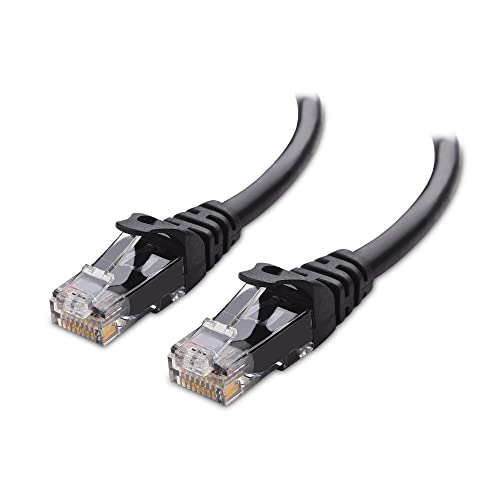 | Cable Matters Cat 6Best overall | Cat 6, 24 AWG | Round | 25 ft | $9.99 |
 | Amazon Basics Cat 6Cheapest | Cat 6 | Round | 25 ft | $7.20 |
 | Jadaol Flat Cat 6Best for hiding | Cat 6, 30 AWG | Flat + clips | 25 ft | $9.99 |
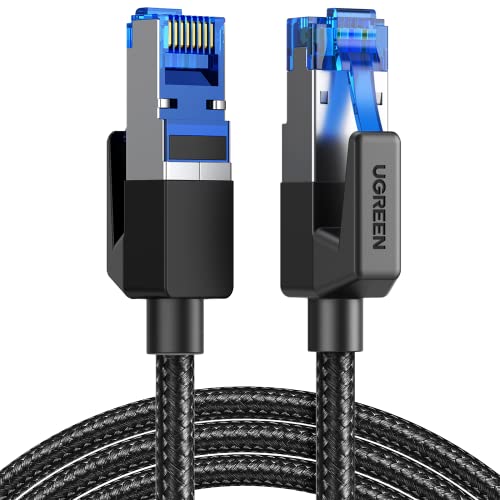 | UGREEN Cat 8 BraidedMost durable | Cat 8, F/FTP | Braided round | 10 ft | $9.99 |
 | Ultra Clarity Cat 6 (2-pack)Best 2-pack | Cat 6, ETL verified | Round | 2 × 25 ft | $15.99 |
 | Snowkids Cat 8 FlatBest short run | Cat 8, S/FTP | Flat braided | 10 ft | $9.99 |
The PlayStation 5 has one Ethernet port, and it runs at 1 Gbps. That single fact settles almost every question about which cable to buy, so it is worth being precise about what it means.
Every Ethernet category above Cat 5e already exceeds gigabit:
Cat 5e, 1 Gbps, 100 MHz. Exactly what the PS5 needs, no headroom.
Cat 6, 10 Gbps up to 55 m, 250 to 550 MHz. Ten times the console’s port.
Cat 6a, 10 Gbps to 100 m, 500 MHz.
Cat 7, 10 Gbps, 600 MHz. Not a recognised TIA/EIA standard for RJ45.
Cat 8, 40 Gbps, 2000 MHz, to 30 m. Designed for data-centre switch-to-switch runs.
Plug any of these into a PS5 and you get the same result: 1 Gbps, because that is the ceiling of the port. A Cat 8 cable does not make your console faster, lower your ping, or improve download speeds. The link negotiates to the slowest device in the chain, and that device is the PlayStation.
Why Cat 8 listings mention the PS5 anyway: because “compatible with PS5” is true and sells cables. It is not a false claim, it is simply not a useful one. The cable works. So does a $5 Cat 5e.
Recommendation: buy Cat 6. It costs the same as Cat 5e, gives you headroom for a future console or a PC with a 2.5 GbE port, and is the sensible default. Buy Cat 8 only when the specific cable you want happens to have a better jacket, never for the number.
Length, buy more than you measure. A cable pulled taut across a room strains the connector and eventually fails at the boot. Measure the real route, along skirting, around the door, behind the TV unit, and add 20%. Signal loss is irrelevant at these distances; Cat 6 runs 55 m before 10 Gbps degrades, and you are using a fraction of that at a fraction of the speed.
Conductor material: insist on bare copper. Cheap cables use copper-clad aluminium (CCA), which is more brittle, has higher resistance, and cannot legally carry PoE. Listings say “bare copper” or “100% copper” when it is real. If a listing avoids the word entirely, assume CCA. This is the one specification worth checking on any cable at any price.
Shape: round for durability, flat for hiding. Round cables have thicker jackets and last longer. Flat cables slide under carpet edges, along skirting and under doors, which is often the deciding factor in a living room. Flat cables use thinner conductors, 30 AWG rather than 24, which is irrelevant at gigabit over short runs.
Snagless boots. The small moulded shroud over the clip stops it catching when you pull the cable through furniture. A snapped retaining clip is the most common way an Ethernet cable dies, and snagless costs nothing extra.
Shielding: usually unnecessary. Shielded cables (STP, F/FTP, S/FTP) resist electrical interference, which matters near industrial equipment or long parallel mains runs. In a living room, unshielded UTP is fine, and shielded cable can actually perform worse if it is not properly grounded at both ends, which in a home setup it usually is not.
This is the cable to buy, and it is $9.99 because there is no reason for a PS5 cable to cost more.
24 AWG bare copper conductors are the specification that matters. Thicker conductors than the 26 or 30 AWG used in budget and flat cables, and real copper rather than copper-clad aluminium, which means lower resistance, better durability, and a cable that will still work in five years.
It is certified to meet or exceed TIA/EIA 568-C.2 for Category 6, which is the actual standard rather than a manufacturer’s claim. Plenty of cables described as “Cat 6” on Amazon have never been tested against it.
Gold-plated contacts resist corrosion, and the snagless strain-relief boots protect the retaining clip, the part that actually breaks. At 25 ft you have enough length to route around furniture properly rather than stretching it across the floor.
It supports PoE, PoE+ and PoE++, which the PS5 will never use but means you can repurpose the cable later for a security camera or an access point. For $10, buying the cable that outlives the console is the easy call.
Buy it if you want the correct cable with no thinking required, this is the default answer.
At $7.20 for 25 ft this is about as cheap as a Cat 6 cable gets from a seller with real accountability, and for a PS5 it is entirely sufficient.
Amazon rates it at 1,000 Mbps, which is a refreshingly honest way to describe a Cat 6 cable in a market where every listing shouts 10 Gbps. It matches exactly what the console’s port does.
Gold-plated RJ45 connectors resist corrosion, and the build is unremarkable in the way a commodity cable should be. There is no braiding, no unusual jacket, nothing to fail in an interesting way.
What you give up against the Cable Matters is transparency about conductor gauge and material, Amazon does not publish AWG or state bare copper. For a permanent run behind a TV that is unlikely to matter. For a cable that gets coiled and moved regularly, the Cable Matters is worth the extra $2.79.
The honest summary: if the cable will be plugged in once and left alone, this is the sensible purchase and the $2.79 saving is real.
Buy it if the cable will be plugged in once and forgotten and you want to spend as little as possible.
The most common reason people do not wire their PS5 is that a cable across the living room floor is unacceptable to somebody in the household. This cable solves that specific problem, and it is why it earns a place over cheaper round alternatives.
The flat profile slides under carpet edges, along skirting boards, and under a closed door without being crushed. Ten adhesive cable clips are included, so you can run it along a wall edge in about ten minutes and it effectively disappears.
It is bare copper, which is the specification to check on any budget flat cable, many use copper-clad aluminium and become brittle where they bend.
Flat cables use 30 AWG conductors rather than 24 AWG, which is the trade for the profile. Thinner conductors mean marginally higher resistance and less physical robustness, and at long distances or high speeds that would matter. Over 25 ft at 1 Gbps it makes no measurable difference.
One caveat: flat cables are more vulnerable to sharp creases than round ones. Route it around corners rather than folding it, and it will last as long as anything else here.
Buy it if the cable has to cross a living room without being seen, that is what this is for.
Buy this cable for its jacket, not its category. The 40 Gbps Cat 8 rating is forty times what the PS5’s port can accept and does nothing for you, but the braided construction is a genuine improvement, and at $9.99 you are not paying a premium for the unusable specification.
UGREEN rates it for 10,000 bend cycles. That matters if the console gets moved between rooms, taken to a friend’s house, or sits somewhere the cable is regularly disturbed. A standard PVC-jacketed cable develops stress fractures at the boot after repeated flexing; a braided one does not.
The F/FTP shielding is the other feature you are unlikely to need but will not be harmed by. It resists electrical interference from mains cables and appliances. In a normal living room, unshielded is fine, but if your Ethernet has to run alongside a power cable for several feet, shielding is a legitimate reason to choose this.
At 10 ft it is aimed at a console sitting near the router rather than across the house. Measure before ordering; UGREEN sells longer lengths of the same cable.
The framing to keep in mind: this is a well-built 10 ft cable that happens to be Cat 8. That is a good purchase. Paying $30 for a Cat 8 cable because of the number would not be.
Buy it if the cable will be moved and re-plugged often, the braid is the reason, not the category.
Two 25 ft Cat 6 cables for $15.99 works out at $8 each, which is cheaper per cable than most singles, and if you are wiring a PS5 you are usually about to wire a TV, a PC or a second console too.
The specification is properly documented, which is unusual at this price: 8 solid copper conductors at 24 AWG, four unshielded twisted pairs separated by a PE cross-insulation spline that keeps the pairs apart and reduces crosstalk. That spline is the physical difference between real Cat 6 and Cat 5e sold as Cat 6.
ETL verification means an independent lab tested it against TIA/EIA 568-C.2, rather than the manufacturer asserting compliance. Combined with RoHS compliance and a CM-grade PVC jacket, this is a cable with actual paperwork behind it.
Moulded strain-relief boots are flexible rather than rigid, which helps where the cable exits behind a TV unit at an angle.
Ultra Clarity offers a one-year replacement on defects with US-based support. On a $16 purchase that is not a large financial guarantee, but it does indicate a seller who expects to still be trading next year.
Buy it if you are wiring more than one device, a TV, a PC, or a second console.
This combines the two properties that actually help a console cable: flat, so it hides, and braided, so it survives. The Cat 8 rating is again irrelevant to the PS5 and again costs nothing extra at $9.99.
The flat nylon braid is an unusual construction, most flat cables use plain PVC and most braided cables are round. Snowkids rates it for 15,000 bend cycles, higher than the UGREEN’s 10,000, while keeping a profile thin enough to run under a carpet edge.
S/FTP shielding wraps each pair individually and then the whole bundle. That is more shielding than a home network needs, but it does no harm and is genuinely useful if the run passes close to a power strip or behind an AV rack full of mains adapters.
At 10 ft it suits a console within a room of the router. Snowkids sells the same cable in longer lengths if you need to cross a room.
Between this and the UGREEN: choose this one if the cable needs to disappear, the UGREEN if it needs to survive being coiled and carried. Both are well made for $10.
Buy it if you want a cable that both hides and lasts over a short run near the router.
Yes, and more than most hardware upgrades, but for latency and consistency rather than raw speed.
Latency drops and stops varying. WiFi devices share airtime and take turns transmitting, so wireless latency fluctuates as other devices become active. Ethernet is a dedicated link with no contention, which is why a wired connection produces a flat ping graph where wireless produces a spiky one. In competitive play that consistency is what you feel.
Packet loss largely disappears. Wireless interference causes retransmissions, which register in games as brief rubber-banding or hit registration problems. A cable eliminates the cause.
Downloads get faster if WiFi was the bottleneck. On a 300 Mbps plan with a good router, wireless was probably not limiting you. On a gigabit plan, or with the console two rooms from the router, wiring can double or triple download speed.
What it will not do: lower your baseline ping to a game server. That is set by your ISP’s routing and the physical distance to the server. Ethernet removes the variance your home network was adding, it does not shorten the path to Frankfurt.
If running a cable to the console is impractical, the next best option is a mesh node in the same room with the PS5 wired to it, covered in our guide to the best routers for PS5.
Yes, physically, Cat 8 uses the same RJ45 connector and is backward compatible. But the PS5’s Ethernet port runs at 1 Gbps, so a Cat 8 cable delivers exactly the same performance as Cat 5e or Cat 6. The 40 Gbps rating cannot be used. Buy Cat 8 only if you want the braided jacket, never for speed.
Cat 6. It costs the same as Cat 5e, exceeds the console’s gigabit port by ten times, and leaves headroom if you later use the cable for a PC or a 2.5 GbE device. Cat 5e also works perfectly; Cat 7 and Cat 8 add nothing the console can use.
No, but wiring the console instead of using WiFi does, substantially. Once wired, all cable categories perform identically because the port is the limit. Your baseline ping to a game server is set by your ISP and the distance to the server; no cable changes that.
Up to 100 metres (328 ft) for Cat 5e, Cat 6 and Cat 6a at gigabit speeds. Nothing in a home comes close to that limit, so buy whatever length routes comfortably and add 20% slack. A taut cable stresses the connector and fails at the boot.
Slightly, in ways that do not matter at home. Flat cables use thinner 30 AWG conductors and have less physical robustness, which would show up over very long runs or at 10 Gbps. At gigabit over 25 ft the performance is identical, and the ability to hide the cable is worth far more than the theoretical difference.
Almost certainly not. Shielding protects against electrical interference from industrial equipment or long parallel mains runs. In a living room, unshielded UTP is fine. Shielded cable can even perform slightly worse if it is not grounded at both ends, which in a typical home setup it is not.
Buy the Cable Matters Cat 6 at $9.99. It is 24 AWG bare copper, certified to the real Cat 6 standard, snagless, and long enough to route properly. Nothing about a PS5 justifies spending more.
If the cable has to cross a living room without being seen, the Jadaol Flat Cat 6 with its included clips solves that for the same price. And ignore Cat 8 marketing entirely, the console’s gigabit port means a $7 cable and a $40 cable deliver identical performance. The only reason to choose Cat 8 is a jacket you like, at a price you would have paid anyway.
Disclosure: Networking Signal is a participant in the Amazon Services LLC Associates Program. We earn a commission on qualifying purchases made through links on this page, at no additional cost to you. Prices shown were accurate at the time of writing and may change. We are not affiliated with Sony Interactive Entertainment; the PS5’s gigabit Ethernet specification is from Sony’s published hardware documentation.
Hand-picked articles you might also find useful.
 Cables
 Cable testing is a vital process that ensures cables are functioning optimally and transmissions occur without errors or…
 Cables
 Are you tired of seeing unsightly Ethernet cables all over your home or office? Perhaps you are worried…
 Cables
 Why is My Ethernet Slower Than WiFi? There are many factors that can affect the speed of your…