
RJ11 vs RJ45 — Differences, Pins, and Why They Are Not Interchangeable
RJ11 is a 6-position phone connector using 2 or 4 wires; RJ45 is an 8-position Ethernet connector using…
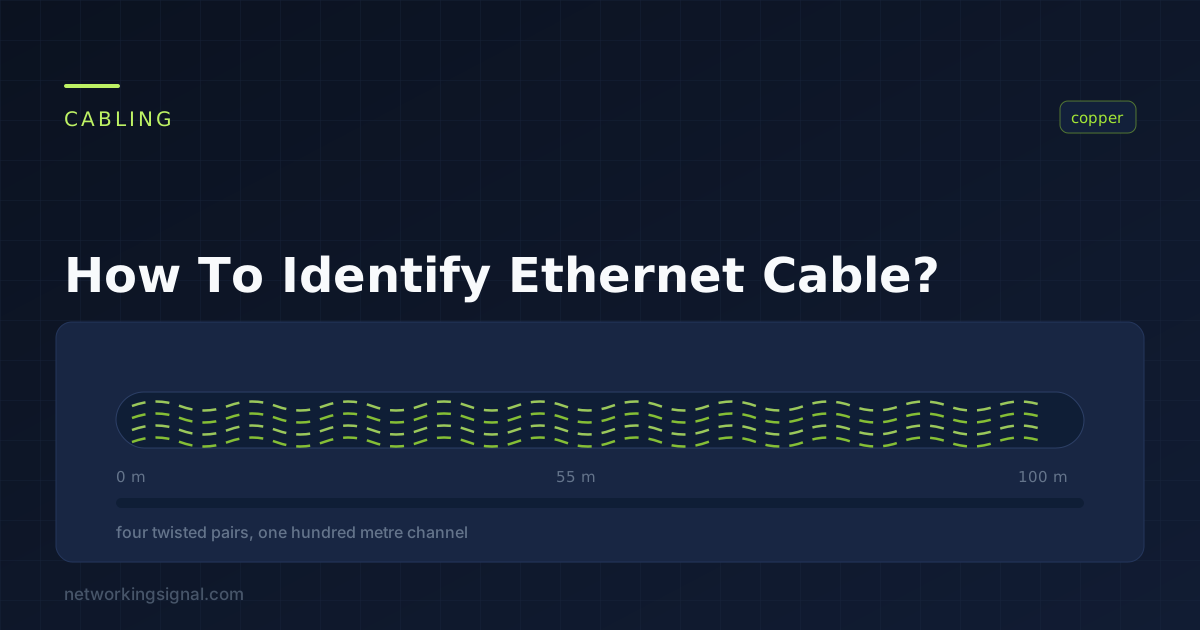
Ethernet cables are critical components in setting up wired computer networks and establishing connectivity between devices.
Correctly identifying the category and type of Ethernet cable is extremely important to ensure compatibility between equipment, getting maximum performance, and avoiding any network issues.
This guide will provide a comprehensive overview of understanding different types of Ethernet cables, the key detailed steps involved in accurately identifying them, the potential role of manufacturers and how it impacts identification and the importance of proper Ethernet cable identification for performance.
Ethernet cables contain twisted pairs of copper wiring and are used to provide physical connectivity between devices in a wired local area network or LAN.
They establish a hardwired point-to-point connection between computers, routers, switches, printers, network storage devices, and other equipment to allow them to communicate with each other.
The common categories of twisted pair Ethernet network cables are:
Newer categories and types of Ethernet cables provide higher bandwidth, faster networking speed standards, better shielding, and the ability to transmit data with reduced noise and interference.
Look Here:
There are several methods and key steps to accurately identify the category or type of a particular Ethernet cable:
Ethernet cables typically have clear labeling imprinted on the outer plastic jacket that indicates the category, network rating, and other detailed specifications.
Looking for this labeled information provides the quickest and easiest way to identify the type of Ethernet cabling. The category – CAT5, CAT5e, CAT6, etc is clearly marked on quality cables.
Ethernet cables have insulation in different colors to visually distinguish between the various categories and ratings.
CAT5e cables commonly use solid colors like blue, green, etc for the insulation. CAT6 cables use two-tone colors with a main color and stripe for easy visual identification.
The connector clips, pins, and overall construction can indicate whether a cable is CAT5, CAT6, or other categories.
High-quality connectors with gold-plated clips provide performance and durability. Connector quality also demonstrates the cable generation with CAT6 using more elaborate connectors.
Physically inspect the entire length of the Ethernet cable for any damage, wear and tear, or cuts on the cabling.
This includes the RJ45 connector tips, the inner copper wires, and the outer plastic jacket. Severe physical cable damage can negatively impact network performance. Replace damaged cables to maintain speed.
Specialized network cable tester devices and Ethernet analyzers can instantly identify the category, pin configuration, and actual real-world performance parameters of Ethernet cables.
This provides the most accurate method of testing and identification. Useful for IT technicians installing and troubleshooting networks.
Closely looking at the jacket material, thickness, and shielding components indicates the category and performance rating of the Ethernet cable.
High-speed CAT6 and CAT7 cables will have thicker sheaths and external shielding to reduce interference.
Reputable Ethernet cable manufacturers follow industry standards for the production of cables in terms of technical specifications, material quality, and testing benchmarks.
However, some may use custom marketing markings, non-standard coloring schemes, and unique category identifiers on the cables.
Always check vendor technical guides to accurately interpret any non-standard cable markings. Quality manufacturers adhere closely to naming conventions and standards.
Identifying Ethernet cables properly is the first step in troubleshooting network issues, upgrading infrastructure, and performing installations.
This guide provides key steps including checking labels, inspecting connectors, looking for damage, and using testers.
While standards exist, manufacturer deviations can occur. Following these methods will help identify Ethernet cable types accurately.
Hand-picked articles you might also find useful.
 Cables
 RJ11 is a 6-position phone connector using 2 or 4 wires; RJ45 is an 8-position Ethernet connector using…
 Cables
 The best bulk Ethernet cable for 2026. trueCABLE Cat6 Riser at $214 per 1000 ft is Fluke tested…
 Cables
 When setting up a wired home or office network, you'll likely encounter Ethernet ports and cables with those…