
Routing Protocols Guide — BGP, OSPF, EIGRP, RIP Explained
Routing protocols are algorithms that determine the best path for data to travel across a network. The two…
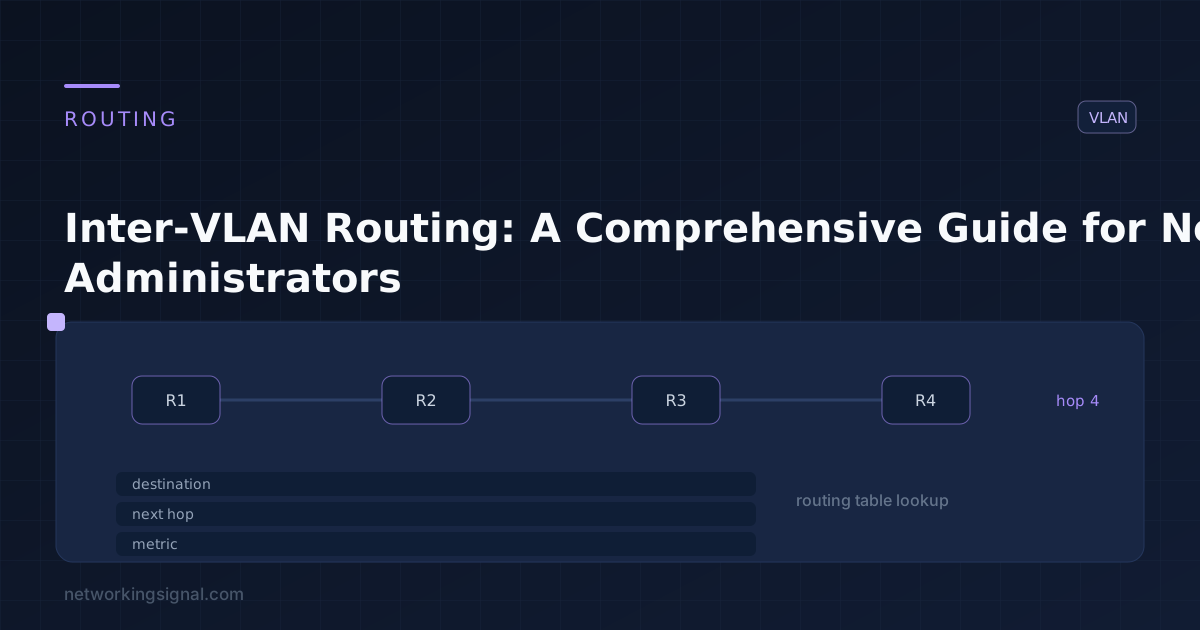
Inter-VLAN routing is the process of allowing communication between different VLANs (Virtual Local Area Networks) within a network. VLANs are logical subnets created within a larger network to segment traffic, improving network performance, and security. Without proper inter-VLAN routing, VLANs become isolated silos that cannot communicate with each other, hindering network operations.
Inter-VLAN routing is essential for breaking down the communication barriers between VLANs. When VLANs are created, they operate as separate subnets, and devices within different VLANs cannot communicate with each other.
For instance, if two departments within a company are on different VLANs, they won’t be able to share resources such as printers, files, or applications. By enabling inter-VLAN routing, devices within different VLANs can communicate with each other, enhancing collaboration and productivity.
Router on a Stick (ROS) is a type of inter-VLAN routing where a single physical interface on a router is used to connect to a switch, and sub-interfaces are created for each VLAN. Each sub-interface is assigned an IP address in its respective VLAN, enabling communication between devices in different VLANs. ROS is ideal for small networks that require only basic inter-VLAN routing.
Layer 3 switches have routing capabilities that allow them to perform inter-VLAN routing. When using a Layer 3 switch, each VLAN is assigned an IP subnet, and the switch can route traffic between the subnets. Layer 3 switches are a cost-effective solution for inter-VLAN routing, as they eliminate the need for an additional router.
This method of inter-VLAN routing uses a combination of Layer 3 switches and routers. Layer 3 switches are used for routing traffic within the VLANs, while the router handles traffic between the VLANs. This method is suitable for larger networks that require advanced routing capabilities.
Look Here:
To configure inter-VLAN routing using ROS, the router’s physical interface must be connected to a trunk port on a switch. Sub-interfaces are then created for each VLAN, and IP addresses are assigned to each sub-interface. A default gateway is also configured to enable communication between VLANs.
To configure inter-VLAN routing on a Layer 3 switch, each VLAN is assigned an IP subnet, and the switch’s routing table is configured to enable communication between subnets. The switch’s default gateway is set to the router’s IP address.
To configure inter VLAN routing using a Layer 3 switch and router, the Layer 3 switch is configured to route traffic within the VLANs, while the router is configured to handle traffic between the VLANs.
Each VLAN is assigned an IP subnet, and the router is connected to the Layer 3 switch via a trunk port. The Layer 3 switch’s default gateway is set to the router’s IP address, and the router is configured with sub-interfaces for each VLAN, each with an assigned IP address.
Look Here:
Before implementing inter-VLAN routing, it is essential to plan and design the network topology carefully. This involves identifying the VLANs required, selecting appropriate IP subnets, and determining the inter-VLAN routing method.
VLAN segmentation is critical for effective inter-VLAN routing. Network administrators must ensure that devices are appropriately segmented to prevent unauthorized access and improve network performance.
Inter VLAN routing can increase the risk of security breaches if not implemented correctly. Network administrators must implement appropriate security policies to prevent unauthorized access between VLANs.
Inter-VLAN routing is essential for breaking down communication barriers between VLANs and improving network performance, and security. Although configuring inter-VLAN routing can be complex and costly, it is a critical component of modern network design. Network administrators must implement best practices for inter-VLAN routing to ensure a secure and scalable network.
Hand-picked articles you might also find useful.
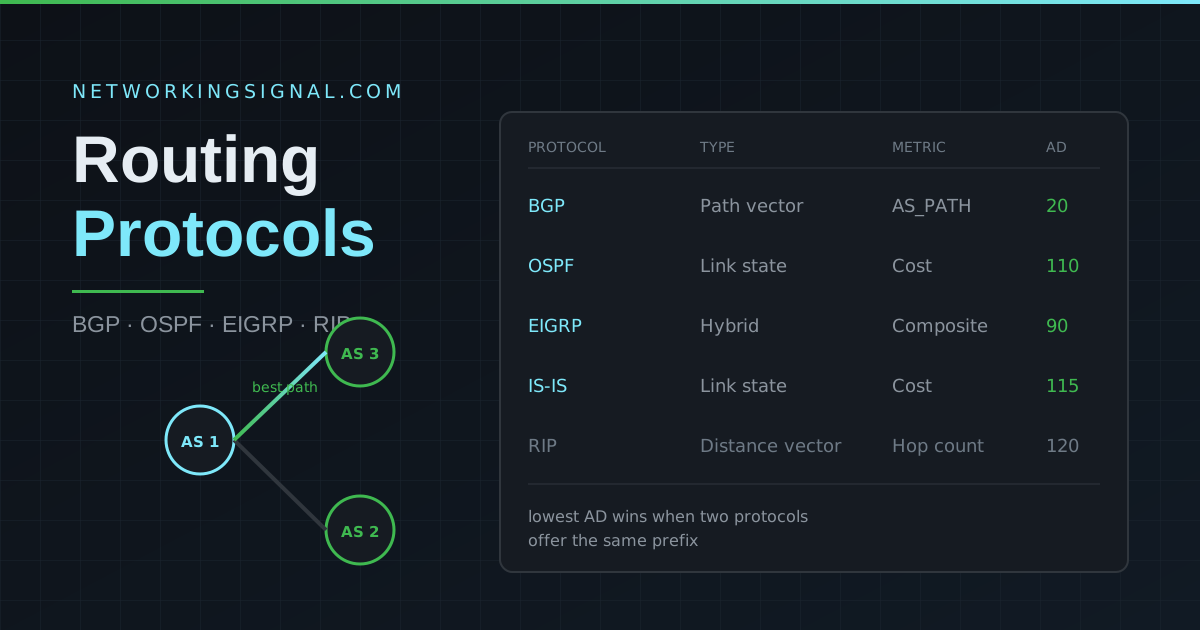 Routing
 Routing protocols are algorithms that determine the best path for data to travel across a network. The two…
 Routing
 MPLS forwards packets on short labels instead of IP lookups. Here is how the label stack, push/swap/pop, LDP,…
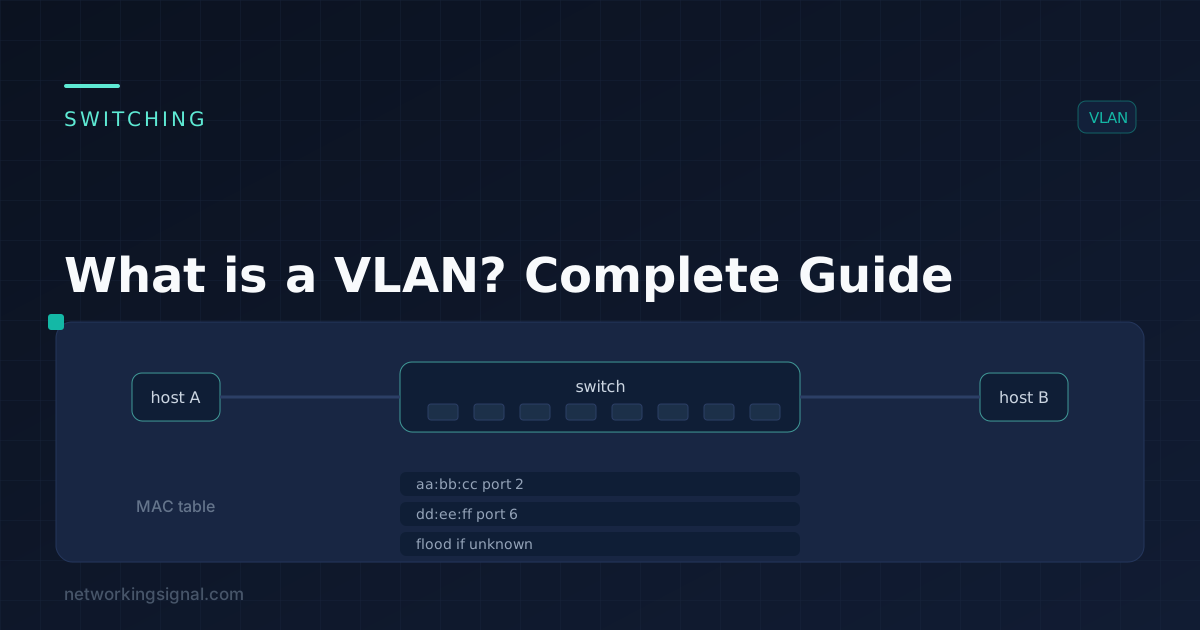 Switching
 What is VLAN? A VLAN is a virtual LAN. VLANs keep different network traffic isolated from each other…