
6 Best Outdoor WiFi Extenders in 2026 (Access Points Compared)
The best outdoor WiFi extenders for 2026. The TP-Link EAP650-Outdoor at $134.99 is the pick. Includes why you…

The Synology DS223j ($189.99) is the best home NAS for most people, and the reason is software rather than hardware. Synology’s DSM operating system is the most mature in the category, gets years of security updates, and does not require you to become a Linux administrator.
If you want a media server, buy the TerraMaster F2-425 ($254.99) instead. Its Intel x86 chip does hardware 4K H.265 decoding, which ARM based NAS units cannot, and that is the difference between Plex playing smoothly and stuttering.
Two things that will cost you money if you get them wrong. First, almost every NAS here is diskless, so budget for drives separately, and they usually cost more than the box. Second, buy CMR drives, never SMR. SMR drives can fail during a RAID rebuild, which is precisely when you need them to work.
| Product | NAS | Bays | CPU | Network | Price | |
|---|---|---|---|---|---|---|
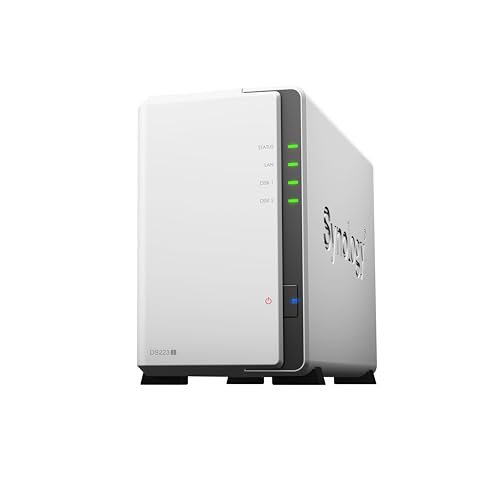 | Synology DS223jBest overall | 2 bay | ARM | Gigabit | Diskless | $189.99 |
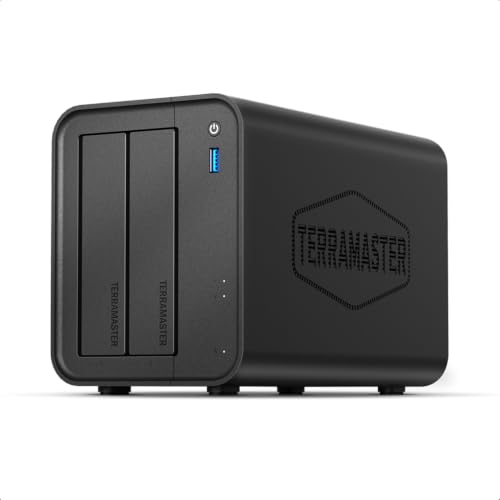 | TerraMaster F2-425Best for Plex | 2 bay | Intel x86 quad | 2.5GbE | Diskless | $254.99 |
 | Asustor Drivestor 4 Gen 2Best 4 bay value | 4 bay | Quad 1.7GHz | 2.5GbE | Diskless | $262.99 |
 | UGREEN DH2300Easiest to start | 2 bay | 4GB RAM | Gigabit | Diskless | $227.99 |
 | UGREEN DH4300 PlusBest for families | 4 bay | 8GB LPDDR4X | 2.5GbE | Diskless | $373.99 |
 | UGREEN DXP4800 GTBest for creators | 4 bay | AMD Ryzen | Dual 10GbE | Diskless | $559.99 |
This is the most important thing on this page, because getting it wrong risks the data you bought the NAS to protect.
Hard drives use one of two recording methods. CMR (conventional magnetic recording) writes tracks side by side. SMR (shingled magnetic recording) overlaps them like roof tiles to fit more data on a platter. SMR is cheaper per terabyte, which is why it appears in budget drives.
The problem is what happens when SMR has to write a lot of data continuously. Because tracks overlap, changing one means rewriting its neighbours, and sustained write performance collapses, sometimes to a few megabytes per second.
That is exactly what a RAID rebuild does. When a drive fails and you replace it, the array rewrites the entire new drive continuously for hours. On SMR that process slows to a crawl and can take days, or time out entirely and drop the drive from the array. You discover this at the worst possible moment: one drive already dead, the rebuild failing, your redundancy gone.
Buy drives explicitly sold for NAS use. WD Red Plus and Red Pro are CMR; plain WD Red was SMR for a period and is worth avoiding. Seagate IronWolf and IronWolf Pro are CMR. Toshiba N300 is CMR. If a listing does not say, assume SMR.
Budget realistically. Two 8TB NAS drives run roughly $300 to $400, which exceeds the price of most enclosures here. The NAS is often the smaller half of the purchase.
This gets repeated because people keep learning it the hard way.
RAID protects against one thing: a drive failing. It does not protect against deleting a file by accident, ransomware encrypting your data, a power surge killing the whole unit, theft, fire, or flood. In every one of those cases RAID faithfully mirrors the damage across all your drives.
The rule worth following is 3-2-1: three copies of your data, on two different media types, with one copy offsite. A NAS with RAID is a good primary copy and a good local backup target. It is not the whole strategy.
Snapshots are the practical answer to the most common threats. Btrfs snapshots, supported by the Asustor and by Synology, capture the state of your data at points in time. Delete a file by mistake or get hit by ransomware, and you roll back to yesterday. Asustor pairs this with WORM, write once read many, which makes selected data immutable so it cannot be encrypted or overwritten at all.
For the offsite copy, every NAS here syncs to a cloud provider, or you can keep a second NAS elsewhere.
The processor type is the specification that separates a NAS that plays media well from one that does not.
ARM processors are efficient and cheap, and they handle file serving, backups and photo indexing perfectly well. They lack hardware video transcoding.
Intel x86 processors include Quick Sync, which decodes and re encodes video in dedicated silicon. A NAS with Quick Sync transcodes 4K H.265 in real time while drawing very little power.
Why this matters: Plex, Emby and Jellyfin transcode when the playing device cannot handle the source file natively. Streaming a 4K H.265 film to an older TV or a phone on mobile data forces a transcode. On ARM that runs in software and stutters or fails. On Intel it just works.
If you will only stream to devices that play your files directly, ARM is fine. If you want a genuine media server, buy Intel. The TerraMaster F2-425 is the cheapest here with an Intel x86 quad core and explicit hardware 4K H.265 decoding.
Also check the network port. Gigabit tops out at roughly 110 MB/s, which one large file transfer saturates. A 2.5GbE port gives about 280 MB/s, and 2.5G switches now cost $50, so this is a genuine upgrade rather than a specification you cannot use. Our guide to managed switches for a home lab covers what to plug it into.
On paper the DS223j is the weakest device here: two bays, an ARM processor, a gigabit port. It is still the right recommendation for most people, because with a NAS you are buying an operating system that has to keep your data safe for a decade, and Synology’s DSM is the best one.
DSM is genuinely mature. Setup is guided rather than technical, the interface makes sense to someone who has never administered a server, and the documentation is extensive. More importantly, Synology ships security updates for its hardware for years after release. A NAS is internet connected and holds everything you own; an abandoned device with unpatched vulnerabilities is a serious liability, and smaller vendors have a patchy record here.
The feature set covers what home users actually need: automated backup for Macs, PCs and mobile devices to multiple destinations, secure file sharing with granular permissions, and Surveillance Station for recording IP cameras with remote viewing.
Two bays in RAID 1 gives you a mirrored copy, so a single drive failure costs you nothing. With two 8TB drives that is 8TB usable.
The limitations are real. The ARM chip cannot hardware transcode, so this is not the Plex machine. Gigabit networking caps transfers around 110 MB/s. And two bays means expanding later requires replacing drives rather than adding them.
Buy it for reliability and software, not for specifications.
Buy this if you want backup and file storage that simply works and stays supported for years.
If the NAS is going to serve media, this is the one, because the Intel x86 quad core does hardware level 4K H.265 decoding that ARM units cannot.
In practice that means Plex, Emby or Jellyfin can transcode a 4K film down for a phone or an older TV in real time, using dedicated silicon rather than struggling in software. It is the single specification that separates a working media server from a frustrating one, and at $254.99 this is the cheapest route to it here.
The 2.5GbE port complements that, moving files at roughly 280 MB/s against gigabit’s 110. For anyone editing video off network storage or moving large media libraries, that is a genuine time difference.
Noise is the underrated feature. TerraMaster rates it at 19 dB, which is close to silent. A NAS runs continuously, and if it lives in a bedroom, a study or a living room, noise is the reason people end up switching it off. Nothing else here publishes a figure this low.
TRAID is TerraMaster’s flexible array system, which they claim saves around 30 percent more usable space than traditional RAID while keeping redundancy. Capacity goes to 60TB across two 30TB bays.
Push Lock trays let you fit drives without tools, and the TNAS mobile app can complete initial setup without a computer.
The trade against Synology is software maturity. TOS is capable and improving, but DSM has a longer track record and a larger community when something goes wrong.
Buy this if Plex or Jellyfin is the main reason you want a NAS.
Four bays for $262.99 is the value proposition here, and four bays change what a NAS can do.
With four drives you can run RAID 5, which gives you the capacity of three drives with the redundancy of one. Four 8TB drives in RAID 5 yield 24TB usable while surviving any single drive failure. In a two bay unit running RAID 1, the same four drives would give you 16TB. The efficiency improves as you add bays.
The feature worth highlighting is Btrfs snapshots with WORM. Snapshots let you restore your data to an earlier point in time, which is the practical defence against both accidental deletion and ransomware. WORM makes selected data immutable, so it cannot be encrypted or overwritten even by an attacker with access. That combination is genuinely enterprise grade and unusual at this price.
The Realtek RTD1619B quad core at 1.7GHz with 1GB DDR4 handles backups and file serving efficiently at low power. It is an ARM class chip, so hardware transcoding is not its strength despite the listing mentioning 4K playback. Direct streaming of files a device can already play works fine; transcoding does not.
A 2.5GbE port and three USB 3.0 ports round it out.
The 1GB of RAM is the real constraint. It is adequate for storage and backup, and thin for running several applications at once.
Buy this if you want four bays and real snapshot protection for the least money.
UGREEN built this specifically for people moving from cloud storage or external drives, and it shows in what it does and does not try to do.
The AI photo organisation is the standout feature for a family. It tags faces, locations, text and objects automatically, so you can search your library for a person or a place rather than scrolling through years of camera roll. It also finds duplicate and near duplicate photos and offers to remove them, which on a decade of phone backups reclaims a genuinely useful amount of space.
4GB of RAM is four times what the Asustor offers, and it is why the photo indexing and search feel responsive rather than sluggish.
Security is unusually well documented: RAID modes, two factor authentication, permission controls and encrypted transfers, with TRUSTe certification and, UGREEN claims, the first NAS certified by TÜV SÜD against ETSI EN 303 645. For a device holding your family’s photos and exposed to the internet, that is worth something.
UGREEN is explicit about the limitation: the DH2300 does not support Docker or virtual machines. That is a deliberate simplification for the beginner market, and it means you cannot self host applications on it. If you want Home Assistant or a Plex server, this is the wrong model and the DH4300 Plus is the one to look at.
Gigabit networking at up to 125 MB/s, capacity to 64TB across two bays.
Buy this if the goal is getting family photos off phones and out of the cloud.
This is the DH2300 with the constraints removed: four bays instead of two, 8GB of RAM instead of 4, a 2.5GbE port instead of gigabit, and Docker support.
Docker is what turns a NAS from storage into a small server. With it you can run Pi-hole for network wide ad blocking, Home Assistant for smart home control, a Jellyfin media server, or a personal password manager. UGREEN notes that virtual machines are still not supported, so this sits between the beginner DH2300 and the full DXP series.
8GB of RAM is what makes several containers plus photo indexing practical simultaneously. It is the highest of any sub $400 NAS here.
Transfers run at roughly 333 MB/s over 2.5GbE, quoted as a 1GB file in about three seconds.
A 4K HDMI output means the NAS can drive a television directly, playing media without a separate streaming box in the loop.
The AI photo features carry over from the DH2300, with semantic search, recognition of people, objects and pets, and duplicate removal. On a family library that is the feature people use daily.
Setup includes NFC pairing, and access works across Windows, macOS, Android, iOS, browsers and smart TVs.
At $373.99 it is $111 more than the four bay Asustor. You are paying for eight times the RAM, Docker, HDMI output and the photo software, which for a family is a reasonable trade.
Buy this for a family that also wants to self host Pi-hole, Home Assistant or a media server.
This is a different class of machine, and the case for it is specific: editing large video files directly from network storage.
Dual 10GbE networking is the reason. At 10 gigabit you move roughly 1,100 MB/s, which is faster than many internal SATA SSDs. That is the threshold at which editing 4K footage off the NAS feels like editing from a local drive, with no copying step at all. Two ports allow link aggregation or a separate high speed path to an edit workstation.
The AMD Ryzen Embedded R2514 with four cores, eight threads and boost to 3.70GHz is a proper desktop class processor, with 8GB DDR4 expandable to 64GB. It runs Docker containers and full virtual machines simultaneously, which the DH series cannot.
Capacity reaches 144TB: four SATA bays up to 32TB each, with two of those bays also accepting U.2 NVMe SSDs, plus two M.2 slots for another 16TB.
Two practical touches for creators. A built in SD card slot imports footage straight from a camera without a reader or a computer. And the Surveillance Center turns the NAS into an ONVIF and RTSP camera recorder with live multi view, PTZ control and timeline playback, all stored locally with no subscription.
Connectivity includes USB-A and USB-C at 10 Gbps, USB 2.0 and 4K HDMI.
At $559.99 before drives this is a serious purchase. Buy it if you edit video or run virtual machines. For storage and backup, the Synology at a third of the price does that job.
Buy this if you edit video from network storage or need virtual machines.
Usually not. Every unit on this page except the Buffalo LinkStation range is sold diskless, and drives typically cost more than the enclosure. Two 8TB NAS rated drives run roughly $300 to $400, so budget for the complete system rather than the box alone.
CMR writes tracks side by side, while SMR overlaps them to fit more data on a platter. SMR performs badly under sustained writes, which is exactly what a RAID rebuild is, so an SMR drive can take days to rebuild or drop out of the array entirely. Always buy CMR drives sold explicitly for NAS use, such as WD Red Plus, Seagate IronWolf or Toshiba N300.
No. RAID protects against a drive failing and nothing else. It does not protect against accidental deletion, ransomware, power surges, theft, fire or flood, because it faithfully mirrors damage across every drive. Follow the 3-2-1 rule: three copies, two media types, one offsite. Snapshots protect against deletion and ransomware specifically.
Two bays in RAID 1 gives you a mirror and is enough for photos, documents and backups. Four bays let you run RAID 5, which uses capacity far more efficiently: four 8TB drives give 24TB usable with single drive redundancy, against 16TB from the same drives in two mirrored pairs. Start with four bays if a media library is involved.
Any NAS can run the Plex server software, but only Intel x86 models transcode 4K video properly. Transcoding happens when the playing device cannot handle the source file, such as streaming 4K H.265 to an older TV or a phone on mobile data. ARM based units attempt this in software and stutter. For a media server, buy Intel.
Over several years, substantially. A NAS is a one time purchase where cloud storage bills monthly and never stops. UGREEN’s own comparison puts a 12TB cloud plan at roughly $720 a year against a one time NAS and drive cost, with break even inside the first year at that capacity. You do take on responsibility for backups and updates yourself.
Buy the Synology DS223j at $189.99 if the NAS is for backup, file storage and photos. You are buying DSM and years of security updates, which matter more over a decade than any specification on the box.
Buy the TerraMaster F2-425 at $254.99 if you want a media server, because its Intel chip transcodes 4K in hardware and it runs at a near silent 19 dB. For four bays on a budget, the Asustor Drivestor 4 Gen 2 at $262.99 adds RAID 5 efficiency and Btrfs snapshots.
Whichever you choose, spend the money on CMR NAS drives and set up an offsite copy. The enclosure is the cheap part, and RAID alone will not save you.
Disclosure: Networking Signal is a participant in the Amazon Services LLC Associates Program. We earn a commission on qualifying purchases made through links on this page, at no additional cost to you. Prices shown were accurate at the time of writing and may change. All NAS units listed are sold diskless unless stated otherwise, and hard drives are an additional cost.
Hand-picked articles you might also find useful.
 Networking Gears
 The best outdoor WiFi extenders for 2026. The TP-Link EAP650-Outdoor at $134.99 is the pick. Includes why you…
 Networking Gears
 Network-attached storage is a file-dedicated storage device that makes data continuously available for employees to collaborate effectively over…
 Networking Gears
 The best PoE switches for 2026, compared on power budget rather than port count. Includes how to size…