
192.168.1.1 Router Login: Admin Password & Setup
Log in to 192.168.1.1 safely: find the correct gateway, use label-based router credentials, and fix common admin-login problems.
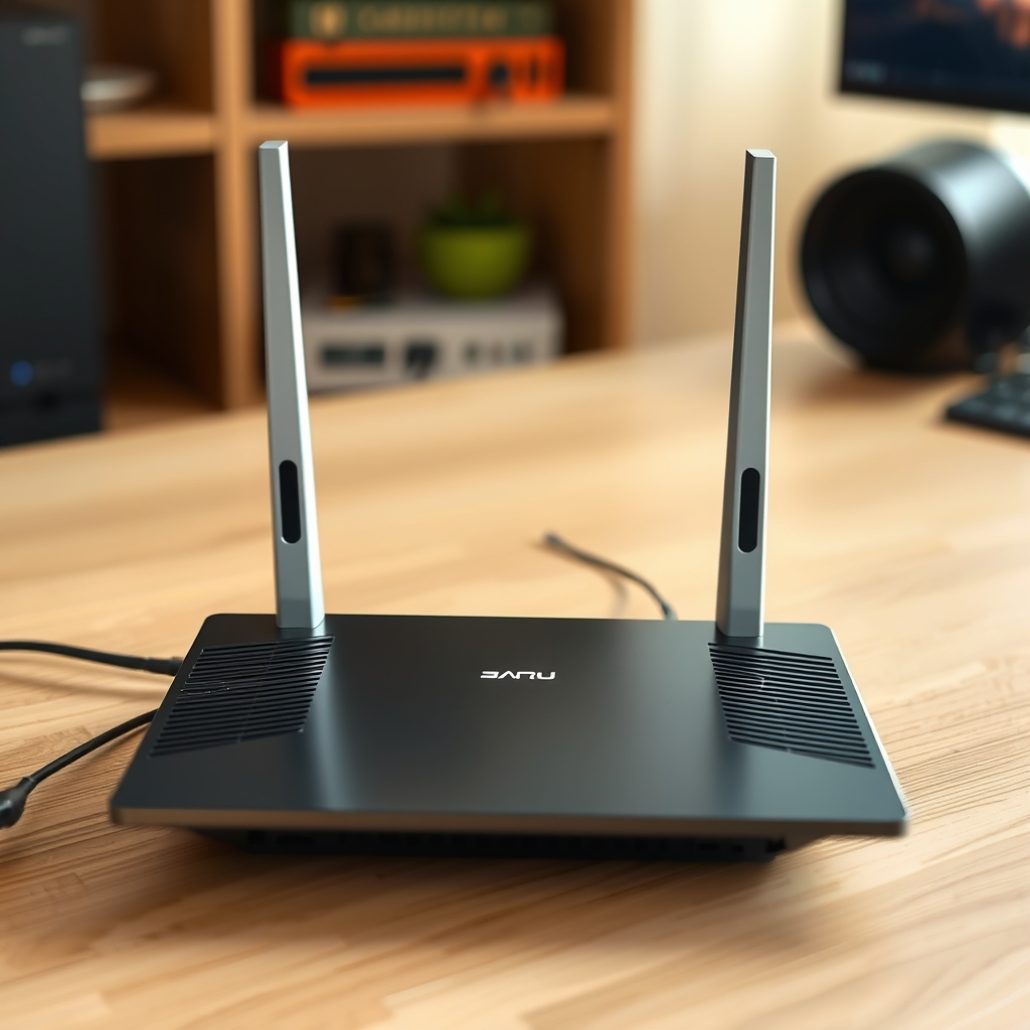
For most gamers the ASUS RT-BE86U at around $199 is the sweet spot, WiFi 7, a 10 Gbps port, and ASUS’s adaptive QoS, without flagship pricing. If you play on Ethernet and want the best latency tooling, the NETGEAR Nighthawk XR1000 and its DumaOS geo-filtering is still the specialist’s choice.
Spend under $130 and the NETGEAR RAX36 covers a console and a PC perfectly well. Nothing above $400 is justified unless you have a multi-gig connection and a WiFi 7 client to use it.
A “gaming router” is mostly a normal router with three things added: a QoS engine that prioritises game traffic, a faster CPU so that engine does not become the bottleneck, and firmware that surfaces latency instead of hiding it. That is genuinely useful on a busy home network. It is also where a lot of marketing budget goes, so the gap between the $99 pick and the $610 one is smaller than the price suggests.
The picks below are all current models with live pricing. Where a router’s advantage is marketing rather than engineering, the review says so.
| Router | WiFi | Fastest port | Best for | Price | |
|---|---|---|---|---|---|
 | ASUS RT-BE86UBest choice | WiFi 7 · 6.8 Gbps | 10G WAN/LAN | Most gamers | $199.00 |
 | NETGEAR Nighthawk XR1000Best latency tools | WiFi 6 · 5.4 Gbps | 1G | Competitive play | $299.99 |
 | NETGEAR Nighthawk RAX36Budget friendly | WiFi 6 · 3 Gbps | 1G | One console + PC | $99.99 |
 | ASUS ROG Strix GS-BE12000Best for wired setups | WiFi 7 · 12 Gbps | 8× 2.5G | LAN-heavy homes | $289.99 |
 | TP-Link Archer BE600Best value | WiFi 7 · 9.7 Gbps | 10G WAN/LAN | Large homes | $189.99 |
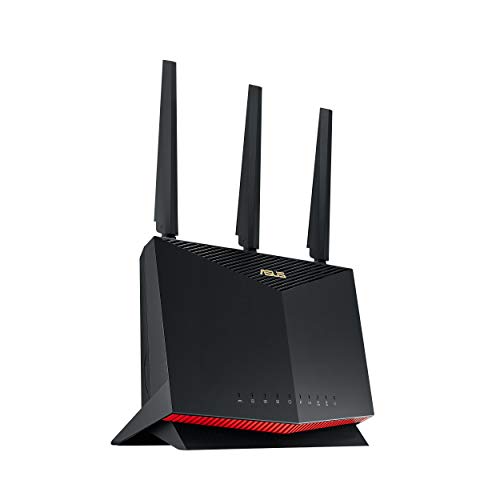 | ASUS RT-AX86U ProProven WiFi 6 | WiFi 6 · 5.7 Gbps | 2.5G | Dedicated game port | $322.98 |
 | TP-Link BE400Cheapest WiFi 7 | WiFi 7 · 6.5 Gbps | 2× 2.5G | Small flats | $129.99 |
 | ASUS ROG Rapture GT-BE98 ProPremium pick | WiFi 7 · 30 Gbps | 2× 10G | Multi-gig fibre | $609.99 |
This is the one that makes sense for most people, and the reason is the port rather than the wireless. A 10 Gigabit WAN/LAN port at $199 is unusual, most routers at this price stop at 2.5G, and it means the router will not be the limiting factor if your ISP upgrades you to multi-gig fibre in a few years.
The quad-core 2.6 GHz CPU matters more for gaming than the headline WiFi number. QoS works by inspecting and reordering packets in real time, and on a cheap single-core router that inspection is itself a source of latency. ASUS’s Adaptive QoS runs comfortably here even with the network busy.
Dual-band rather than tri-band means no dedicated 6 GHz band, which sounds like a compromise but rarely is: 6 GHz barely penetrates walls, and if your gaming device is in another room it was never going to use it. Multi-Link Operation across 2.4 and 5 GHz gives you the reliability benefit of WiFi 7 without paying for a band you cannot reach.
Guest Network Pro is genuinely useful for a household, five SSIDs, so IoT devices, a guest network and your gaming devices can be separated properly rather than sharing one flat network. That is the same segmentation idea covered in our guest WiFi VLAN guide, made accessible without a managed switch.
Buy it if you want one router to last five years and might get faster internet before then.
The XR1000 is the only router here where the software is the reason to buy it. DumaOS 3.0 does things consumer firmware normally will not: geo-filtering lets you restrict matchmaking to servers within a radius you draw on a map, so you stop being matched into 150 ms lobbies on another continent. For competitive play on peer-to-peer titles this is the single most effective latency fix available.
Its ping heatmap and per-device bandwidth allocation are equally unusual, you can see which device is causing a spike rather than guessing. NETGEAR quotes ping reductions “up to 93%”, which is marketing arithmetic from a worst-case congested baseline; the honest version is that on a busy household connection it meaningfully flattens the spikes that cause rubber-banding.
The catch is the hardware around it. This is WiFi 6 with 1 Gigabit ports only, no 2.5G, no WiFi 7, at $300, which is more than the faster RT-BE86U. You are paying for DumaOS, and that only makes sense if you will actually use geo-filtering.
Buy it if you play peer-to-peer shooters or fighting games competitively and ping matters more than throughput.
Under $100 you are not getting gaming-specific QoS, and you do not really need it. What you need is a router that does not fall over when someone streams while you play, and AX3000 with OFDMA handles that, OFDMA is the WiFi 6 feature that lets the router service several devices within one transmission slot instead of queuing them, which is exactly the congestion that causes lag spikes in a busy house.
Coverage is quoted at 2,000 sq ft for 25 devices, which is realistic for a flat or a small house. Four gigabit LAN ports mean your console and PC can both be wired, and wiring the console is worth more than any QoS feature on this list.
Skip it if you have a connection faster than about 800 Mbps, the 1G WAN port becomes the ceiling.
Buy it if you have a gigabit-or-slower connection, a flat or small house, and would rather spend the difference on games.
The specification that matters here is seven 2.5 Gbps LAN ports plus a 2.5 Gbps WAN. Almost every router on the market gives you four 1G ports; this gives you eight multi-gig ones. If you have a gaming PC, a console, a NAS and a capture setup all on Ethernet, this replaces both your router and the switch you were about to buy.
Tri-band WiFi 7 with 320 MHz channels on 6 GHz is genuinely fast in the same room, and the quad-core 2.0 GHz CPU with 2 GB of RAM means the QoS and security scanning run without throttling throughput, a common failure on cheaper “gaming” hardware where enabling every feature halves your speed.
ROG’s Gaming Network feature sets up a dedicated SSID with prioritisation pre-applied, which saves working through QoS menus. It is convenience rather than magic, the same result is achievable manually on the cheaper RT-BE86U.
Buy it if you have four or more wired devices and were about to buy a multi-gig switch anyway.
Tri-band WiFi 7 with a 10 Gbps port and four further 2.5 Gbps ports, for under $200. On paper that undercuts everything else here, and for a large house it is the most sensible WiFi 7 buy, 2,600 sq ft of quoted coverage from six antennas, with the 6 GHz band available for devices in the same room as the router.
What you give up against ASUS is the software. TP-Link’s QoS is coarser than Adaptive QoS or DumaOS: you can prioritise a device, but not intelligently classify game traffic against a video call. For a household where the gaming machine is simply the most important device, that distinction rarely matters.
Worth noting TP-Link is a signatory to CISA’s Secure-by-Design pledge and pushes firmware updates reliably, relevant given how often consumer routers become the weakest device on a home network.
Buy it if you have a big house and want WiFi 7 coverage rather than gaming-specific software.
The AX86U has been the default enthusiast recommendation for years, and the Pro refresh keeps what made it good: a dedicated gaming LAN port that automatically gets top priority with no configuration, Adaptive QoS that classifies traffic by type rather than just by device, and AiProtection Pro security with no subscription.
Mobile Game Mode is the underrated feature, one tap in the app prioritises a phone or tablet, which matters if you play mobile titles competitively where you cannot use Ethernet.
The honest problem is price. At $322 it costs more than the newer RT-BE86U while offering WiFi 6 and a 2.5G port instead of WiFi 7 and 10G. Buy it if you find it discounted or you specifically want the physical gaming port; otherwise the BE86U is the better buy from the same manufacturer.
Buy it if you find it on sale below $200, or you want the dedicated gaming port specifically.
WiFi 7 with two 2.5 Gbps ports for $130 is a genuine bargain, and Multi-Link Operation is the feature worth having, it lets a client use 2.4 and 5 GHz simultaneously, so a brief interference spike on one band no longer causes a dropped frame. For gaming that reliability improvement is more valuable than raw speed.
Dual-band means no 6 GHz, which at this price is the right compromise. Six antennas and 2,400 sq ft of quoted coverage make it a solid flat or small-house router.
Do not expect meaningful QoS. This is a fast, cheap, reliable router rather than a gaming router in the software sense.
Buy it if you want future-proofing on a budget and your gaming device is wired anyway.
Quad-band, two separate 5 GHz radios plus 2.4 and 6 GHz, with 320 MHz channels and dual 10 Gigabit ports. On specifications nothing else here is close, and Triple-Level Game Acceleration prioritises game traffic from the device, through the router, out to the game server.
The honest assessment: almost nobody needs this. To see any benefit over the $199 RT-BE86U you need a multi-gig internet connection, WiFi 7 client devices, and enough simultaneous heavy users to saturate a second 5 GHz radio. Miss any of those and you have spent $410 extra for identical in-game latency.
It earns its place for one scenario: a household with multi-gig fibre, a 10G NAS, and several people gaming and streaming at once. That is a real setup, it is just not a common one.
Buy it if you have multi-gig fibre and several heavy simultaneous users. Otherwise buy the RT-BE86U.
Four things actually change your in-game experience. Everything else on the box is secondary.
Quality of Service decides what gets sent first when the connection is busy. Without it, a large download and your game packets queue equally, and your ping spikes. Implementations differ significantly:
QoS inspects packets in real time. A weak processor makes that inspection a bottleneck, so enabling every feature halves throughput. A quad-core at 2 GHz or above with at least 1 GB of RAM is the threshold where features can all stay on.
The single biggest latency improvement available is an Ethernet cable, and it costs a few pounds. WiFi is a shared, half-duplex medium, see collision domains for why that adds jitter no router can remove. Our guides to the best Ethernet cable for PS5 and Xbox Series X cover what to buy; Cat6 is plenty.
The classic “great speed test, terrible gaming” pattern is buffer bloat: oversized buffers fill during a download and add hundreds of milliseconds of latency to everything else. The fix is a router with modern queue management (fq_codel or CAKE), not a faster plan. More in improving network performance.
Probably not yet, and the reason is client devices. WiFi 7’s benefits, Multi-Link Operation, 320 MHz channels, 4K-QAM, require a WiFi 7 client. A PS5, an Xbox Series X and most laptops older than 2024 are WiFi 6 or earlier, and will connect at WiFi 6 speeds to a WiFi 7 router.
Buy WiFi 7 for the ports, not the wireless. The RT-BE86U is worth it at $199 because of its 10G port and CPU, which benefit you today. Paying a premium for 320 MHz channels you have no device to use is the mistake.
The ASUS RT-BE86U at around $199 for most people, WiFi 7, a 10 Gbps port and a quad-core CPU fast enough that QoS does not itself add latency. For competitive peer-to-peer play, the NETGEAR Nighthawk XR1000’s DumaOS geo-filtering is more valuable than raw speed.
It reduces ping spikes caused by congestion on your own network, which is what most people experience as lag. It cannot reduce the base latency to a game server, that is set by physical distance and your ISP’s routing. Geo-filtering is the exception: by restricting matchmaking to nearby servers it lowers the base ping too.
Only if you have WiFi 7 client devices. Consoles and most laptops before 2024 are WiFi 6, and will connect at WiFi 6 speeds regardless. Buy WiFi 7 routers for their faster ports and processors rather than the wireless standard.
Yes, substantially, and it is the cheapest upgrade available. WiFi is half duplex on a shared medium, so it adds jitter that no amount of QoS removes. Wiring a console typically does more for consistency than a $300 router.
$100 to 200 covers almost everyone. Under $100 you lose multi-gig ports and QoS; over $300 you are paying for capacity you can only use with multi-gig internet and several simultaneous heavy users.
Oversized buffers filling during heavy transfers, adding large amounts of latency to everything else. The signature is low ping when idle and very high ping during a download. Routers with fq_codel or CAKE queue management fix it; most consumer QoS settings only partly mitigate it.
Only with many simultaneous heavy users. The extra bands add capacity, not speed for one device. A dual-band router with a fast CPU serves a typical household better than a tri-band one with a weak processor.
Disclosure: we earn a commission on purchases made through the links above, at no extra cost to you. Prices are those shown at the time of writing and change frequently, check the current price on Amazon before buying. Specifications are taken from manufacturer listings.
Hand-picked articles you might also find useful.
 Router Login
 Log in to 192.168.1.1 safely: find the correct gateway, use label-based router credentials, and fix common admin-login problems.
 Routers
 The best WiFi routers under $200 in 2026. The TP-Link Archer BE600 at $190 gives you tri-band WiFi…
 Networking Gears
 Compare six network cable testers for wire mapping, cable tracing and Ethernet fault finding—and know when a certification…